


 |
|
But lets put any scaremongering aside: Ultimately, I traveled to Duisburg to chronicle this state-of-the-art speaker system to you, my readers. And my description is certainly not intended to stoke your jealousy. Prior to their trip to China, Hermann Winters expects the Sphärons to be around for listening at the Audio Forum at least after the High End show: Until then you may have the unique opportunity to experience this speaker system by yourself and redefine your standards in regard to realistic audio performance. Acapella’s studio is open to public two days a week, but nevertheless, I would strongly recommend a phone reservation. The fact that the active Sphärons are mainly responsible for this most likely unparalleled sonic outcome is proven by looking at their teammates. This time around there isn’t a master tape run on a Telefunken M15, resonance- optimized by Alfred Rudolph for both recording and playback as it was three years ago when listening to the Poseydon, but The Audio One streamer, manufactured for Acapella by ReQuest, adding to the bill with only slightly more than one percent of the price of the Sphäron. Currently not even all functions of The Audio One are in use. Instead of its analogue outputs, one of the digital outputs is connected to the rest of the system: A prototype developed in cooperation with Artistic Fidelity – or better, Ralf Koschnicke – assumes the functions of D/A converter and pre-amp. The converter section of Acapella’s DAC/pre-amp combo is similar to that of the arfi-dac2xt, which has been already highly acclaimed for its sonic qualities as well as for its tremendously customer-friendly price-performance ratio. Only the currently used analogue source, the LaMusika Laudatio, is as rare as the Sphäron itself and also ranging in the exclusive realms of high-end pricing. So for most of the following sonic descriptions, these acoustic transducers therefore require neither master tapes nor absolutely priceless teammates. And, most of the files we listened to had a resolution of a mere 16-bit and 44.1 kilohertz.

While some of my test albums make their way to the server via LAN, Hermann Winters takes on the role of the iPad-DJ. He starts with an old recording from A&M: "Top Of The World" by The Carpenters. As the well-known melody happily burbles along, you can very much concentrate on the tonal aspects of the song. For example, it never came up to me with how much pressure and realism the bass drum had been caught to the recording. The Sphäron allows to take a good listen into the – virtual? – depth of the recording studio and to rejoicingly capture the perspectively convincing arrangement of the well-differentiated instruments. If you only know the song from being played on the radio, it’s almost frightening, how much information is abundantly included within this stroke of recorded luck. But to find your way into this kind of detail depth, it really requires such a high-resolving acoustic transducer like the imposing Excalibur. Instead, what you surely can forego is a high or even elevated volume level. To me, it’s absolutely amazing how the Sphäron manages to trace the played content down to finest detail even at moderate volume levels. Their sensitivity of well over 100 decibels is pretty much advantageous not only when it comes to brute playback levels. Low listening levels very much benefit from it, too. However, the same credit is due to the power amplifier as well, which not only holds ready enormous reserves of power, but also performs with a lot of finesse even within the range of some milliwatts.
We leave the well-trodden paths of Diana Krall, the Eagles and the other usual audiophile slowpokes by instead appreciating the Fairfield Four and their "Those Bones". The “Four” in the band name stands for the four vocal registers in which the gospel group uses to sing, and not necessarily for the number of singers. In the days of their foundation, the Fairfield Four used to be a quintet. The Sphäron projects the gentlemen outright into the Audio Forum, without rendering even the slightest technical artifact. The voices sound incredibly natural – except for the bassist. He, instead, does not rely very much on his own volume, but uses the proximity effect of the microphone for a little extra “touch”. As a result, the Sphäron lets him appear significantly bigger than his colleagues. Although this doesn’t diminish the enjoyment we have with the song, it by the way proves that Acapella's top-of-the-range model makes any kind of technical gadgetry within the recording instantly audible. Whereas the Sphäron exhibits no distinctive anomalies in Gene Harris' version of "Summertime": It simply projects a full-sized grand piano into the room, garnishes it with double bass and drums, and lets the music flow. In the course of the track, the rhythmic applauding of the rightly euphoric audience joins the whole. Not even the minutest thought arises about the technical aspects of the performance, the music is irrefutably in the foreground, you simply are part of an enthralling concert.


-

High Fidele Wundertüten
Manchmal stolpert man ja einfach über etwas oder in etwas hinein, ohne zu wissen, was daraus wird. So geschehen als mein Mann und ich Mitte April im vergangenen Jahr in Erlangen waren, um das Projektorchester Orchester concertare der Universitäten Erlangen und Regensburg in der Heinrich-Lades-Halle aufzunehmen. Wir waren an dem Tag für Aufbau und Soundcheck zu früh dran. Was tun mit der gewonnenen Zeit? Ein bisschen die Umgebung erkunden. So schlenderten wir durch die Haupteinkaufsstraße…11.09.2026 -
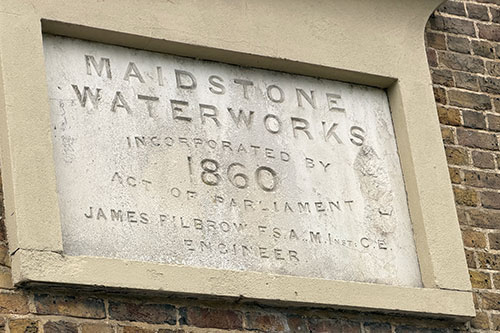
Chord Electronics neuer Firmensitz
Tests außergewöhnlicher Komponenten werfen ihren Schatten voraus: Im Umfeld der Beschäftigung mit Chord Electronics' DAVE besuchte mich sein Entwickler in Gröbenzell, ebenso zur Vorstellung des M-Scalers. Die Technik des Maßstäbe setzenden BLU MKII erläuterte mir Rob Watts in Maidstone. Ebendort fand auch das Interview zum Thema Quartet statt. Die Frage, ob wir uns lieber in Gröbenzell oder in Maidstone treffen würden, entschied Mika Dauphin, der Inhaber des deutschen Chord-Vertriebs, recht pragmatisch: Da die englischen Verstärker-…24.07.2026 -
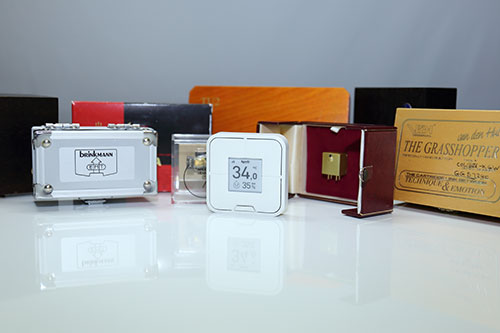
Temperatur und Tonabnehmer
Vor rund 20 Jahren, als noch von Jahrhundertsommern statt von Hitzedomen die Rede war, trieb mich erstmals die Frage um, ob es Tonabnehmersystemen schade, wenn sie oberhalb der üblichen Raumtemperatur benutzt werden. Damals gab Benz-Eigner Albert Lukaschek bereitwillig Auskunft, heuer befragte ich Ortofons ehemaligen Chefentwickler Leif Johannsen. Heute kann man nur neidvoll an die Sommer vergangener Jahrzehnte zurückdenken, als es schon bemerkenswert war, wenn das Thermometer mehrere Tage lang mal mehr als 25 Grad anzeigte.…10.07.2026 


-

Wiener (High End) Impressionen
Der Umzug der wohl wichtigsten Hifi-Messe weltweit stellt nicht nur die Veranstalter, Aussteller – und Besucher? – vor neue Herausforderungen. Für uns war die Show in München in Heimspiel: Im letzten Jahr kamen fünf der sieben hifistatement.net-Teilnehmer aus München oder dem nahen Umfeld, auch wenn nicht alle Bild- oder Textbeiträge lieferten. Auch in diesem Jahr wird die Hauptlast die Berichterstattung wieder auf den Schultern von Finn Corvin Gallowsky liegen. Er hat die Aufgabe im letzten…04.06.2026 -
Statements in High Fidelity | Vienna Edition 2026
My colleague Wojciech Pacuła’s magazine, highfidelity.pl, and hifistatement.net have traditionally recognised one component at each of the trade fairs in Munich and Warsaw that had impressed us over the previous six months. As High End is taking place in Vienna this year, we will henceforth be referring to the Vienna and Warsaw Edition of the Awards. Apart from the name change, there are no surprises this time. My colleague indulged his fondness for British loudspeakers…25.05.2026 -
Statements in High Fidelity | Vienna Edition 2026
Das Magazin meines Kollegen Wojciech Pacuła, highfidelity.pl, und hifistatement.net zeichneten zu den Messen in München und in Warschau traditionell jeweils eine Komponente aus, die uns im vorausgegangenen Halbjahr begeisterte. Da die High End heuer in Wien stattfindet, werden wir ab sofort von der Vienna und der Warsaw Edition der Awards sprechen. Außer der Namensänderung gibt es diesmal keine Überraschungen. Der Kollege frönte seiner Vorliebe für englische Lautsprecher aus der BBC-Tradition, kürte die Harbeth mit der…25.05.2026
© 2026 | HIFISTATEMENT | netmagazine | Alle Rechte vorbehalten | Impressum | Datenschutz


Einige Hifistatement-Autoren benutzen
Qobuz Sublime+ Abonnements.

Einige Hifistatement-Autoren besitzen
eine roon Mitgliedschaft.

Einige Hifistatement-Autoren besitzen
die JPLAY hi-fi app.

Einige Hifistatement-Autoren besitzen
den Audirvana Plus 3 Music Player.