


 |
|
Following next we listen to an excerpt from a recording made by Hermann Winters way back in the early days of digital technology in the Mercator Hall in Duisburg. Approximately above the seventh row of spectators, he had suspended two Beyerdynamic large-diaphragm microphones from the ceiling, both switched to omnidirectional characteristics, while a Sony PCM-F1 took care of the conversion and a portable video recorder was in charge of the recording. Early digital technology or not: This recording would certainly do honour to any of nowadays audiophile recording labels, if one considers how differentiated the rendering of solo instrument, orchestra and the not always completely silent audience was encaptured. However, many a cough gives somewhat the necessary vivid character to a live recording. Although, as already described in my first article about Acapella, Alfred Rudolph and Hermann Winters enjoy my full trust – ultimately resulting in extremely heavy loudspeakers cladded in sandwich cabinets and self-twisted speaker cables of two times 25 square millimeters –, I did not just ask once, whether this recording had been supported by the one or the other spot microphone for the grand piano, or not. This, because it sounded so differentiated and three-dimensional, as if it had been given two additional microphones. But that doesn’t necessarily mean that the grand piano didn’t acoustically fit well into the room and the orchestra sound. According to my existing experience, such a detailed imaging of an instrument you only get when using the microphones in a very close-up position. Hermann Winter's recording and the Sphäron now make me more than open to conviction. If you have the opportunity to listen to the Excalibur, dare to claim for this piece of music. As so often, in the end a raw, subsequently entirely unprocessed two-microphone recording – using omnidirectional microphones, Hermann Winters would deliberately add – sounds very credible and natural. Finally, there's Johnny Cash with his guitar again, probably to show that the almost perfect illusion of spatiality within the recording made in the Mercator Hall is due to the microphone arrangement and not caused by some peculiarity within the Sphäron’s radiation charateristics. It’s not uncommon, that horn systems very much pretend to display vocalists with huge mouths and instruments in excessive size, which may be quite appealing at first glance, but not with the Excalibur. Here, Johnny Cash and his guitar step onto the stage in their genuine size.

Hermann Winters then has to leave for an appointment, so Alfred Rudolph takes over. While we have a little chat about his latest recording projects, it appears to me that this subject seems to give him a better deal of pleasure than to discuss the Sphäron’s technical specifications. From his record collection he picks the sommelier-du-son issue sds 0015-1, which is Soyeusement by Michel Godard, treats it with squalane oil and lets the Sphäron transport me to the Refectory of the Noirlac Abbey: And I must say that I have never heard that space in such a size and the instruments within my own recording to such a three-dimensional extent before. But not only the music attracts our attention. Each time "Trace Of Grace" is repeated, the performance gets even smoother and more harmonious: With each pass, the stylus spreads the oil finer and finer throughout the groove. Even more apparent than these improvements are the tonal differences coming from the various wood inserts applied to the Laudatio’s record clamp. Depending on the involved audio system, the tonality of the recording or your own personal taste, the sonic properties of the analogue source allow hereby to be fine-tuned. In the near future, the record clamp is going to be also separately available with three wood inserts for selection.
Meanwhile, my test albums have found their way into the hard drive of The Audio One. Its price of 5500 euros includes two SSDs with one terabyte each and a high-quality D/A converter. At extra cost, also two terabytes each and a linear power supply are available. I will try to get The Audio One for a detailed evaluation to my listening room. But let’s switch to the pieces of music on the hard drive: I select Keith Jarrett's "God Bless The Child", and I nearly get overwhelmed by the abundance of almost incidentally presented detail. I virtually "see" the grand piano in its original size right in front of me, enjoy how perfectly hi-hat and snare are spatially differentiated and leave me to the boisterous groove of the trio. Do I still have to express that I have never heard this track better and more realistic before? Certainly not, and in order to ever enjoy my test albums again back in my music room at home, I deliberately refrain from listening to any other of my music. However, I would rather prefer to listen to Alfred Rudolph's recording of the Talking Horns. Even though they now are sourced from the server rather than from tape as they were years ago, the fascination caused by the Sphäron still is somewhat bigger than with the Poseydon. The big horn system simply plays in a more casual manner with almost unlimited dynamics. Yes, I know that I have written such lines already about the Poseydon. But today, I found out that there’s a little more to it.


-

High Fidele Wundertüten
Manchmal stolpert man ja einfach über etwas oder in etwas hinein, ohne zu wissen, was daraus wird. So geschehen als mein Mann und ich Mitte April im vergangenen Jahr in Erlangen waren, um das Projektorchester Orchester concertare der Universitäten Erlangen und Regensburg in der Heinrich-Lades-Halle aufzunehmen. Wir waren an dem Tag für Aufbau und Soundcheck zu früh dran. Was tun mit der gewonnenen Zeit? Ein bisschen die Umgebung erkunden. So schlenderten wir durch die Haupteinkaufsstraße…11.09.2026 -
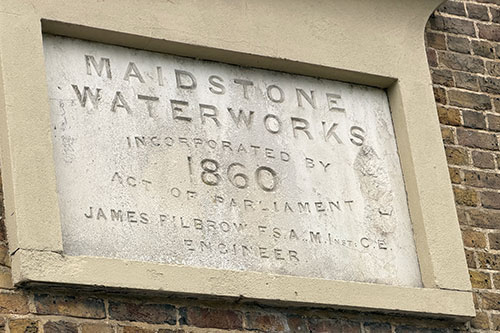
Chord Electronics neuer Firmensitz
Tests außergewöhnlicher Komponenten werfen ihren Schatten voraus: Im Umfeld der Beschäftigung mit Chord Electronics' DAVE besuchte mich sein Entwickler in Gröbenzell, ebenso zur Vorstellung des M-Scalers. Die Technik des Maßstäbe setzenden BLU MKII erläuterte mir Rob Watts in Maidstone. Ebendort fand auch das Interview zum Thema Quartet statt. Die Frage, ob wir uns lieber in Gröbenzell oder in Maidstone treffen würden, entschied Mika Dauphin, der Inhaber des deutschen Chord-Vertriebs, recht pragmatisch: Da die englischen Verstärker-…24.07.2026 -
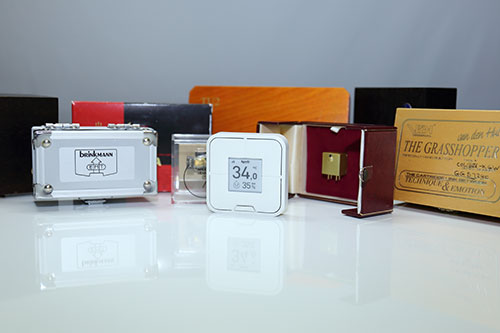
Temperatur und Tonabnehmer
Vor rund 20 Jahren, als noch von Jahrhundertsommern statt von Hitzedomen die Rede war, trieb mich erstmals die Frage um, ob es Tonabnehmersystemen schade, wenn sie oberhalb der üblichen Raumtemperatur benutzt werden. Damals gab Benz-Eigner Albert Lukaschek bereitwillig Auskunft, heuer befragte ich Ortofons ehemaligen Chefentwickler Leif Johannsen. Heute kann man nur neidvoll an die Sommer vergangener Jahrzehnte zurückdenken, als es schon bemerkenswert war, wenn das Thermometer mehrere Tage lang mal mehr als 25 Grad anzeigte.…10.07.2026 


-

Wiener (High End) Impressionen
Der Umzug der wohl wichtigsten Hifi-Messe weltweit stellt nicht nur die Veranstalter, Aussteller – und Besucher? – vor neue Herausforderungen. Für uns war die Show in München in Heimspiel: Im letzten Jahr kamen fünf der sieben hifistatement.net-Teilnehmer aus München oder dem nahen Umfeld, auch wenn nicht alle Bild- oder Textbeiträge lieferten. Auch in diesem Jahr wird die Hauptlast die Berichterstattung wieder auf den Schultern von Finn Corvin Gallowsky liegen. Er hat die Aufgabe im letzten…04.06.2026 -
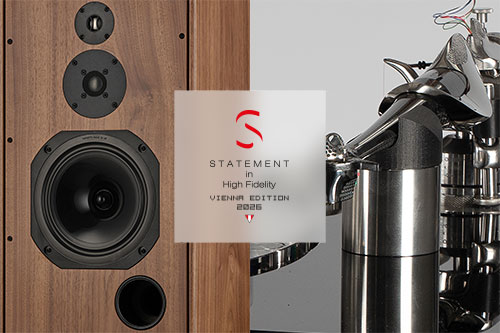
Statements in High Fidelity | Vienna Edition 2026
My colleague Wojciech Pacuła’s magazine, highfidelity.pl, and hifistatement.net have traditionally recognised one component at each of the trade fairs in Munich and Warsaw that had impressed us over the previous six months. As High End is taking place in Vienna this year, we will henceforth be referring to the Vienna and Warsaw Edition of the Awards. Apart from the name change, there are no surprises this time. My colleague indulged his fondness for British loudspeakers…25.05.2026 -
Statements in High Fidelity | Vienna Edition 2026
Das Magazin meines Kollegen Wojciech Pacuła, highfidelity.pl, und hifistatement.net zeichneten zu den Messen in München und in Warschau traditionell jeweils eine Komponente aus, die uns im vorausgegangenen Halbjahr begeisterte. Da die High End heuer in Wien stattfindet, werden wir ab sofort von der Vienna und der Warsaw Edition der Awards sprechen. Außer der Namensänderung gibt es diesmal keine Überraschungen. Der Kollege frönte seiner Vorliebe für englische Lautsprecher aus der BBC-Tradition, kürte die Harbeth mit der…25.05.2026
© 2026 | HIFISTATEMENT | netmagazine | Alle Rechte vorbehalten | Impressum | Datenschutz


Einige Hifistatement-Autoren benutzen
Qobuz Sublime+ Abonnements.

Einige Hifistatement-Autoren besitzen
eine roon Mitgliedschaft.

Einige Hifistatement-Autoren besitzen
die JPLAY hi-fi app.

Einige Hifistatement-Autoren besitzen
den Audirvana Plus 3 Music Player.