


 |
|Interview with Monsieur Delétraz aka darTZeel – part 1

DS: You said that you have a patent for your amplifier. What did you get it for?
S2: It's for the electronic circuit in the audio part. You can even see the patent on the internet. My circuit is so simple that when I built the prototype, my mother told me: „You know, it's fantastic, but you have to patent it.“. “Why Mom?” “Because you cannot use it, if somebody copies you.” I asked a lawyer how I should proceed. He researched all over the world to see if anyone had built a similar circuit and found out: No. So I was able to apply for the patent. My work was based on the conviction that negative feedback is not good for the sound. At that time I read about Matti Otala. He fought against global negative feedback and made three designs with very low negative feedback. It was one design for Harman Kardon, one for B&O and one for Revox. Matti Otala designed the big power amplifier with the VU metres, the A740. I love it. It doesn't have global negative feedback, but it has a lot of local feedback loops that respond faster. But for me it still had too many stages, too many components.

I contacted Matti Otala and we had some correspondence for some time. And that was nice. He was quite old and retired at the time. And we exchanged ideas and I told him what I wanted to do. He answered: “Nice. Great. Go ahead.” I didn't want to steal his work. So I was going to do my own research and for me it was obvious that the fewer components in the signal path the better. So I tried removing all the stages from my Revox amplifier until it stopped working because it was nothing left in it. So I tried with two stages, three stages, four stages et cetera. At the end my first 108 had three stages: Only one input stage, one gain stage and one output stage and they had no connection via negative feedback. The input stage is independent. There is no feedback on it. The middle stage has a small feedback for the setting of the gain, but is split into one small feedback for the positive leg and the for the negative leg. So it is separated. That helps the amplifier to be more responsive with depending on the voltage if it is not the same. The output stage is a bipolar transistor follower with a fully open loop. Many people and even competitors say their amplifiers have no feedback but it's not exactly like this. If you look at the schematics there is always some feedback at some point. The only schematics I know of where the feedback is extremely low, is my design. The problem was also how to achieve a high bandwidth. Because if you don't have any feedback, the bandwidth is limited to achieve stability.

In the 90s, it was nice: I was lucky at the time because Motorola had just launched a new kind of transistors, the bipolar transistor specially dedicated for audio, and I think I was one of the first to use them bach then. Today everyone uses them. In all amplifiers you find the same transistors, the MJL3…, whatever Motorola called them, they changed their name to Semi and now it's not Motorola anymore. But they still make them, Sanken makes them, Toshiba makes them and all the manufacturers make them under their name. But the original one was made by Motorola in 1995. And it's funny that every amplifier manufacturer used the same transistor. I'm glad I was one of the first to use them back then. These transistors were nice because they keep the gain even if you put a lot of current into them. The more current you take out of a transistor, the lower the gain usually becomes. With these transistors, you can keep the gain constant no matter how high the output current is. So if you don't draw too much current, you can increase the bandwidth. I do that and then my amplifier goes up to 1 megahertz with -6 decibels without negative feedback.


-
Chord Electronics neuer Firmensitz
Tests außergewöhnlicher Komponenten werfen ihren Schatten voraus: Im Umfeld der Beschäftigung mit Chord Electronics' DAVE besuchte mich sein Entwickler in Gröbenzell, ebenso zur Vorstellung des M-Scalers. Die Technik des Maßstäbe setzenden BLU MKII erläuterte mir Rob Watts in Maidstone. Ebendort fand auch das Interview zum Thema Quartet statt. Die Frage, ob wir uns lieber in Gröbenzell oder in Maidstone treffen würden, entschied Mika Dauphin, der Inhaber des deutschen Chord-Vertriebs, recht pragmatisch: Da die englischen Verstärker-…24.07.2026 -
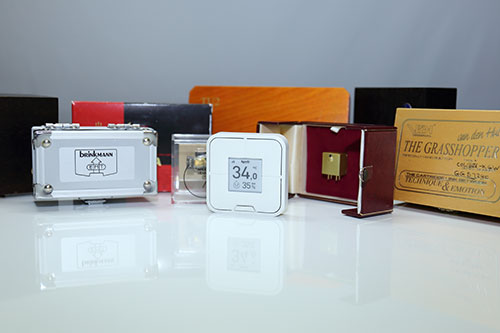
Temperatur und Tonabnehmer
Vor rund 20 Jahren, als noch von Jahrhundertsommern statt von Hitzedomen die Rede war, trieb mich erstmals die Frage um, ob es Tonabnehmersystemen schade, wenn sie oberhalb der üblichen Raumtemperatur benutzt werden. Damals gab Benz-Eigner Albert Lukaschek bereitwillig Auskunft, heuer befragte ich Ortofons ehemaligen Chefentwickler Leif Johannsen. Heute kann man nur neidvoll an die Sommer vergangener Jahrzehnte zurückdenken, als es schon bemerkenswert war, wenn das Thermometer mehrere Tage lang mal mehr als 25 Grad anzeigte.…10.07.2026 -

Wiener (High End) Impressionen
Der Umzug der wohl wichtigsten Hifi-Messe weltweit stellt nicht nur die Veranstalter, Aussteller – und Besucher? – vor neue Herausforderungen. Für uns war die Show in München in Heimspiel: Im letzten Jahr kamen fünf der sieben hifistatement.net-Teilnehmer aus München oder dem nahen Umfeld, auch wenn nicht alle Bild- oder Textbeiträge lieferten. Auch in diesem Jahr wird die Hauptlast die Berichterstattung wieder auf den Schultern von Finn Corvin Gallowsky liegen. Er hat die Aufgabe im letzten…04.06.2026 


-
Statements in High Fidelity | Vienna Edition 2026
My colleague Wojciech Pacuła’s magazine, highfidelity.pl, and hifistatement.net have traditionally recognised one component at each of the trade fairs in Munich and Warsaw that had impressed us over the previous six months. As High End is taking place in Vienna this year, we will henceforth be referring to the Vienna and Warsaw Edition of the Awards. Apart from the name change, there are no surprises this time. My colleague indulged his fondness for British loudspeakers…25.05.2026 -
Statements in High Fidelity | Vienna Edition 2026
Das Magazin meines Kollegen Wojciech Pacuła, highfidelity.pl, und hifistatement.net zeichneten zu den Messen in München und in Warschau traditionell jeweils eine Komponente aus, die uns im vorausgegangenen Halbjahr begeisterte. Da die High End heuer in Wien stattfindet, werden wir ab sofort von der Vienna und der Warsaw Edition der Awards sprechen. Außer der Namensänderung gibt es diesmal keine Überraschungen. Der Kollege frönte seiner Vorliebe für englische Lautsprecher aus der BBC-Tradition, kürte die Harbeth mit der…25.05.2026 -
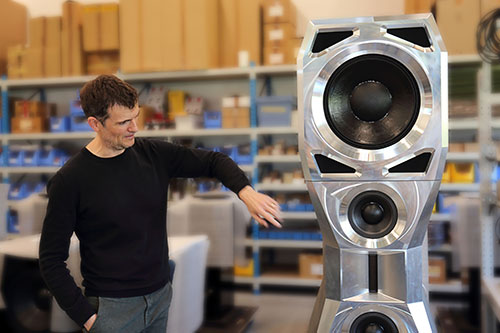
High End ohne Limit – ein Besuch bei Göbel High End
Vor einem Jahr erlebte ich die Göbel Divin Comtesse bei Dirk Sommer – das kleinste Modell der Divin-Serie. Schon sie überzeugte mich klanglich. Und doch schwärmte Dirk Sommer bei dieser Gelegenheit über die geradezu unglaubliche Wiedergabe der großen Systeme, die er im Showroom von Oliver Göbel in Landshut hören durfte. Nun hat Göbel High End die Premiere seines neuen Ultra-High-End-Standlautsprechers Divin Monarque auf der kommenden High End im Juni in Wien angekündigt und hifistatement.net vorab…01.05.2026
© 2026 | HIFISTATEMENT | netmagazine | Alle Rechte vorbehalten | Impressum | Datenschutz


Einige Hifistatement-Autoren benutzen
Qobuz Sublime+ Abonnements.

Einige Hifistatement-Autoren besitzen
eine roon Mitgliedschaft.

Einige Hifistatement-Autoren besitzen
die JPLAY hi-fi app.

Einige Hifistatement-Autoren besitzen
den Audirvana Plus 3 Music Player.