


 |
|
For a standard device, the REF10 SE120 has undoubtedly outstanding measurement values. MUTEC is particularly proud of the fact that the development of the REF10 has already created a basis, from the power supply to the mainboard, which is so good that the brilliant values of the new oscillator used in the REF10 SE120 can actually be routed to the outputs without any loses in performance. Convincing technical justification or not – for me the question remains, whether the further improvement of the REF10 SE120 compared to the REF10 leads to an audible gain in sound quality. I am set on a hard head-to-head race between the two clocks, in which I will work out the finest differences between the two clock generators by switching back and forth several times between them.

Accordingly, I carefully prepare my listening test. As always, my tried and tested music server with XEON processor and Windows Server 2019 in Core Mode, tuned with Audiophile Optimizer, is used as the audio source. JPLAY Femto, MinimServer, JRiver26 and Roon Core are installed on the server as music management software. My two cascaded MUTEC MC3+USB are interconnected on the USB path to my PS Audio DirectStream DAC and are to draw their clock from either the REF10 or the REF10 SE120.
I prescribe the two REF10 clocks and the two MUTEC MC3+USB a warm-up period of several days. The clock generators are placed upside down on the shelf, that means with their rears facing forward, in order to be able to switch the cables between the devices as quickly as possible. MUTEC kindly supplied two matching, identical cables with 75Ω specification out of their own production. The right cable with the correct termination impedance is eminently important at a clock rate of 10 Megahertz. Mismatches can ruin everything. I advise against exotic cables without exact specifications at this critical point. All clock outputs that are not needed are switched off with the rotary knob on the front panel to reduce unnecessary interferences as far as possible. On both of my MUTEC MC3+USB the operating mode "externally referenced re-clocking mode" is set. Therefore, the two green LEDs "EXTERN" and "RE-CLK" light up under "Mode" and under "Status” the two upper blue LEDs "MAIN REF" and "RE-CLK REF". To be absolutely sure, I first play some music and remove the clock cables for test purposes. The two MUTEC MC3+USB don't make a sound anymore and I am sure that the clock is really set by the REF10.


-
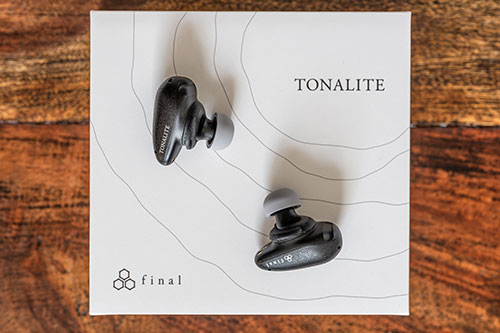
Final Tonalite
Finals Tonalite ist nicht nur ein neuer In-Ear, sondern macht gleichzeitig Finals Timbreanpassung jedem Nutzer mittels einer App zugänglich. Seit der noch etwas kryptischen Ankündigung dieser Technologie auf der High End 2022 habe ich Ihnen über den Entwicklungsprozess berichtet. Das fertige Produkt halte ich persönlich für einen Meilenstein. Tonalite ist eine grundlegende Neuentwicklung mit neuem Formfaktor und neuer Technik. Die Tonalite In-Ears verfügen über eine eher ovale Form, in der die gesamte Elektronik untergebracht ist.…25.09.2026 -
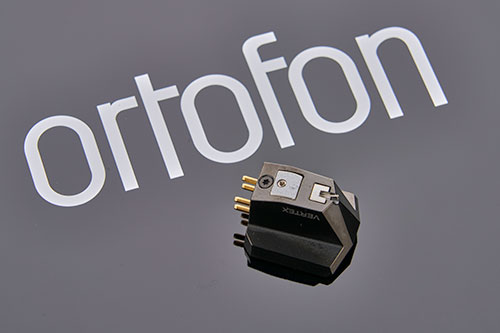
Ortofon MC Vertex
Die bisherigen Topmodelle von Ortofon, das Anna, das Anna Diamond und das Diamond, ähnelten einander auch optisch stark. Das Vertex macht schon durch sein Erscheinungsbild klar, dass es anders ist. Es ist der erste Tonabnehmer mit einem Diamanten mit Vertex-Schliff. Soweit mir bekannt, ist das der erste neue Nadelschliff seit rund 40 Jahren. Aber das ist nicht die einzige Veränderung gegenüber dem MC Diamond: Der Generator des Vertex besitzt einen deutlich höheren Innenwiderstand, die Nadelnachgiebigkeit…15.09.2026 -
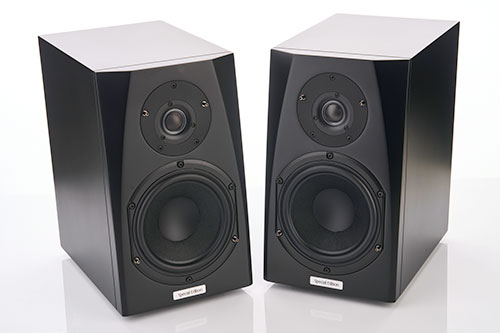
Phonar Veritas M4.2 SE
Es hat mir bislang stets Vergnügen bereitet, mich mit Phonar Lautsprechern zu beschäftigen. Nach einem Test kaufte ich die Veritas 9.2 SE und genieße seitdem ihre Musikalität. Phonar überzeugte immer wieder mit einem außergewöhnlich attraktiven Preis-Klang-Verhältnis. Bestätigt die neue, kompakte Phonar Veritas M4.2 SE diese Erfahrungen? Mein eindrucksvollstes Phonar-Erlebnis hatte ich vor zwei Jahren mit der Standbox Veritas p4.2 Next, die aktuell für einen Paarpreis von 2400 Euro auf der Phonar-Website zu sehen ist. Genau…08.09.2026 


-
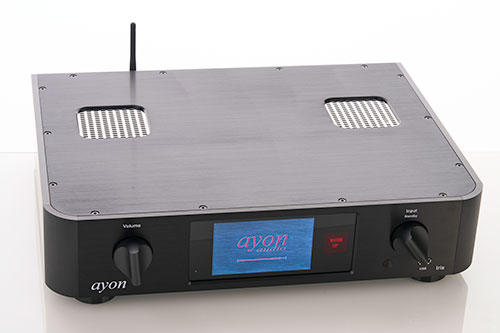
Ayon Iris Signature Streamer
Auf der High End Vienna haben Dirk Sommer und ich den Ayon Iris erstmals entdeckt – nun steht der außergewöhnliche Streaming-Player bei uns bereits zum Test. So frisch ist der Iris, dass selbst die Roon-Zertifizierung zum Testzeitpunkt noch läuft. Brandneu, doch der Iris kommt keineswegs aus dem Nichts: Wer die Entwicklung der digitalen Ayon-Komponenten verfolgt hat, erkennt eine kontinuierliche Beschäftigung mit dem Thema Streaming. Auch wir konnten diesen Weg begleiten – nach dem S3 und…01.09.2026 -
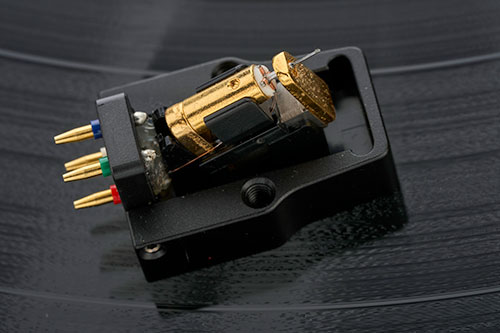
Sumiko Starling
Mein letzter Test eines Tonabnehmersystems befasste sich mit dem Sumiko Oriole. Nun drehen sich für diesen Test meine Schallplatten unter dem Sumiko Starling, dem teuersten System aus der Sumiko Referenz Serie. Nachdem ich überaus positiv überrascht vom Test des Oriole war und dies Peter Laitenberger vom deutschen ATR Vertrieb mitteilte, empfahl mir dieser mir doch einmal das Sumiko Starling anzuhören. Gesagt, getan und bereits wenige Tage später kam das kleine Päckchen mit dem Starling zu…28.08.2026 -
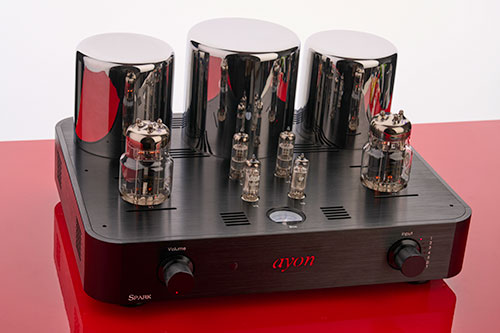
Ayon Spark V
Der Röhrenvollverstärker Spark ist mittlerweile seit über 20 Jahren ein fester Bestandteil des Produktportfolios von Ayon. Preislich eher im Einstiegssegment der Österreicher und nominell unterhalb der Evolution-Serie angesiedelt, hat dieses Gerät aufgrund der eingesetzten russischen Triode 6C33 das Potenzial zum Hidden Champion. Spätestens seit meinem Test des Boliden Ayon Crossfire Evo maße ich mir an, ein Kenner der Marke Ayon zu sein, zumal mir diverse andere Geräte der Marke im Laufe der Jahre zu Gehör…25.08.2026
© 2026 | HIFISTATEMENT | netmagazine | Alle Rechte vorbehalten | Impressum | Datenschutz


Einige Hifistatement-Autoren benutzen
Qobuz Sublime+ Abonnements.

Einige Hifistatement-Autoren besitzen
eine roon Mitgliedschaft.

Einige Hifistatement-Autoren besitzen
die JPLAY hi-fi app.

Einige Hifistatement-Autoren besitzen
den Audirvana Plus 3 Music Player.