


 |
|Even though I have almost used the beginning of the first movement of Mahler's 3rd symphony under Mariss Jansons too often for tests I still enjoy listening to it - probably also because of Christoph Stickel's mastering: In just a few minutes it makes clear what a hifi set-up can achieve in terms of dynamics, spatial representation, fine resolution and bass reproduction. After the entry of the brass section and the powerful timpani that follows shortly after, a certain uneasiness is introduced into the subsequent calmer passage. After about a minute, during the single, quite restrained timpani beats far in the depths of the room, the further events unfold against a deep black background. Thanks to the darTZeel, the source of the uneasiness can suddenly be made out: That are extremely light strokes on the deep drums, with a volume just above the threshold of perception. This is where the letters in the model designation of the power amplifier have their justification: never heard before!

In Patrice Herals' “Improvisation” on Le Concert Des Parfums, the Einstein pleased with a lot of low-frequency energy and a very deep space. However, the comparison with the darTZeel made it clear that the latter develops a little more force in the lowest octave and is a bit more accurate in the frequency range directly above. The imaginary stage extends at least as far in depth, but this is a little obscured by the fact that it also extends quite a way to the side. At the very quiet beginning of the fourth movement of the Symphonie Fantastique, conducted by Verujan Kojian, the NHB-108 demonstrates its enormous abilities in terms of resolution and fine detail. Nevertheless, it does not act as an analytical, audiophile magnifying glass: the reproduction has not the slightest hint of coldness, but instead a never intrusive, extremely pleasant sound. You could almost believe that there was a tube somewhere in the signal path. Even without the 50-ohm connection and the preamplifier from the same manufacturer, the darTZeel has impressed me so much that I already know how difficult it will be to part with it again.

After the darTZeel preamplifier took the place of the WestminsterLab Quest – the Audioquest Dragon XLR still connects the NHB-18NS to the NHB-108 – and I listened to a few pieces, I was faced with a problem: to describe the sonic improvement, it is simply not enough to refer to a hint more depth of stage or a detail that has not previously crossed the threshold of perception – even if the grand piano's interaction with the recording space on the title track of Carla Bley's Live Goes On really comes across as more fascinating than ever. Thanks to the darTZeels, an exciting relationship develops between the sparse notes and chords of the intro; the attack and decay of the individual notes suddenly take on a meaning that was previously not recognisable. But I only worry about that when I try to describe what makes the reproduction of the very familiar song by NHB-18NS and NHB108 so special. What is much more important is that the music can now be experienced even more intensely and is simply more fun. Even if the description of the amplifiers' acoustic merits seems a little contrived, the reproduction of the TZeels is certainly not: despite their high resolution and accuracy, they are real fun machines!


-
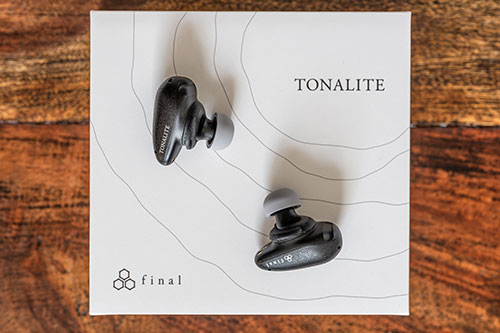
Final Tonalite
Finals Tonalite ist nicht nur ein neuer In-Ear, sondern macht gleichzeitig Finals Timbreanpassung jedem Nutzer mittels einer App zugänglich. Seit der noch etwas kryptischen Ankündigung dieser Technologie auf der High End 2022 habe ich Ihnen über den Entwicklungsprozess berichtet. Das fertige Produkt halte ich persönlich für einen Meilenstein. Tonalite ist eine grundlegende Neuentwicklung mit neuem Formfaktor und neuer Technik. Die Tonalite In-Ears verfügen über eine eher ovale Form, in der die gesamte Elektronik untergebracht ist.…25.09.2026 -
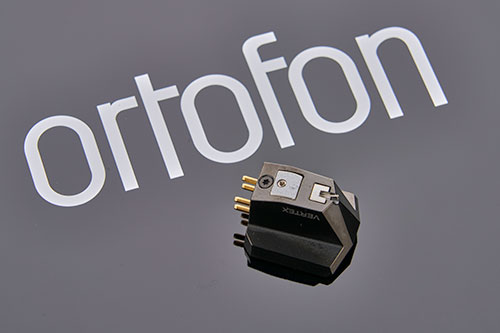
Ortofon MC Vertex
Die bisherigen Topmodelle von Ortofon, das Anna, das Anna Diamond und das Diamond, ähnelten einander auch optisch stark. Das Vertex macht schon durch sein Erscheinungsbild klar, dass es anders ist. Es ist der erste Tonabnehmer mit einem Diamanten mit Vertex-Schliff. Soweit mir bekannt, ist das der erste neue Nadelschliff seit rund 40 Jahren. Aber das ist nicht die einzige Veränderung gegenüber dem MC Diamond: Der Generator des Vertex besitzt einen deutlich höheren Innenwiderstand, die Nadelnachgiebigkeit…15.09.2026 -
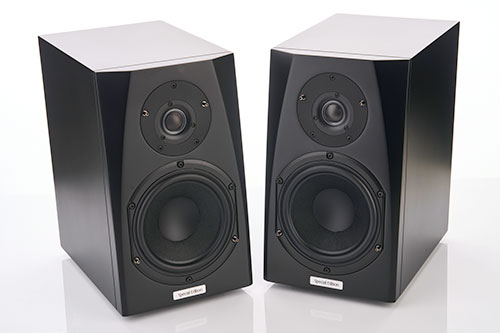
Phonar Veritas M4.2 SE
Es hat mir bislang stets Vergnügen bereitet, mich mit Phonar Lautsprechern zu beschäftigen. Nach einem Test kaufte ich die Veritas 9.2 SE und genieße seitdem ihre Musikalität. Phonar überzeugte immer wieder mit einem außergewöhnlich attraktiven Preis-Klang-Verhältnis. Bestätigt die neue, kompakte Phonar Veritas M4.2 SE diese Erfahrungen? Mein eindrucksvollstes Phonar-Erlebnis hatte ich vor zwei Jahren mit der Standbox Veritas p4.2 Next, die aktuell für einen Paarpreis von 2400 Euro auf der Phonar-Website zu sehen ist. Genau…08.09.2026 


-
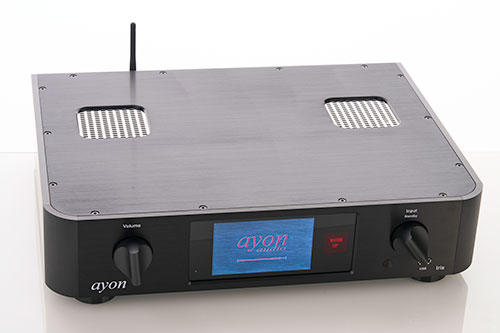
Ayon Iris Signature Streamer
Auf der High End Vienna haben Dirk Sommer und ich den Ayon Iris erstmals entdeckt – nun steht der außergewöhnliche Streaming-Player bei uns bereits zum Test. So frisch ist der Iris, dass selbst die Roon-Zertifizierung zum Testzeitpunkt noch läuft. Brandneu, doch der Iris kommt keineswegs aus dem Nichts: Wer die Entwicklung der digitalen Ayon-Komponenten verfolgt hat, erkennt eine kontinuierliche Beschäftigung mit dem Thema Streaming. Auch wir konnten diesen Weg begleiten – nach dem S3 und…01.09.2026 -
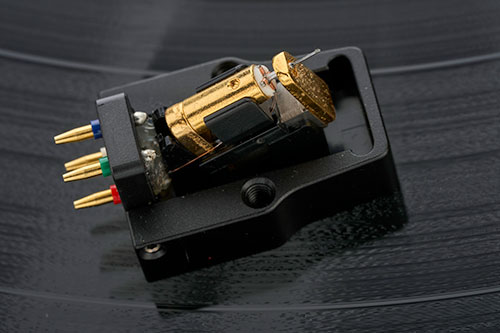
Sumiko Starling
Mein letzter Test eines Tonabnehmersystems befasste sich mit dem Sumiko Oriole. Nun drehen sich für diesen Test meine Schallplatten unter dem Sumiko Starling, dem teuersten System aus der Sumiko Referenz Serie. Nachdem ich überaus positiv überrascht vom Test des Oriole war und dies Peter Laitenberger vom deutschen ATR Vertrieb mitteilte, empfahl mir dieser mir doch einmal das Sumiko Starling anzuhören. Gesagt, getan und bereits wenige Tage später kam das kleine Päckchen mit dem Starling zu…28.08.2026 -
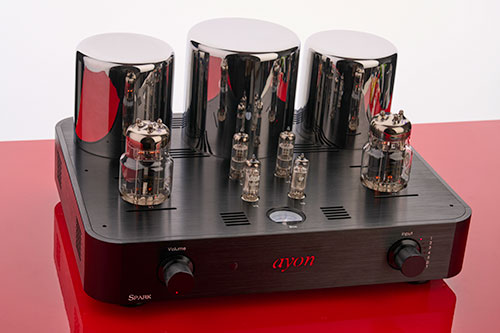
Ayon Spark V
Der Röhrenvollverstärker Spark ist mittlerweile seit über 20 Jahren ein fester Bestandteil des Produktportfolios von Ayon. Preislich eher im Einstiegssegment der Österreicher und nominell unterhalb der Evolution-Serie angesiedelt, hat dieses Gerät aufgrund der eingesetzten russischen Triode 6C33 das Potenzial zum Hidden Champion. Spätestens seit meinem Test des Boliden Ayon Crossfire Evo maße ich mir an, ein Kenner der Marke Ayon zu sein, zumal mir diverse andere Geräte der Marke im Laufe der Jahre zu Gehör…25.08.2026
© 2026 | HIFISTATEMENT | netmagazine | Alle Rechte vorbehalten | Impressum | Datenschutz


Einige Hifistatement-Autoren benutzen
Qobuz Sublime+ Abonnements.

Einige Hifistatement-Autoren besitzen
eine roon Mitgliedschaft.

Einige Hifistatement-Autoren besitzen
die JPLAY hi-fi app.

Einige Hifistatement-Autoren besitzen
den Audirvana Plus 3 Music Player.