


 |
|Ideon Audio 3R USB Renaissance mk2 Black Star, 3R Master Time Black Star, Absolute Time and Absolute Time Signature
I collected the following sound impressions with the "Intermezzo from Goyescas" by Enrique Granados with the New Philharmonia Orchestra under the direction of Rafael Frübeck des Burgos (Decca Legacy Volume One - FIM UHD). In this work, Granados uses complex harmonic structures and refined melodic arcs that capture the feeling of passion and melancholy. The present recording is excellent in every respect and is perfectly suited for the demanding re-clocker comparison: large orchestral instrumentation staggered low, expressive, massive string entries at the beginning and in the middle, striking winds, filigree piano and fortissimo passages in alternation. When the notebook is connected directly to my DAC, it sounds surprisingly fresh and lively, but also somehow "digital". The massive string entries are just too hard and too thin for me and the brass are really exhausting in their entrances. The spatial representation suggests great depth, but remains but remains unresolved and diffuse.

With the entry-level 3R USB Renaissance model, there is a more significant improvement in sound in all areas that do not require much effort to hear. How big the improvement really is becomes clear when I remove the box from the signal path again. With the 3R USB Renaissance, the expressive string entries gain in radiance on the one hand and lose significantly in hardness on the other. Without 3R USB Renaissance, these passages seem very grainy in direct comparison. At the same time, the 3R Renaissance provides a better insight into the details, subtleties and deeper structures of the piece. The winds that introduce the climax are better focused and no longer simply sound undefined from the depths of the room. This also benefits a much clearer representation of the room as a whole. A good tuning measure is to replace the simple plug-in power supply – you know my "allergy" to this type of power supply – with a good linear power supply. This makes the playback in all areas, but above all in inner peace. But as far as the investment in a power supply is concerned, please don’t exaggerate; the level of the 3R Master Time cannot be reached by an external power supply, no matter how good.

The 3R Master Time model is yet another big step towards better sound. The wind instruments just mentioned are now unquestionably more clearly defined, both in size and in terms of their placement in the orchestra. It becomes more clearly audible that at this point the horns first enter at the back left and then the trumpets – placed slightly to the right outside the centre – take over. In this way, the soundstage gains emphatically, not so much in absolute depth as in clarity and conciseness. A further sound improvement results when I switch off the 5-volt power line after booting up all devices. Obviously, the PS Audio DirectStream DAC reacts quite sensitively here. I am surprised at the level of sound that can be achieved with my simple notebook solution. And it slowly dawns on me what CEO George Ligerakis and chief developer Vasilis Tounas wanted to tell us during their visit to our editorial office, when they said somewhat provocatively that only a really expensive and elaborate music server would be worthwhile in terms of sound. Otherwise, it is better to use a simple computer and invest the money saved in USB re-clocking – from Ideon, of course. In the next step, I raise the bar much higher and switch to my audio PC, which is equipped with a SOtM USB card that draws its clock from a SOtM 10 MHz master clock and has its own power supply separate from the PC. This is now a completely different starting point than if the source is a PC or notebook with a switching power supply and USB ports integrated into the motherboard.


-
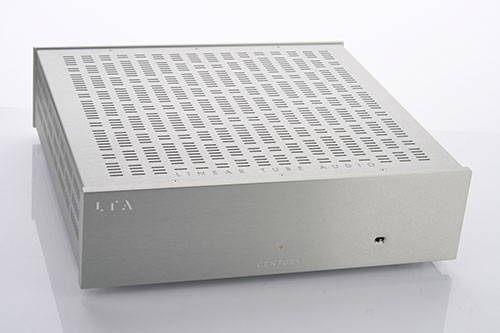
Linear Tube Audio Century
Century heißen die Röhren-Mono-Endverstärker von Linear Tube Audio, die ohne Ausgangsübertrager auskommen und sich dennoch grundlegend von anderen OTL-Konzepten unterscheiden. Wir haben uns intensiv damit beschäftigt, was die patentierte ZOTL-Technologie des Entwicklers so besonders macht und wie sie sich klanglich auswirkt. Für diesen Test haben Dirk Sommer und ich uns eine Arbeitsteilung vorgenommen, bei der ich (Carsten Bussler) mich auf die Technik der Century-Monos sowie die Hintergründe zu Linear Tube Audio und die Zusammenarbeit mit…29.09.2026 -
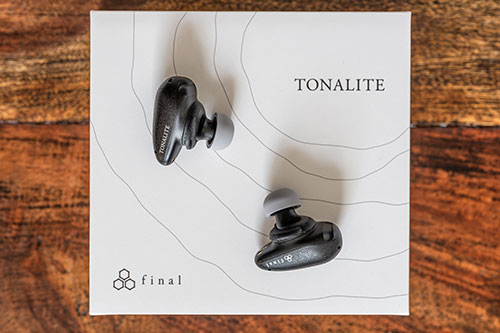
Final Tonalite
Finals Tonalite ist nicht nur ein neuer In-Ear, sondern macht gleichzeitig Finals Timbreanpassung jedem Nutzer mittels einer App zugänglich. Seit der noch etwas kryptischen Ankündigung dieser Technologie auf der High End 2022 habe ich Ihnen über den Entwicklungsprozess berichtet. Das fertige Produkt halte ich persönlich für einen Meilenstein. Tonalite ist eine grundlegende Neuentwicklung mit neuem Formfaktor und neuer Technik. Die Tonalite In-Ears verfügen über eine eher ovale Form, in der die gesamte Elektronik untergebracht ist.…25.09.2026 -
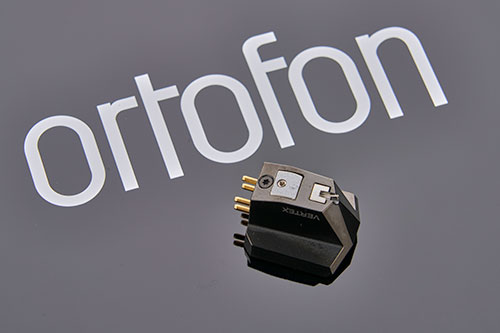
Ortofon MC Vertex
Die bisherigen Topmodelle von Ortofon, das Anna, das Anna Diamond und das Diamond, ähnelten einander auch optisch stark. Das Vertex macht schon durch sein Erscheinungsbild klar, dass es anders ist. Es ist der erste Tonabnehmer mit einem Diamanten mit Vertex-Schliff. Soweit mir bekannt, ist das der erste neue Nadelschliff seit rund 40 Jahren. Aber das ist nicht die einzige Veränderung gegenüber dem MC Diamond: Der Generator des Vertex besitzt einen deutlich höheren Innenwiderstand, die Nadelnachgiebigkeit…15.09.2026 


-
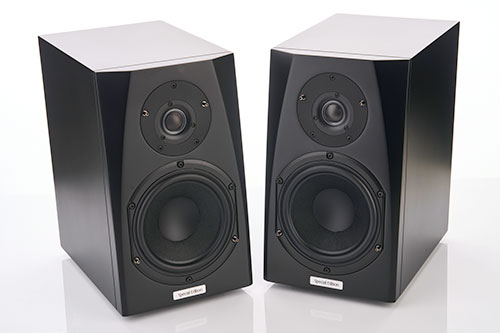
Phonar Veritas M4.2 SE
Es hat mir bislang stets Vergnügen bereitet, mich mit Phonar Lautsprechern zu beschäftigen. Nach einem Test kaufte ich die Veritas 9.2 SE und genieße seitdem ihre Musikalität. Phonar überzeugte immer wieder mit einem außergewöhnlich attraktiven Preis-Klang-Verhältnis. Bestätigt die neue, kompakte Phonar Veritas M4.2 SE diese Erfahrungen? Mein eindrucksvollstes Phonar-Erlebnis hatte ich vor zwei Jahren mit der Standbox Veritas p4.2 Next, die aktuell für einen Paarpreis von 2400 Euro auf der Phonar-Website zu sehen ist. Genau…08.09.2026 -
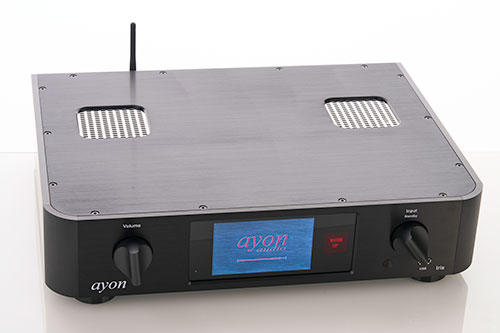
Ayon Iris Signature Streamer
Auf der High End Vienna haben Dirk Sommer und ich den Ayon Iris erstmals entdeckt – nun steht der außergewöhnliche Streaming-Player bei uns bereits zum Test. So frisch ist der Iris, dass selbst die Roon-Zertifizierung zum Testzeitpunkt noch läuft. Brandneu, doch der Iris kommt keineswegs aus dem Nichts: Wer die Entwicklung der digitalen Ayon-Komponenten verfolgt hat, erkennt eine kontinuierliche Beschäftigung mit dem Thema Streaming. Auch wir konnten diesen Weg begleiten – nach dem S3 und…01.09.2026 -
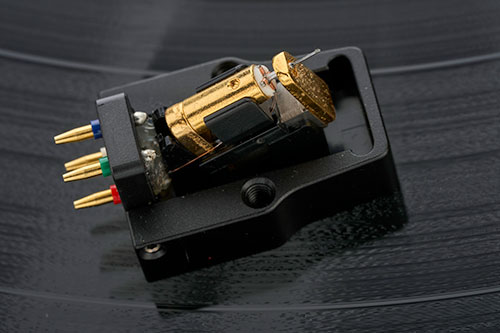
Sumiko Starling
Mein letzter Test eines Tonabnehmersystems befasste sich mit dem Sumiko Oriole. Nun drehen sich für diesen Test meine Schallplatten unter dem Sumiko Starling, dem teuersten System aus der Sumiko Referenz Serie. Nachdem ich überaus positiv überrascht vom Test des Oriole war und dies Peter Laitenberger vom deutschen ATR Vertrieb mitteilte, empfahl mir dieser mir doch einmal das Sumiko Starling anzuhören. Gesagt, getan und bereits wenige Tage später kam das kleine Päckchen mit dem Starling zu…28.08.2026
© 2026 | HIFISTATEMENT | netmagazine | Alle Rechte vorbehalten | Impressum | Datenschutz


Einige Hifistatement-Autoren benutzen
Qobuz Sublime+ Abonnements.

Einige Hifistatement-Autoren besitzen
eine roon Mitgliedschaft.

Einige Hifistatement-Autoren besitzen
die JPLAY hi-fi app.

Einige Hifistatement-Autoren besitzen
den Audirvana Plus 3 Music Player.