


 |
|In any case, the frequency response has clearly been smoothed out to allow for deep linear extension, though at the cost of a rather modest sensitivity of 87 decibels per watt per meter. The flip side of the coin is a high demand on the amplifier’s power, stability, and quality. Storgaard & Vestskov recommends at least 30 watts, but for sufficient headroom depending on room size, I would suggest at least 50 to 80 watts, and a high damping factor certainly doesn’t hurt either. This, of course, ruled out all of my tube amplifiers from the start. For this review I borrowed a refurbished Einstein ‘The Amp’ MkII solid-state integrated amplifier from a friend — an amp I once owned and loved, and one I know inside out. As one would expect for a loudspeaker of this size, the design is a rear-vented bass reflex. Fortunately, it is not a restless air pump, meaning placement close to the wall is possible without booming effects. In my case, a distance of about half a meter from the rear wall proved optimal. The connection terminal is equipped with WBT connectors, and the hybrid internal wiring, silver-plated copper conductors, comes from Van den Hul.

I don’t think I’ve ever described my listening room before, probably because I rarely review loudspeakers. But with Frida, I felt it was necessary. She had to contend with my somewhat over 50-square-meter, L-shaped room, where I initially placed the loudspeakers about a meter out from the roughly four-meter-wide rear wall at the ‘living room end.’ The spacing between the two Frida twins was about two and a half meters center-to-center, with a slight toe-in toward my listening position three meters away. My house is timber-frame construction: the inner walls are OSB panels covered with textured wallpaper, the floor is parquet, and the continuous wooden ceiling features numerous beams that act like diffusers. On the floor, a few faux sheepskins are scattered about for our dogs to play on. So even without any special acoustic treatment, my averagely furnished room with its manageable glass and window areas (fitted with light curtains and pleated blinds) and a few larger houseplants sounds damn good. There are no pronounced room modes, nor are there Acoustic System resonators, just for the record. Just lived-in room acoustics. In this setup, Frida already sounded very open and free from any compression effects, which encouraged me to move the speakers gradually closer to the rear wall to gain a bit more low end weight. At about half a meter distance, the balance was ideal. Overall, this Danish loudspeaker proved to be refreshingly uncritical in terms of placement.

One striking characteristic of this loudspeaker seemed to be its constant focus on the music itself. This became apparent to me while listening to Joy Division’s “New Dawn Fades” (Unknown Pleasures, Factory, 1979). In the late 1970s, it was common practice for bands to record live in the studio. Producer Martin Hannett, however, chose to record drums and vocals separately in order to achieve the cleanest, most isolated sound possible. He even went so far as to dismantle the drum kit, recording each piece individually for later processing. The result was the now-famous ‘Martin Hannett reverb,’ with its rehearsal-room or bathroom-like ambiance. On this track, the effect is especially pronounced, and the Storgaard & Vestskov Frida rendered it with an unmistakable presence in the foreground. The sound of these loudspeakers was marked by crystalline clarity without ever coming across as analytical or sterile. Rather, it seemed as if no sonic artifacts whatsoever were standing in the way, provided the recording allowed it. Fascinating!


-
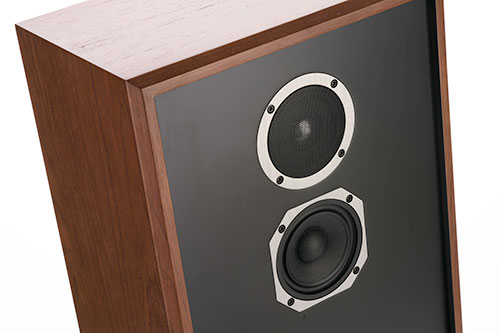
KLH Audio Model Four
Endlich steht mal etwas ganz anderes in meinem Hörraum. Der Lautsprecher des traditionsreichen amerikanischen Herstellers KLH entspricht einem Design von vor mehr als 50 Jahren, wie man es auch heutzutage bei Edelmarken wie Harbeth oder Audio Note findet. Bislang hatte ich nicht das Vergnügen, einen solchen Lautsprecher im Hörraum zu erleben. Neben dem Design mit breiter Schallwand und geringer Bautiefe macht der Paarpreis von knapp 2000 Euro die KLH Model Four hochgradig interessant. Auf zum…19.10.2026 -
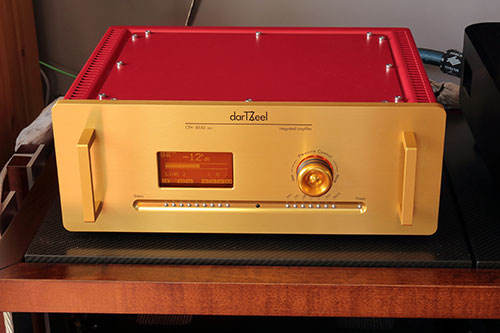

darTZeel Audio CTH-8550 Mk II
darTZeel ist ein Schweizer Unternehmen, das 2001 in Genf von Hervé Delétraz gegründet wurde. Der Name ist ein Anagramm des Nachnamens Delétraz. Die Arbeit an den ersten Geräten begann bereits 1984 im Rahmen einer Diplomarbeit, und nach 18 Jahren Forschung wurde 2002 der Leistungsverstärker NHB-108 offiziell vorgestellt. Es gibt Marken, auf die man viele Jahre warten muss, aber man wartet trotzdem weiter. So war es für mich bei der Marke darTZeel. Zufällig traf ich ihren…13.10.2026 -
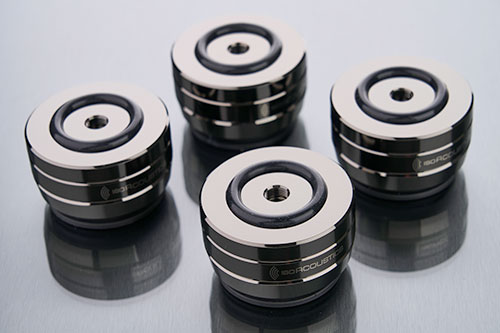
IsoAcoustics GAIA Neo I
Erinnern Sie sich noch? Es ist bereits eine ganze Weile her, da haben Hifi-Fans ihre Lautsprecher auf Tennisbälle gestellt, um einen besseren Klang aus ihnen herauszukitzeln. Oder sie haben abenteuerliche Selfmade-Konstruktionen gebastelt, auf denen die vielleicht nicht ganz highendigen Schallwandler platziert wurden. Das ist lange her und in der Zwischenzeit hat sich in Sachen Lautsprecher-Füße einiges getan. Es gibt eine große Zahl an Herstellern, die Basen, Spikes oder Ständer mit unterschiedlichen Konzepten und Materialien produzieren,…09.10.2026 


-
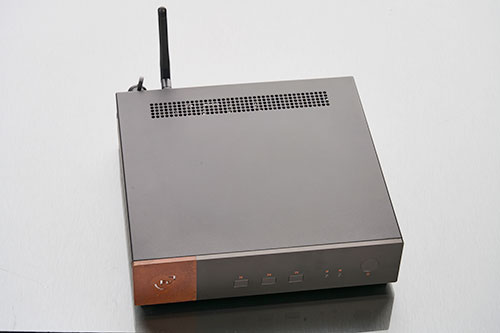
Ferrum BROEN
Auf der High End 2025 ließ man bei Ferrum durchblicken, dass an einem Streamer gearbeitet wird. Die Ferrum Streaming Control Technology, mit der die Musikwiedergabe mittels der Fernbedienung Ferrums DAC WANDLA steuerbar ist, war bereits eine Vorbereitung auf den Streamer und das Schaffen eines gesamten Ferrum-Ökosystems. Im Oktober 2025, wenige Monate nach der High End letzten Jahres waren auf der Audio Video Show in Warschau dann bereits erste BROEN Vorserienmodelle in Betrieb. Auf der diesjährige…06.10.2026 -
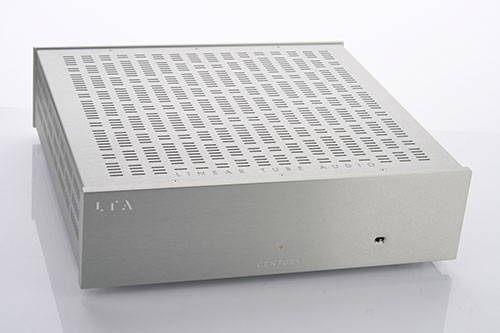
Linear Tube Audio Century
Century heißen die Röhren-Mono-Endverstärker von Linear Tube Audio, die ohne Ausgangsübertrager auskommen und sich dennoch grundlegend von anderen OTL-Konzepten unterscheiden. Wir haben uns intensiv damit beschäftigt, was die patentierte ZOTL-Technologie des Entwicklers so besonders macht und wie sie sich klanglich auswirkt. Für diesen Test haben Dirk Sommer und ich uns eine Arbeitsteilung vorgenommen, bei der ich (Carsten Bussler) mich auf die Technik der Century-Monos sowie die Hintergründe zu Linear Tube Audio und die Zusammenarbeit mit…29.09.2026 -
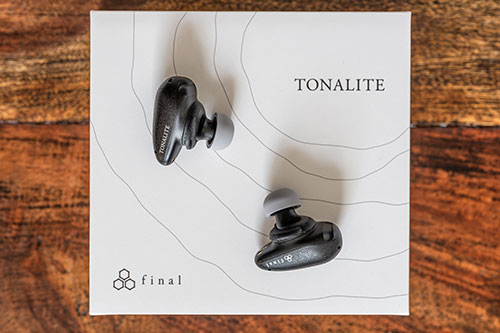
Final Tonalite
Finals Tonalite ist nicht nur ein neuer In-Ear, sondern macht gleichzeitig Finals Timbreanpassung jedem Nutzer mittels einer App zugänglich. Seit der noch etwas kryptischen Ankündigung dieser Technologie auf der High End 2022 habe ich Ihnen über den Entwicklungsprozess berichtet. Das fertige Produkt halte ich persönlich für einen Meilenstein. Tonalite ist eine grundlegende Neuentwicklung mit neuem Formfaktor und neuer Technik. Die Tonalite In-Ears verfügen über eine eher ovale Form, in der die gesamte Elektronik untergebracht ist.…25.09.2026
© 2026 | HIFISTATEMENT | netmagazine | Alle Rechte vorbehalten | Impressum | Datenschutz


Einige Hifistatement-Autoren benutzen
Qobuz Sublime+ Abonnements.

Einige Hifistatement-Autoren besitzen
eine roon Mitgliedschaft.

Einige Hifistatement-Autoren besitzen
die JPLAY hi-fi app.

Einige Hifistatement-Autoren besitzen
den Audirvana Plus 3 Music Player.