


 |
|
Another outstanding quality of this loudspeaker was its bass response. I was completely astonished at the foundation the Frida was able to generate from such a compact cabinet combined with a five-inch driver. And no, it didn’t cheat in the usual way with an exaggerated bass hump around 100 hertz, as so many manufacturers of bookshelf speakers like to do in order to create a false impression. The bass was quick, clean, precise, and yet impressively deep. The prerequisite, however, was an amplifier of excellent caliber in terms of speaker control (damping factor) and current delivery, such as the Einstein I had connected. The specified -3dB point of 32 hertz, given the sensitivity of 87 dB per watt per meter, struck me as somewhat optimistic. I couldn’t verify it with measurements, but ultimately it didn’t matter at all. With my eyes closed, I had the distinct impression of listening to a full-grown floorstander. What impressed me most was how these bass qualities were entirely at the service of the music: with fine articulation, proper timing, and an excellent sense of rhythm, I could effortlessly follow even the most complex bass lines.

One record after another landed on the turntable, and I simply couldn’t get enough. In other words: Frida not only allowed me to listen for hours without fatigue, but also impressed me with an irresistible fun factor, which I greatly appreciated. By this I mean that the Frida was able to bring out subtle interpretive nuances that did not reveal themselves directly in tonal terms, but rather indirectly through the mental images they evoked. When Morrissey sang “Everyday Is Like Sunday” (Viva Hate, His Master’s Voice, 1988), I was immediately reminded of the brilliance of this song. The listener could interpret it as an expression of depression and despair or, much more fittingly, recognize in Morrissey’s detached powers of observation and poetic imagery a yearning for escape, and thus a certain dark beauty or a silver lining on the horizon. Morrissey’s dry, black humor culminates in the line: Etch a postcard “How I dearly wish I was not here.” To be able to peel away and convey the poetry of an artistic genius like Morrissey so vividly, while also creating imaginative images in the listener’s mind, is something that only genuine high-end components such as the Frida are capable of.
Now, for those who might want me to comment on whether the Frida fulfills the usual hi-fi technical requirements, my first instinct was to say: all mere trivialities—I won’t bother with such banalities. But that might be a bit unfair to you as the reader, so here goes: the Storgaard & Vestskov Frida impresses with a fast, powerful bass foundation that despite (or rather because of) its bass reflex design, which has been executed here with technical perfection — never lags behind the rest of the frequency spectrum in timing. And that, with bass reflex designs, is anything but a given. Rhythm, pace, and timing all benefit tremendously. The vocal range is very homogeneous, with sibilants sounding clear and clean, without any hiss or lisping. The overtone spectrum shines brilliantly; the Frida reaches up into bat-ear territory, with a tonal coloration that leans more silvery than golden, without ever sounding sharp or harsh. Frida also never sounds “boxy” like a beaming studio monitor but instead offers excellent dispersion and a holographic imaging capability. I was unable to detect any weaknesses. In terms of pinpoint imaging and coherence, perhaps it doesn’t quite reach the very best coaxial loudspeakers or full-range drivers in the world, but that is splitting hairs and hardly worth mentioning. The true strength of this loudspeaker lies in its ability to involve the listener, to draw them in, to make music simply compelling. The Storgaard & Vestskov Frida is a loudspeaker for music lovers.


-
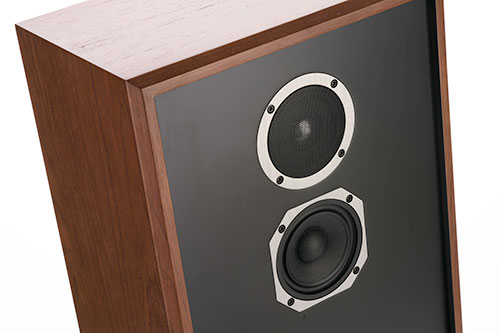
KLH Audio Model Four
Endlich steht mal etwas ganz anderes in meinem Hörraum. Der Lautsprecher des traditionsreichen amerikanischen Herstellers KLH entspricht einem Design von vor mehr als 50 Jahren, wie man es auch heutzutage bei Edelmarken wie Harbeth oder Audio Note findet. Bislang hatte ich nicht das Vergnügen, einen solchen Lautsprecher im Hörraum zu erleben. Neben dem Design mit breiter Schallwand und geringer Bautiefe macht der Paarpreis von knapp 2000 Euro die KLH Model Four hochgradig interessant. Auf zum…19.10.2026 -
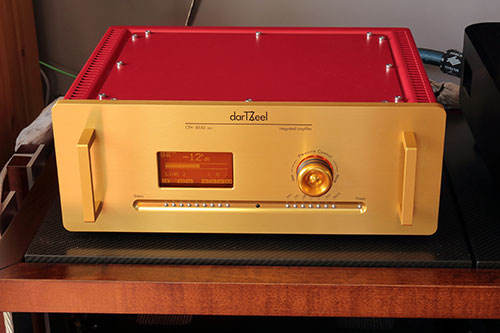

darTZeel Audio CTH-8550 Mk II
darTZeel ist ein Schweizer Unternehmen, das 2001 in Genf von Hervé Delétraz gegründet wurde. Der Name ist ein Anagramm des Nachnamens Delétraz. Die Arbeit an den ersten Geräten begann bereits 1984 im Rahmen einer Diplomarbeit, und nach 18 Jahren Forschung wurde 2002 der Leistungsverstärker NHB-108 offiziell vorgestellt. Es gibt Marken, auf die man viele Jahre warten muss, aber man wartet trotzdem weiter. So war es für mich bei der Marke darTZeel. Zufällig traf ich ihren…13.10.2026 -
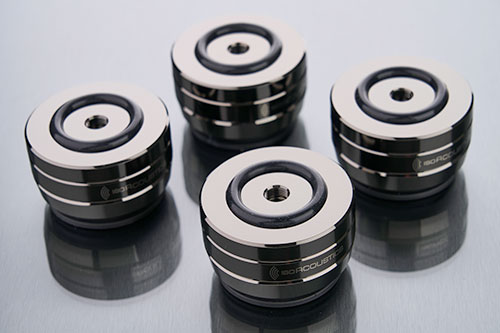
IsoAcoustics GAIA Neo I
Erinnern Sie sich noch? Es ist bereits eine ganze Weile her, da haben Hifi-Fans ihre Lautsprecher auf Tennisbälle gestellt, um einen besseren Klang aus ihnen herauszukitzeln. Oder sie haben abenteuerliche Selfmade-Konstruktionen gebastelt, auf denen die vielleicht nicht ganz highendigen Schallwandler platziert wurden. Das ist lange her und in der Zwischenzeit hat sich in Sachen Lautsprecher-Füße einiges getan. Es gibt eine große Zahl an Herstellern, die Basen, Spikes oder Ständer mit unterschiedlichen Konzepten und Materialien produzieren,…09.10.2026 


-
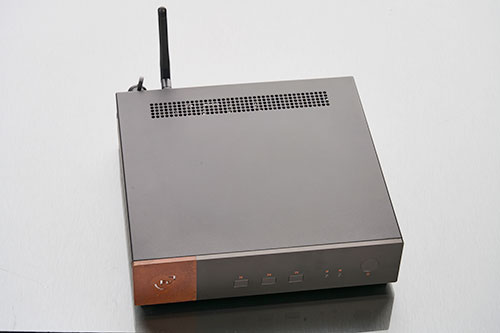
Ferrum BROEN
Auf der High End 2025 ließ man bei Ferrum durchblicken, dass an einem Streamer gearbeitet wird. Die Ferrum Streaming Control Technology, mit der die Musikwiedergabe mittels der Fernbedienung Ferrums DAC WANDLA steuerbar ist, war bereits eine Vorbereitung auf den Streamer und das Schaffen eines gesamten Ferrum-Ökosystems. Im Oktober 2025, wenige Monate nach der High End letzten Jahres waren auf der Audio Video Show in Warschau dann bereits erste BROEN Vorserienmodelle in Betrieb. Auf der diesjährige…06.10.2026 -
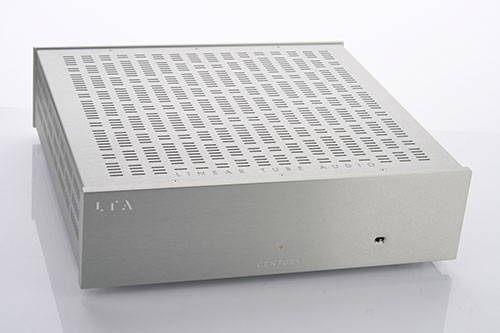
Linear Tube Audio Century
Century heißen die Röhren-Mono-Endverstärker von Linear Tube Audio, die ohne Ausgangsübertrager auskommen und sich dennoch grundlegend von anderen OTL-Konzepten unterscheiden. Wir haben uns intensiv damit beschäftigt, was die patentierte ZOTL-Technologie des Entwicklers so besonders macht und wie sie sich klanglich auswirkt. Für diesen Test haben Dirk Sommer und ich uns eine Arbeitsteilung vorgenommen, bei der ich (Carsten Bussler) mich auf die Technik der Century-Monos sowie die Hintergründe zu Linear Tube Audio und die Zusammenarbeit mit…29.09.2026 -
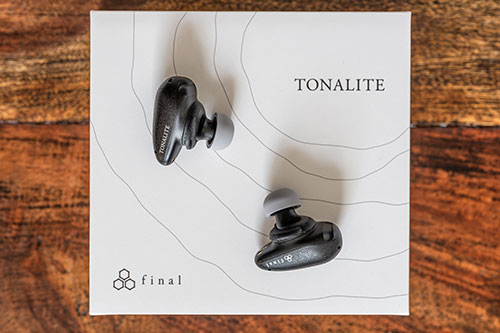
Final Tonalite
Finals Tonalite ist nicht nur ein neuer In-Ear, sondern macht gleichzeitig Finals Timbreanpassung jedem Nutzer mittels einer App zugänglich. Seit der noch etwas kryptischen Ankündigung dieser Technologie auf der High End 2022 habe ich Ihnen über den Entwicklungsprozess berichtet. Das fertige Produkt halte ich persönlich für einen Meilenstein. Tonalite ist eine grundlegende Neuentwicklung mit neuem Formfaktor und neuer Technik. Die Tonalite In-Ears verfügen über eine eher ovale Form, in der die gesamte Elektronik untergebracht ist.…25.09.2026
© 2026 | HIFISTATEMENT | netmagazine | Alle Rechte vorbehalten | Impressum | Datenschutz


Einige Hifistatement-Autoren benutzen
Qobuz Sublime+ Abonnements.

Einige Hifistatement-Autoren besitzen
eine roon Mitgliedschaft.

Einige Hifistatement-Autoren besitzen
die JPLAY hi-fi app.

Einige Hifistatement-Autoren besitzen
den Audirvana Plus 3 Music Player.