


 |
|Wilson Benesch Prime Meridian System – an approximation
The company is the leading centre for glass science and research in the UK. In collaboration with Dr. Katrina Skerratt-Love, Andrew Broadhurst, and Martyn Marshall of GTS, a groundbreaking damping system was developed. This innovative system holds great potential for various applications in future Wilson Benesch product developments. … This design incorporates a variety of different materials and utilizes the principles of fractal science to achieve broadband damping. The careful arrangement of the materials and the specific geometry within the two-part design are made possible by pockets integrated into the chassis to house the damping materials. The initial results, listed below, clearly demonstrate the effectiveness of this design. These results highlight the significant impact of the FrACTal chassis on achieving superior damping characteristics in a system that requires no adjustment and remains effective indefinitely. … The main objective in developing the FrACTal chassis is to eliminate any potential excitation of the solid metal chassis by air vibrations.” To these explanations Wilson Benesch adds a number of examples of fractal geometries for energy dissipation in nature, of which only one will be mentioned here: The fractal geometry of a coastline converts the energy of the waves into heat and sound: an effective way of energy dissipation.

It should be clear by now how intensely Wilson Benesch dedicates itself to a single component, and also that it's impossible to present all of their research in this breadth here – however fascinating some areas might be. At least as interesting, however, is explaining how a company the size of Wilson Benesch finances the research underlying its products. The OMEGA Drive motor of the GMT® One system shall serve as an example: In 2019, the GMT consortium was founded to develop the OMEGA Motor Drive with a team including Dr. Faris Al Naemi, Dr. Jon Travis, and Professor Cockerham from Sheffield Hallam University, as well as CAAS Audio, with the help of £326,000 in public funding from Innovate UK. I'm not aware of any government funding available in this country for the realisation of hi-fi or high-end projects, but I am aware that Wilson Benesch managed to secure public funding right from the company's inception. This is likely due to the fact that the developments planned by Wilson Benesch are not variations of existing technology, but rather groundbreaking innovations.

But back to the OMEGA Drive: After several trials with other drive designs, Wilson Benesch decided to use a linear motor with 21 coils in the stator and neodymium-iron-boron magnets in the rotor. To manufacture the coils, Wilson Benesch invested in coil winding machines and hired a university graduate dedicated solely to this task. The OMEGA Motor Drive, a slotless synchronous motor, is designed to have negligible torque ripple and achieve high speed stability. According to the formula "force x diameter = torque," the desired high torque can be achieved through either high force or a large motor diameter. Wilson Benesch opted for a large diameter: At 456 millimetres, the OMEGA Drive motor is the largest ever used as a direct drive in a turntable. This exceptionally large diameter guarantees high torque with relatively low electromagnetic force, resulting in reduced torque ripple.


-
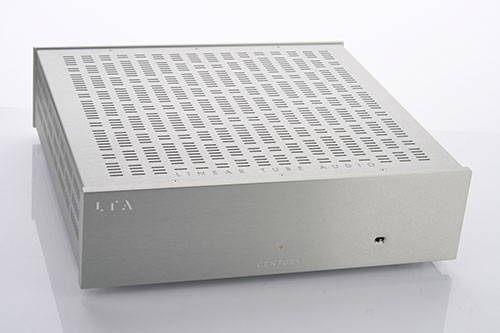
Linear Tube Audio Century
Century heißen die Röhren-Mono-Endverstärker von Linear Tube Audio, die ohne Ausgangsübertrager auskommen und sich dennoch grundlegend von anderen OTL-Konzepten unterscheiden. Wir haben uns intensiv damit beschäftigt, was die patentierte ZOTL-Technologie des Entwicklers so besonders macht und wie sie sich klanglich auswirkt. Für diesen Test haben Dirk Sommer und ich uns eine Arbeitsteilung vorgenommen, bei der ich (Carsten Bussler) mich auf die Technik der Century-Monos sowie die Hintergründe zu Linear Tube Audio und die Zusammenarbeit mit…29.09.2026 -
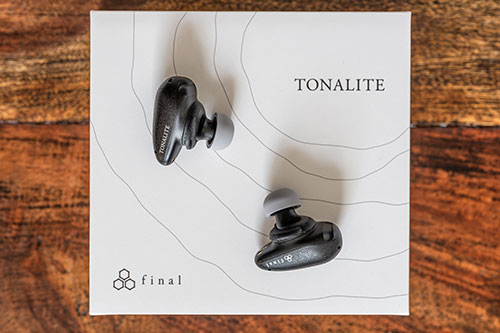
Final Tonalite
Finals Tonalite ist nicht nur ein neuer In-Ear, sondern macht gleichzeitig Finals Timbreanpassung jedem Nutzer mittels einer App zugänglich. Seit der noch etwas kryptischen Ankündigung dieser Technologie auf der High End 2022 habe ich Ihnen über den Entwicklungsprozess berichtet. Das fertige Produkt halte ich persönlich für einen Meilenstein. Tonalite ist eine grundlegende Neuentwicklung mit neuem Formfaktor und neuer Technik. Die Tonalite In-Ears verfügen über eine eher ovale Form, in der die gesamte Elektronik untergebracht ist.…25.09.2026 -
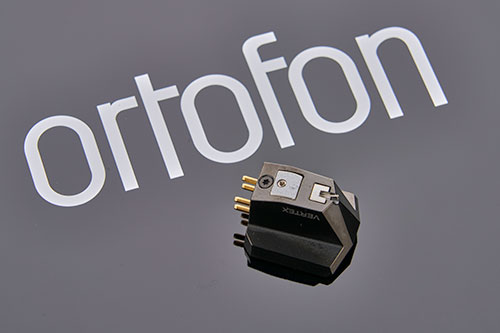
Ortofon MC Vertex
Die bisherigen Topmodelle von Ortofon, das Anna, das Anna Diamond und das Diamond, ähnelten einander auch optisch stark. Das Vertex macht schon durch sein Erscheinungsbild klar, dass es anders ist. Es ist der erste Tonabnehmer mit einem Diamanten mit Vertex-Schliff. Soweit mir bekannt, ist das der erste neue Nadelschliff seit rund 40 Jahren. Aber das ist nicht die einzige Veränderung gegenüber dem MC Diamond: Der Generator des Vertex besitzt einen deutlich höheren Innenwiderstand, die Nadelnachgiebigkeit…15.09.2026 


-
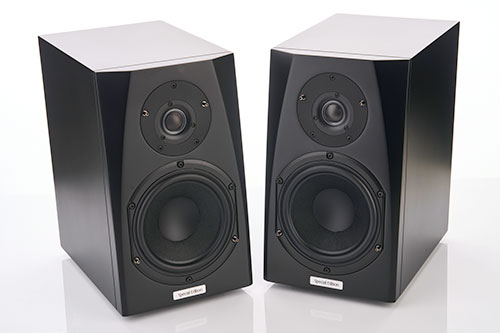
Phonar Veritas M4.2 SE
Es hat mir bislang stets Vergnügen bereitet, mich mit Phonar Lautsprechern zu beschäftigen. Nach einem Test kaufte ich die Veritas 9.2 SE und genieße seitdem ihre Musikalität. Phonar überzeugte immer wieder mit einem außergewöhnlich attraktiven Preis-Klang-Verhältnis. Bestätigt die neue, kompakte Phonar Veritas M4.2 SE diese Erfahrungen? Mein eindrucksvollstes Phonar-Erlebnis hatte ich vor zwei Jahren mit der Standbox Veritas p4.2 Next, die aktuell für einen Paarpreis von 2400 Euro auf der Phonar-Website zu sehen ist. Genau…08.09.2026 -
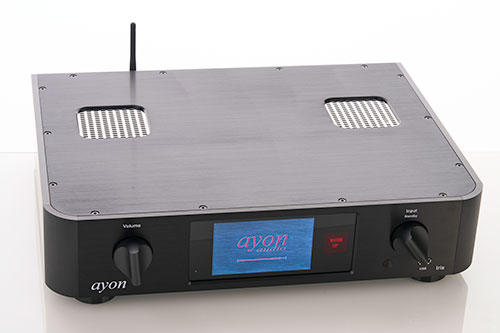
Ayon Iris Signature Streamer
Auf der High End Vienna haben Dirk Sommer und ich den Ayon Iris erstmals entdeckt – nun steht der außergewöhnliche Streaming-Player bei uns bereits zum Test. So frisch ist der Iris, dass selbst die Roon-Zertifizierung zum Testzeitpunkt noch läuft. Brandneu, doch der Iris kommt keineswegs aus dem Nichts: Wer die Entwicklung der digitalen Ayon-Komponenten verfolgt hat, erkennt eine kontinuierliche Beschäftigung mit dem Thema Streaming. Auch wir konnten diesen Weg begleiten – nach dem S3 und…01.09.2026 -
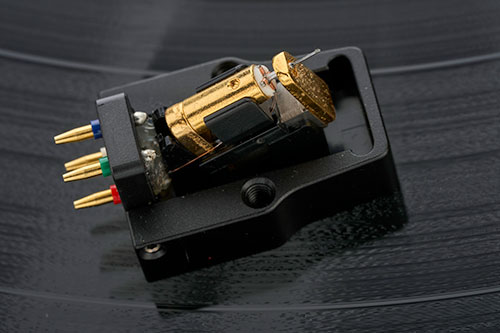
Sumiko Starling
Mein letzter Test eines Tonabnehmersystems befasste sich mit dem Sumiko Oriole. Nun drehen sich für diesen Test meine Schallplatten unter dem Sumiko Starling, dem teuersten System aus der Sumiko Referenz Serie. Nachdem ich überaus positiv überrascht vom Test des Oriole war und dies Peter Laitenberger vom deutschen ATR Vertrieb mitteilte, empfahl mir dieser mir doch einmal das Sumiko Starling anzuhören. Gesagt, getan und bereits wenige Tage später kam das kleine Päckchen mit dem Starling zu…28.08.2026
© 2026 | HIFISTATEMENT | netmagazine | Alle Rechte vorbehalten | Impressum | Datenschutz


Einige Hifistatement-Autoren benutzen
Qobuz Sublime+ Abonnements.

Einige Hifistatement-Autoren besitzen
eine roon Mitgliedschaft.

Einige Hifistatement-Autoren besitzen
die JPLAY hi-fi app.

Einige Hifistatement-Autoren besitzen
den Audirvana Plus 3 Music Player.