


 |
|
The construction of the Antipodes EX is enormously complex, and that's why the device weighs quite a bit for its size. In the EX, a Linux-based computer using a Celeron Quad-Core is configured in such a way, that its operational processes are constrained and optimized to the best possible sound function as a music server. That's easy to say, but it doesn't only require expedient attention to detail in the software. At least as important is the technical design, from power supply to the housing. The fifteen millimetre thick front panel of the Antipodes EX offers a mere On/Off switch for operation, taking the music server out of standby mode or putting it in standby again. The large, round button is illuminated with a red-orange ring in standby mode and changes to green in operational mode. During the booting process or when shutting the EX down, the ring display flashes. As with all high-quality audio components, the EX should be switched off completely using the mechanical power switch on the rear before connections are made or changed.
In that respect, the Antipodes EX offers useful options. The two USB 2.0 outputs, which can connect the EX to an external D/A converter, are quite conspicuous. In addition to the standard USB version there is a second one, which omits the usual five volt power feed. However, there are not many DACs on the market that can be used without it. However, at least this puristic option, which dispenses with the possibly influencing parallel current supply, is there to be used: Who knows what the future may hold. Below the USB sockets, two HDMI ports are located. These provide information for technicians for maintenance purposes. They are not used for displaying photos or movies. Photos and videos stored on the EX are instead streamed by the Plex Media Server installed on the EX to all devices for which there is a Plex player available, such as iOS devices like iPhone, iPad and AppleTV, Android mobile phones, tablets and TVs, Amazon FireTV, gaming consoles like X-Box or Play Station and others. The two blue USB ports allow connection to external hard drives, USB sticks or a drive to rip CDs to the internal hard drive.
The first of the two RJ45 Ethernet ports accepts the cable from the router. For quality reasons, the Antipodes does not go wireless. But if you still want to, an Ethernet WLAN receiver helps you out, such as the TP-Link Nano Router, which receives the wireless signal and transmits it via an Ethernet cable to the Antipodes EX, thus allowing for enough physical separation. The second RJ45 port of the Antipodes EX provides a particularly noise-free network signal, intended for any additional network device or a streaming D/A converter. In the case of expanding the Antipodes EX with the Antipodes CX, the first RJ45 port is to be used. In such a complex configuration the CX would supply the data and house the hard disks. In this case, the EX limits its services solely to rendering and playing, and would therefore play to the internal or any external D/A-converter. The two RCA sockets on the back of the EX output the analogue music signal to an amplifier or active loudspeaker. Antipodes Audio is as demanding as it is honest and modest: The internal converter of the EX is not seen by the company as the best possible option. Rather, an external converter is recommended to increase the sound quality. However, this pulled my expectations regarding the acoustical capabilities of the internal solution to a lower level – but, I ran into a surprise.


-
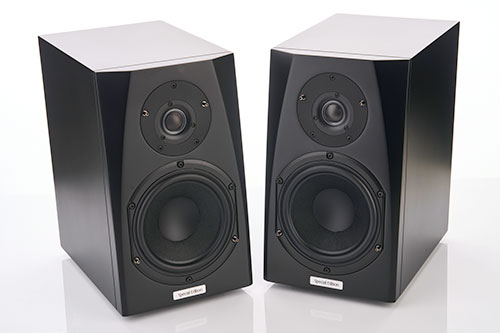
Phonar Veritas M4.2 SE
Es hat mir bislang stets Vergnügen bereitet, mich mit Phonar Lautsprechern zu beschäftigen. Nach einem Test kaufte ich die Veritas 9.2 SE und genieße seitdem ihre Musikalität. Phonar überzeugte immer wieder mit einem außergewöhnlich attraktiven Preis-Klang-Verhältnis. Bestätigt die neue, kompakte Phonar Veritas M4.2 SE diese Erfahrungen? Mein eindrucksvollstes Phonar-Erlebnis hatte ich vor zwei Jahren mit der Standbox Veritas p4.2 Next, die aktuell für einen Paarpreis von 2400 Euro auf der Phonar-Website zu sehen ist. Genau…08.09.2026 -
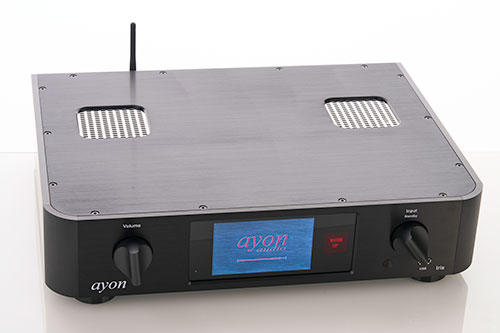
Ayon Iris Signature Streamer
Auf der High End Vienna haben Dirk Sommer und ich den Ayon Iris erstmals entdeckt – nun steht der außergewöhnliche Streaming-Player bei uns bereits zum Test. So frisch ist der Iris, dass selbst die Roon-Zertifizierung zum Testzeitpunkt noch läuft. Brandneu, doch der Iris kommt keineswegs aus dem Nichts: Wer die Entwicklung der digitalen Ayon-Komponenten verfolgt hat, erkennt eine kontinuierliche Beschäftigung mit dem Thema Streaming. Auch wir konnten diesen Weg begleiten – nach dem S3 und…01.09.2026 -
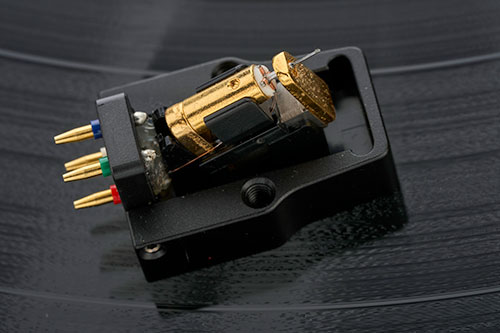
Sumiko Starling
Mein letzter Test eines Tonabnehmersystems befasste sich mit dem Sumiko Oriole. Nun drehen sich für diesen Test meine Schallplatten unter dem Sumiko Starling, dem teuersten System aus der Sumiko Referenz Serie. Nachdem ich überaus positiv überrascht vom Test des Oriole war und dies Peter Laitenberger vom deutschen ATR Vertrieb mitteilte, empfahl mir dieser mir doch einmal das Sumiko Starling anzuhören. Gesagt, getan und bereits wenige Tage später kam das kleine Päckchen mit dem Starling zu…28.08.2026 


-
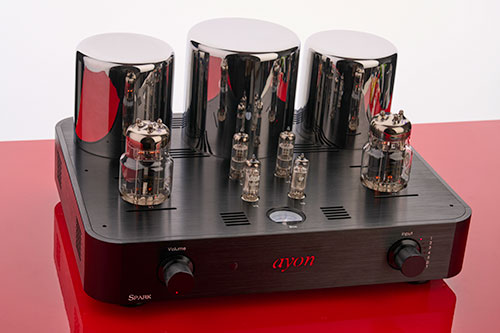
Ayon Spark V
Der Röhrenvollverstärker Spark ist mittlerweile seit über 20 Jahren ein fester Bestandteil des Produktportfolios von Ayon. Preislich eher im Einstiegssegment der Österreicher und nominell unterhalb der Evolution-Serie angesiedelt, hat dieses Gerät aufgrund der eingesetzten russischen Triode 6C33 das Potenzial zum Hidden Champion. Spätestens seit meinem Test des Boliden Ayon Crossfire Evo maße ich mir an, ein Kenner der Marke Ayon zu sein, zumal mir diverse andere Geräte der Marke im Laufe der Jahre zu Gehör…25.08.2026 -
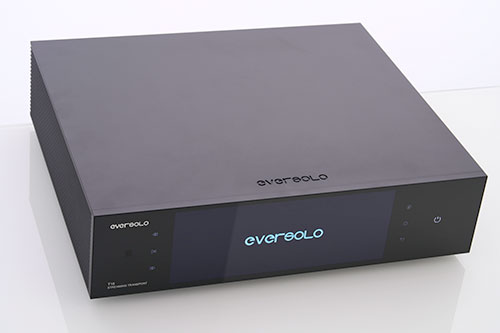
Eversolo T10
Eversolos Streamer DMP-A10 beeindruckte mit seinem hervorragenden Preis/Leistungsverhältnis und seiner prallen Ausstattungsfülle. Aber in meiner Kette im Wohnzimmer mit M-Scaler und HUGO 2 arbeitet er nur als reiner Datenlieferant. Kann das Eversolos neuer Streaming Transport T10 noch besser? Zumindest nach dem ersten Blick auf das rückseitige Anschlussfeld darf man das vermuten, denn dort befinden sich wie beim Eversolo DAC-Z10 zwei BNC-Anschlüsse für die Verbindung mit einer externen Clock, entweder mit einer Impedanz von 75 oder…21.08.2026 -
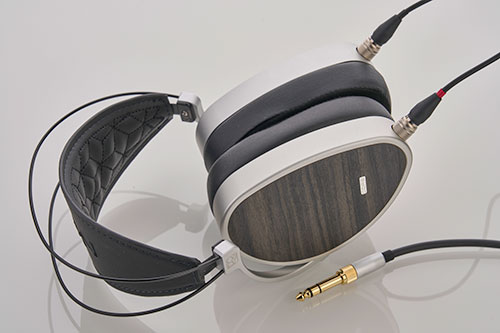
Dan Clark Audio Aeon Core
Anfang letzten Jahres stellte ich den Dan Clark Audio Noire X vor, dessen Klangsignatur der meines absoluten Favoriten, dem Stealth, sehr nahe kommt – und das zu einem Viertel des Preises des Dan Clark Audio-Topmodells. Jetzt charakterisiert der kalifornische Kopfhörerspezialist den Aeon Core sehr ähnlich: „Flagship Performance. Breakthrough Price.“ Dazu, wie sich die Hierarchie zwischen Stealth, Noire X und Aeon Core darstellt, möchte ich später kommen, denn bei seiner Arbeit für den Aeon Core ging…14.08.2026
© 2026 | HIFISTATEMENT | netmagazine | Alle Rechte vorbehalten | Impressum | Datenschutz


Einige Hifistatement-Autoren benutzen
Qobuz Sublime+ Abonnements.

Einige Hifistatement-Autoren besitzen
eine roon Mitgliedschaft.

Einige Hifistatement-Autoren besitzen
die JPLAY hi-fi app.

Einige Hifistatement-Autoren besitzen
den Audirvana Plus 3 Music Player.