


 |
|
The construction of the Antipodes EX is enormously complex, and that's why the device weighs quite a bit for its size. In the EX, a Linux-based computer using a Celeron Quad-Core is configured in such a way, that its operational processes are constrained and optimized to the best possible sound function as a music server. That's easy to say, but it doesn't only require expedient attention to detail in the software. At least as important is the technical design, from power supply to the housing. The fifteen millimetre thick front panel of the Antipodes EX offers a mere On/Off switch for operation, taking the music server out of standby mode or putting it in standby again. The large, round button is illuminated with a red-orange ring in standby mode and changes to green in operational mode. During the booting process or when shutting the EX down, the ring display flashes. As with all high-quality audio components, the EX should be switched off completely using the mechanical power switch on the rear before connections are made or changed.
In that respect, the Antipodes EX offers useful options. The two USB 2.0 outputs, which can connect the EX to an external D/A converter, are quite conspicuous. In addition to the standard USB version there is a second one, which omits the usual five volt power feed. However, there are not many DACs on the market that can be used without it. However, at least this puristic option, which dispenses with the possibly influencing parallel current supply, is there to be used: Who knows what the future may hold. Below the USB sockets, two HDMI ports are located. These provide information for technicians for maintenance purposes. They are not used for displaying photos or movies. Photos and videos stored on the EX are instead streamed by the Plex Media Server installed on the EX to all devices for which there is a Plex player available, such as iOS devices like iPhone, iPad and AppleTV, Android mobile phones, tablets and TVs, Amazon FireTV, gaming consoles like X-Box or Play Station and others. The two blue USB ports allow connection to external hard drives, USB sticks or a drive to rip CDs to the internal hard drive.
The first of the two RJ45 Ethernet ports accepts the cable from the router. For quality reasons, the Antipodes does not go wireless. But if you still want to, an Ethernet WLAN receiver helps you out, such as the TP-Link Nano Router, which receives the wireless signal and transmits it via an Ethernet cable to the Antipodes EX, thus allowing for enough physical separation. The second RJ45 port of the Antipodes EX provides a particularly noise-free network signal, intended for any additional network device or a streaming D/A converter. In the case of expanding the Antipodes EX with the Antipodes CX, the first RJ45 port is to be used. In such a complex configuration the CX would supply the data and house the hard disks. In this case, the EX limits its services solely to rendering and playing, and would therefore play to the internal or any external D/A-converter. The two RCA sockets on the back of the EX output the analogue music signal to an amplifier or active loudspeaker. Antipodes Audio is as demanding as it is honest and modest: The internal converter of the EX is not seen by the company as the best possible option. Rather, an external converter is recommended to increase the sound quality. However, this pulled my expectations regarding the acoustical capabilities of the internal solution to a lower level – but, I ran into a surprise.


-
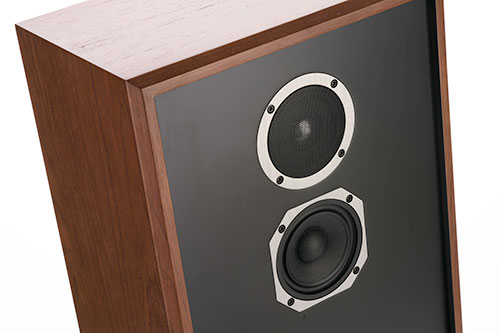
KLH Audio Model Four
Endlich steht mal etwas ganz anderes in meinem Hörraum. Der Lautsprecher des traditionsreichen amerikanischen Herstellers KLH entspricht einem Design von vor mehr als 50 Jahren, wie man es auch heutzutage bei Edelmarken wie Harbeth oder Audio Note findet. Bislang hatte ich nicht das Vergnügen, einen solchen Lautsprecher im Hörraum zu erleben. Neben dem Design mit breiter Schallwand und geringer Bautiefe macht der Paarpreis von knapp 2000 Euro die KLH Model Four hochgradig interessant. Auf zum…19.10.2026 -
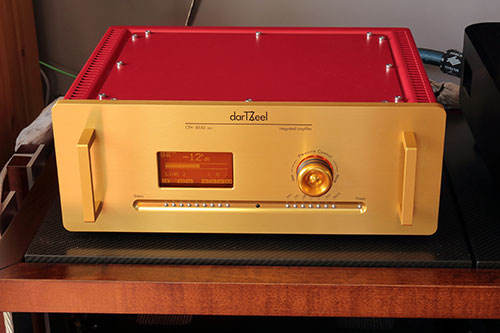

darTZeel Audio CTH-8550 Mk II
darTZeel ist ein Schweizer Unternehmen, das 2001 in Genf von Hervé Delétraz gegründet wurde. Der Name ist ein Anagramm des Nachnamens Delétraz. Die Arbeit an den ersten Geräten begann bereits 1984 im Rahmen einer Diplomarbeit, und nach 18 Jahren Forschung wurde 2002 der Leistungsverstärker NHB-108 offiziell vorgestellt. Es gibt Marken, auf die man viele Jahre warten muss, aber man wartet trotzdem weiter. So war es für mich bei der Marke darTZeel. Zufällig traf ich ihren…13.10.2026 -
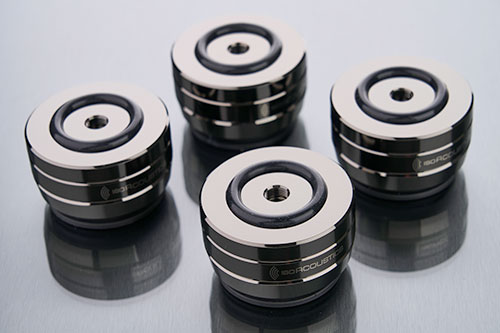
IsoAcoustics GAIA Neo I
Erinnern Sie sich noch? Es ist bereits eine ganze Weile her, da haben Hifi-Fans ihre Lautsprecher auf Tennisbälle gestellt, um einen besseren Klang aus ihnen herauszukitzeln. Oder sie haben abenteuerliche Selfmade-Konstruktionen gebastelt, auf denen die vielleicht nicht ganz highendigen Schallwandler platziert wurden. Das ist lange her und in der Zwischenzeit hat sich in Sachen Lautsprecher-Füße einiges getan. Es gibt eine große Zahl an Herstellern, die Basen, Spikes oder Ständer mit unterschiedlichen Konzepten und Materialien produzieren,…09.10.2026 


-
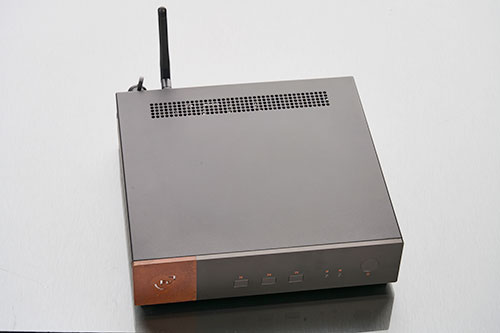
Ferrum BROEN
Auf der High End 2025 ließ man bei Ferrum durchblicken, dass an einem Streamer gearbeitet wird. Die Ferrum Streaming Control Technology, mit der die Musikwiedergabe mittels der Fernbedienung Ferrums DAC WANDLA steuerbar ist, war bereits eine Vorbereitung auf den Streamer und das Schaffen eines gesamten Ferrum-Ökosystems. Im Oktober 2025, wenige Monate nach der High End letzten Jahres waren auf der Audio Video Show in Warschau dann bereits erste BROEN Vorserienmodelle in Betrieb. Auf der diesjährige…06.10.2026 -
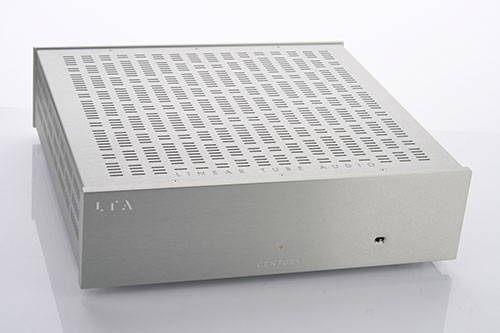
Linear Tube Audio Century
Century heißen die Röhren-Mono-Endverstärker von Linear Tube Audio, die ohne Ausgangsübertrager auskommen und sich dennoch grundlegend von anderen OTL-Konzepten unterscheiden. Wir haben uns intensiv damit beschäftigt, was die patentierte ZOTL-Technologie des Entwicklers so besonders macht und wie sie sich klanglich auswirkt. Für diesen Test haben Dirk Sommer und ich uns eine Arbeitsteilung vorgenommen, bei der ich (Carsten Bussler) mich auf die Technik der Century-Monos sowie die Hintergründe zu Linear Tube Audio und die Zusammenarbeit mit…29.09.2026 -
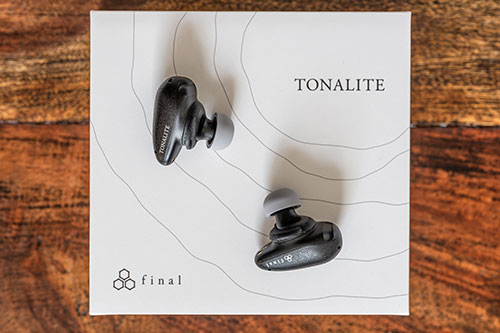
Final Tonalite
Finals Tonalite ist nicht nur ein neuer In-Ear, sondern macht gleichzeitig Finals Timbreanpassung jedem Nutzer mittels einer App zugänglich. Seit der noch etwas kryptischen Ankündigung dieser Technologie auf der High End 2022 habe ich Ihnen über den Entwicklungsprozess berichtet. Das fertige Produkt halte ich persönlich für einen Meilenstein. Tonalite ist eine grundlegende Neuentwicklung mit neuem Formfaktor und neuer Technik. Die Tonalite In-Ears verfügen über eine eher ovale Form, in der die gesamte Elektronik untergebracht ist.…25.09.2026
© 2026 | HIFISTATEMENT | netmagazine | Alle Rechte vorbehalten | Impressum | Datenschutz


Einige Hifistatement-Autoren benutzen
Qobuz Sublime+ Abonnements.

Einige Hifistatement-Autoren besitzen
eine roon Mitgliedschaft.

Einige Hifistatement-Autoren besitzen
die JPLAY hi-fi app.

Einige Hifistatement-Autoren besitzen
den Audirvana Plus 3 Music Player.