


 |
|Without comparing to the SOtM switch and by merely using the standard power supply, my first impression of the S100 was very promising. So during the installation phase there was no reason for me to change anything. I therefore was allowed to spend my time getting used to other test objects – each weighing 200 kilograms and blessed with an efficiency of about 97 decibels per watt and meter – to the extent that I was able to make reliable statements about changes in the connected chain even with them. The first update to the system of course comprised the change from the Melco S100’s standard power supply to the SBooster. Already after the first few tones of the inevitable song from Michel Godard's Le Concert Des Parfums came up it was clear that my prior contentment solely rested on the fact that I couldn’t have guessed what kind of large sonic image the Soundspace Systems Pirol were able to depict. But not only the three-dimensionality and physical size of the recording location benefited from the Melco’s analogue power supply: richness in detail, fine resolution and fine dynamics performed at a higher level as well. But that shouldn't surprise you at all: Up to this day the power supplies from the Dutch company never failed to provide a bigger sonic enhancement than one would expect at their price. And the combination with the S100 is no exception to the rule.

In conjunction with the Melco Switch plus SBooster, the system performs so openly, rhythmically intriguing and indulges with such large – imaginary? – spaces, that I am perfectly happy and can therefore hardly imagine what the SOtM switch and the clock could do even better. But the duo really succeeds in adding a touch of more airiness and finesse to the performance, as well as slightly increasing also the dimensions of the soundstage – these being clear sonic advantages for me, even if they turn out to be quite marginal. But I also understand anyone who prefers the Melco's somewhat more gripping, down-to-earth attitude and minimally brighter tonality. But it doesn't matter whether you consider – as I do – the differences between the switches to range within small quality improvements or to be more a matter of taste: Especially with regard to the price tag, the Melco Switch "sounds" forbiddingly good!
For some time now, the digital playback system in the listening room has only established contacts with my audio network, this being separated from the Internet, in order to keep interference out. The router solely communicates with the iPad to control the Aries G1. An Aries Femto and two Minis located in other rooms receive not only the music files from a Melco N1A 60HA/2 via a second network, but also music data from Qobuz. This is how I learned to appreciate the streaming service and I must say that I miss the access to it in my listening room already a little. Maybe the Melco Switch, thanks to the separate 1-gigabit and 100-megabit sections, will allow its users to benefit from streaming services without having to accept quality losses when playing files from the hard disk.


-
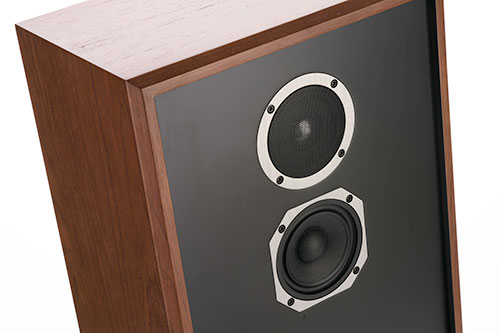
KLH Audio Model Four
Endlich steht mal etwas ganz anderes in meinem Hörraum. Der Lautsprecher des traditionsreichen amerikanischen Herstellers KLH entspricht einem Design von vor mehr als 50 Jahren, wie man es auch heutzutage bei Edelmarken wie Harbeth oder Audio Note findet. Bislang hatte ich nicht das Vergnügen, einen solchen Lautsprecher im Hörraum zu erleben. Neben dem Design mit breiter Schallwand und geringer Bautiefe macht der Paarpreis von knapp 2000 Euro die KLH Model Four hochgradig interessant. Auf zum…19.10.2026 -
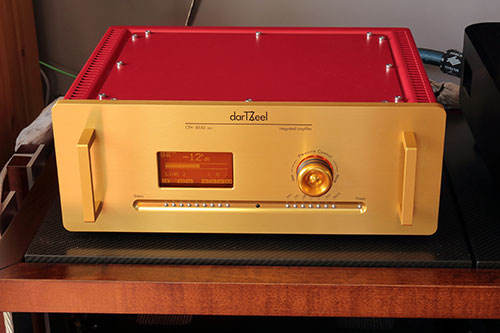

darTZeel Audio CTH-8550 Mk II
darTZeel ist ein Schweizer Unternehmen, das 2001 in Genf von Hervé Delétraz gegründet wurde. Der Name ist ein Anagramm des Nachnamens Delétraz. Die Arbeit an den ersten Geräten begann bereits 1984 im Rahmen einer Diplomarbeit, und nach 18 Jahren Forschung wurde 2002 der Leistungsverstärker NHB-108 offiziell vorgestellt. Es gibt Marken, auf die man viele Jahre warten muss, aber man wartet trotzdem weiter. So war es für mich bei der Marke darTZeel. Zufällig traf ich ihren…13.10.2026 -
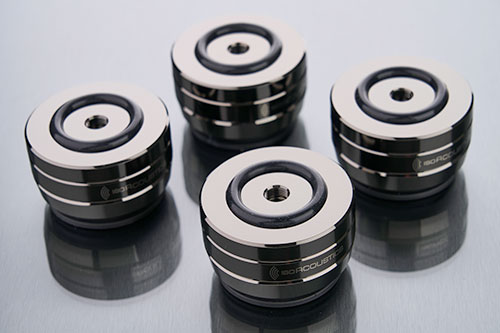
IsoAcoustics GAIA Neo I
Erinnern Sie sich noch? Es ist bereits eine ganze Weile her, da haben Hifi-Fans ihre Lautsprecher auf Tennisbälle gestellt, um einen besseren Klang aus ihnen herauszukitzeln. Oder sie haben abenteuerliche Selfmade-Konstruktionen gebastelt, auf denen die vielleicht nicht ganz highendigen Schallwandler platziert wurden. Das ist lange her und in der Zwischenzeit hat sich in Sachen Lautsprecher-Füße einiges getan. Es gibt eine große Zahl an Herstellern, die Basen, Spikes oder Ständer mit unterschiedlichen Konzepten und Materialien produzieren,…09.10.2026 


-
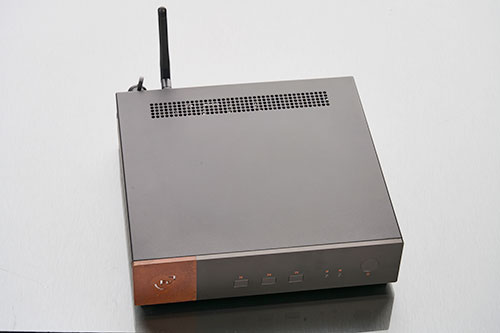
Ferrum BROEN
Auf der High End 2025 ließ man bei Ferrum durchblicken, dass an einem Streamer gearbeitet wird. Die Ferrum Streaming Control Technology, mit der die Musikwiedergabe mittels der Fernbedienung Ferrums DAC WANDLA steuerbar ist, war bereits eine Vorbereitung auf den Streamer und das Schaffen eines gesamten Ferrum-Ökosystems. Im Oktober 2025, wenige Monate nach der High End letzten Jahres waren auf der Audio Video Show in Warschau dann bereits erste BROEN Vorserienmodelle in Betrieb. Auf der diesjährige…06.10.2026 -
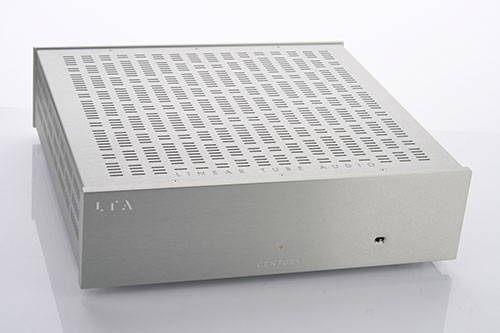
Linear Tube Audio Century
Century heißen die Röhren-Mono-Endverstärker von Linear Tube Audio, die ohne Ausgangsübertrager auskommen und sich dennoch grundlegend von anderen OTL-Konzepten unterscheiden. Wir haben uns intensiv damit beschäftigt, was die patentierte ZOTL-Technologie des Entwicklers so besonders macht und wie sie sich klanglich auswirkt. Für diesen Test haben Dirk Sommer und ich uns eine Arbeitsteilung vorgenommen, bei der ich (Carsten Bussler) mich auf die Technik der Century-Monos sowie die Hintergründe zu Linear Tube Audio und die Zusammenarbeit mit…29.09.2026 -
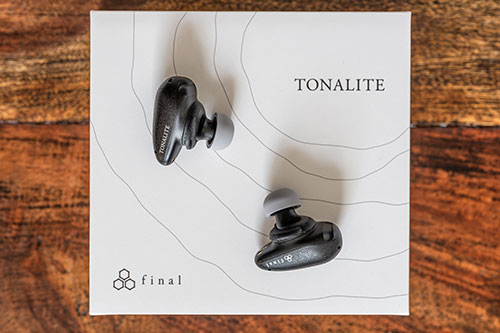
Final Tonalite
Finals Tonalite ist nicht nur ein neuer In-Ear, sondern macht gleichzeitig Finals Timbreanpassung jedem Nutzer mittels einer App zugänglich. Seit der noch etwas kryptischen Ankündigung dieser Technologie auf der High End 2022 habe ich Ihnen über den Entwicklungsprozess berichtet. Das fertige Produkt halte ich persönlich für einen Meilenstein. Tonalite ist eine grundlegende Neuentwicklung mit neuem Formfaktor und neuer Technik. Die Tonalite In-Ears verfügen über eine eher ovale Form, in der die gesamte Elektronik untergebracht ist.…25.09.2026
© 2026 | HIFISTATEMENT | netmagazine | Alle Rechte vorbehalten | Impressum | Datenschutz


Einige Hifistatement-Autoren benutzen
Qobuz Sublime+ Abonnements.

Einige Hifistatement-Autoren besitzen
eine roon Mitgliedschaft.

Einige Hifistatement-Autoren besitzen
die JPLAY hi-fi app.

Einige Hifistatement-Autoren besitzen
den Audirvana Plus 3 Music Player.