


 |
|About the special BASS cables of the "Folk Heroes" and "Mythical Creatures" series, Garth Powell says: "For those who can bi-wire, bi-amp, tri-amp, and so forth, our new GND Technology takes linear noise-dissipation steps beyond. By utilizing a portion of the technology developed for the Niagara AC power products (Ground-Noise Dissipation; US patent #9,373,439), we have developed a highly efficient noise-canceling circuit that works linearly across more than 12 octaves of induced radio frequencies. Further, any cable construction that utilizes a circuit card, micro-chip, or phasing filters in a box in an effort to reduce RF noise cannot be linear, or nearly as effective at doing so. To an extremely small (2GHz) induced noise signal with a sine wave of less than 4 microns (0.004mm), the remaining length of cable (after the small circuit or box), might as well be a kilometer. AudioQuest’s GND technology works across the entire length of the cable, assuring consistent results."

By the way, the white papers also explain why GND technology is supposed to improve the sonic performance of the amplifiers connected to the BASS cables. The developer also explains why two different cables should be used – if possible – for optimal signal transmission to the speakers: "AudioQuest’s patented GND (Ground-Noise Dissipation/phase-cancelling array) technology is extraordinarily effective, but its benefits come at a price. Though a BASS cable will demonstrate a very high bandwidth when measured with a single tone at a high signal level, it can lose some low-level content at extraordinarily low signal levels above 10kHz. It is therefore never suitable for full-range applications. It is, however, the cable of choice for multi-amplified speaker systems that direct signals to any driver other than the tweeter or super-tweeter. A speaker system that directs signal to a tweeter or super tweeter is best served with a ZERO cable. AudioQuest’s ZERO (no characteristic impedance) technology offers extended frequency bandwidth, extraordinarily linear noise-dissipation, and the lowest transient current compression possible in a speaker cable. However, it is important to note that with thisstrength, comes vulnerability. If two or more ZERO cables are paralleled (such as when biwiring), the two cable circuits could create a very high-frequency resonant peak (ringing), making that combination unsuitable. This cannot occur with a single ZERO cable in any connection scenario, nor can it occur when a ZERO cable is used in a BiWire COMBO with a BASS cable. In either of those configurations, the issue is completely nullified."

For my familiarization with the Mythical Creatures, I have chosen the ThunderBird, which is third in the speaker cable hierarchy and is probably named after an animal spirit in the myths of American Indians rather than the primeval giant geese of Australia or the Phorusrhacos, a primeval terror or giant bird from South and Central America. As with all high-quality Audioquest cables, the BASS and ZERO versions of the ThunderBird use the 72-volt dielectric bias system in carbon design. Four solid-core conductors provide a cable cross-section of 5.26 square millimeters. In the ZERO, the conductors are made of high-purity "Perfect-Surface Copper+" or "PSC+," Audioquest's best copper conductor made of high-purity metal with polished surfaces. Multilayer foils with a high carbon content are designed to convert RF radiation into heat. Both PSC+ and "Long Grain Copper" are used in the BASS, the latter probably in the conductors not connected at the amplifier end for Ground Noise Dissipation technology. The cables can be ordered with banana plugs, U, or multi-fork lugs. V-fork lugs are also available for the amplifier side. Audioquest recommends the U-fork lugs, especially for the insulated terminals required in Europe. Regardless of the type of connections, a three-meter ThunderBird ZERO is listed at 5,600 euros. For the bi-wiring variant with an additional BASS cable, it is then 9,700 euros. Ready-made sets are available in two, 2.5, three, and four-meter lengths. Deviating dimensions are of course also possible because the cables are assembled by hand and burned in in Roosendaal, the Netherlands.


-
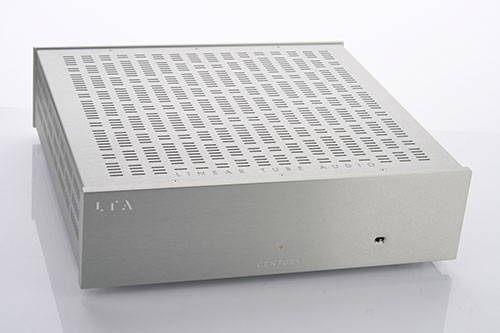
Linear Tube Audio Century
Century heißen die Röhren-Mono-Endverstärker von Linear Tube Audio, die ohne Ausgangsübertrager auskommen und sich dennoch grundlegend von anderen OTL-Konzepten unterscheiden. Wir haben uns intensiv damit beschäftigt, was die patentierte ZOTL-Technologie des Entwicklers so besonders macht und wie sie sich klanglich auswirkt. Für diesen Test haben Dirk Sommer und ich uns eine Arbeitsteilung vorgenommen, bei der ich (Carsten Bussler) mich auf die Technik der Century-Monos sowie die Hintergründe zu Linear Tube Audio und die Zusammenarbeit mit…29.09.2026 -
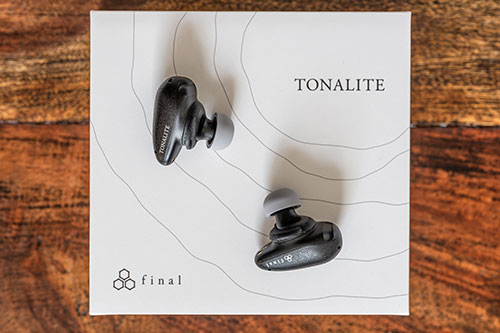
Final Tonalite
Finals Tonalite ist nicht nur ein neuer In-Ear, sondern macht gleichzeitig Finals Timbreanpassung jedem Nutzer mittels einer App zugänglich. Seit der noch etwas kryptischen Ankündigung dieser Technologie auf der High End 2022 habe ich Ihnen über den Entwicklungsprozess berichtet. Das fertige Produkt halte ich persönlich für einen Meilenstein. Tonalite ist eine grundlegende Neuentwicklung mit neuem Formfaktor und neuer Technik. Die Tonalite In-Ears verfügen über eine eher ovale Form, in der die gesamte Elektronik untergebracht ist.…25.09.2026 -
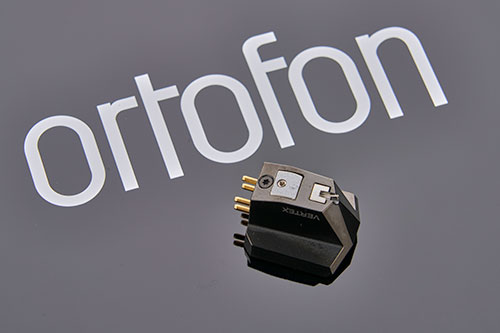
Ortofon MC Vertex
Die bisherigen Topmodelle von Ortofon, das Anna, das Anna Diamond und das Diamond, ähnelten einander auch optisch stark. Das Vertex macht schon durch sein Erscheinungsbild klar, dass es anders ist. Es ist der erste Tonabnehmer mit einem Diamanten mit Vertex-Schliff. Soweit mir bekannt, ist das der erste neue Nadelschliff seit rund 40 Jahren. Aber das ist nicht die einzige Veränderung gegenüber dem MC Diamond: Der Generator des Vertex besitzt einen deutlich höheren Innenwiderstand, die Nadelnachgiebigkeit…15.09.2026 


-
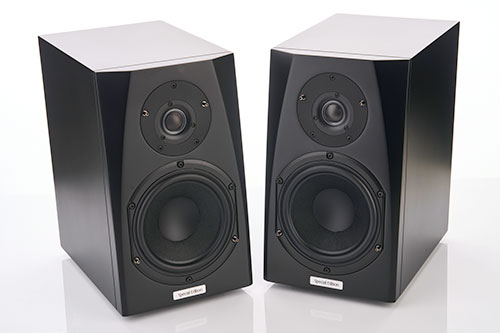
Phonar Veritas M4.2 SE
Es hat mir bislang stets Vergnügen bereitet, mich mit Phonar Lautsprechern zu beschäftigen. Nach einem Test kaufte ich die Veritas 9.2 SE und genieße seitdem ihre Musikalität. Phonar überzeugte immer wieder mit einem außergewöhnlich attraktiven Preis-Klang-Verhältnis. Bestätigt die neue, kompakte Phonar Veritas M4.2 SE diese Erfahrungen? Mein eindrucksvollstes Phonar-Erlebnis hatte ich vor zwei Jahren mit der Standbox Veritas p4.2 Next, die aktuell für einen Paarpreis von 2400 Euro auf der Phonar-Website zu sehen ist. Genau…08.09.2026 -
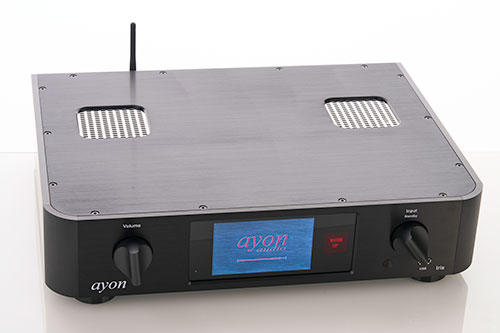
Ayon Iris Signature Streamer
Auf der High End Vienna haben Dirk Sommer und ich den Ayon Iris erstmals entdeckt – nun steht der außergewöhnliche Streaming-Player bei uns bereits zum Test. So frisch ist der Iris, dass selbst die Roon-Zertifizierung zum Testzeitpunkt noch läuft. Brandneu, doch der Iris kommt keineswegs aus dem Nichts: Wer die Entwicklung der digitalen Ayon-Komponenten verfolgt hat, erkennt eine kontinuierliche Beschäftigung mit dem Thema Streaming. Auch wir konnten diesen Weg begleiten – nach dem S3 und…01.09.2026 -
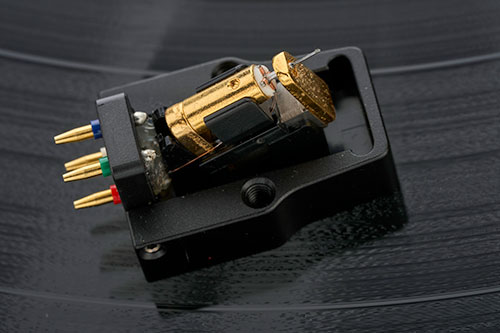
Sumiko Starling
Mein letzter Test eines Tonabnehmersystems befasste sich mit dem Sumiko Oriole. Nun drehen sich für diesen Test meine Schallplatten unter dem Sumiko Starling, dem teuersten System aus der Sumiko Referenz Serie. Nachdem ich überaus positiv überrascht vom Test des Oriole war und dies Peter Laitenberger vom deutschen ATR Vertrieb mitteilte, empfahl mir dieser mir doch einmal das Sumiko Starling anzuhören. Gesagt, getan und bereits wenige Tage später kam das kleine Päckchen mit dem Starling zu…28.08.2026
© 2026 | HIFISTATEMENT | netmagazine | Alle Rechte vorbehalten | Impressum | Datenschutz


Einige Hifistatement-Autoren benutzen
Qobuz Sublime+ Abonnements.

Einige Hifistatement-Autoren besitzen
eine roon Mitgliedschaft.

Einige Hifistatement-Autoren besitzen
die JPLAY hi-fi app.

Einige Hifistatement-Autoren besitzen
den Audirvana Plus 3 Music Player.