


 |
|I have already introduced you to the ThunderBird from the Mythical Creatures series and revealed that the two other associated Mythical Creatures are also frolicking in the listening room. I already covered these cables' remarkable technologies. Therefore, the report about the FireBird should be an easy-going affair. Well, not really.
When dealing with the USB, Firewire, and Ethernet cables, it had turned out that it is entirely harmless to deal with cables of different quality classes within the Audioquest range: Analogous to the price, you get not only increasingly valuable materials, but also better sonic results. So it's no wonder that I spontaneously agreed when Robert Hay, Audioquest's marketing director for Europe, suggested I take a look at the Mythical Creatures trio. Since Garth Powell's power conditioners and cables with their ZERO and ground noise dissipation technology still excite me today – and especially the power-correction circuitry, which is hugely beneficial to dynamics – I was naturally curious to see what the transfer of some of his developments to the realm of loudspeaker cables would do.

I readily admit that it tempted me to have to deal with the cables' technology in detail once and still be able to listen to Audioquest's three best cable models. Of the FireBirds, I did not order a bi-wiring combination with only one pair of connecting cables on the amplifier side, but rather one BASS and one ZERO cable each. The idea was that this would be an easy way to find out if it might make more sense to choose a bi-wiring solution of the Thunderbird or a ZERO of the FireBird series located above it. Since Robert Hay also offered to send along a ZERO of the top cable, the Dragon, in addition to the bi-wiring combination, a comparison of FireBird bi-wiring to Dragon ZERO also seemed like a good idea to me. That's what you get for not studying price lists in advance. I had suspected that a higher quality Zero would be in about the same price region as the bi-wiring model of the cable directly below it. But far from it: If the pair of three-meter bi-wiring cable at the ThunderBird is just under 10,000 euros, a FireBird Zero is already in the price list with almost double. And if I reveal the price of a Dragon – 34,000 euros for the Zero, 25,900 euros for the BASS – I might again spark a discussion about whether a cable of this caliber can be useful in the environment of my chain: It isn't really. The fact that I would need at most the two-meter variant, which is 18,700 euros less in the price list, does not change anything. But if you ask whether it appeals to me to hear such valuables in my chain, I must honestly confess: yes!
But let's go back to the FireBird: The full-range ZERO cable differs from the cheaper ThunderBird not only in the material: Half of the conductors here are made of silver, which Audioquest calls "Solid Perfect-Surface Silver," the other half is made of "Perfect-Surface Copper+," i.e., copper with a finely polished surface. Also, the FireBird has "Sonic Signature Conductors," a mix of conductors of different materials and cross-sections, which should ensure the desired tonal structure. The ThunderBird's four copper conductors, on the other hand, consist of four copper conductors of the same cross-section. A combination of different cross-sections and materials – Perfect-Surface Copper and Long Grain Copper – on the other hand, already existed in the ThunderBird BASS cable. In the FireBird-Bass, the plus cable has three copper conductors and one silver conductor. The minus cable has precisely twice as many conductors, but one half is only connected to the amplifier's connections. It has no part in the transmission of the music signal but serves only for noise dissipation. More detailed explanations and some diagrams can be found in Garth Powell's white paper.


-
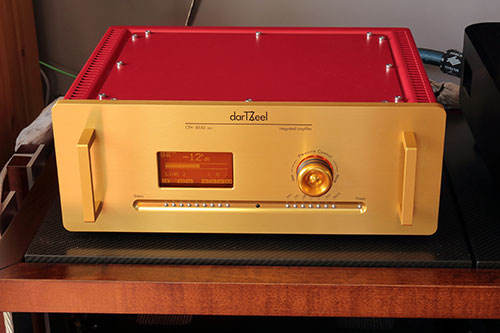

darTZeel Audio CTH-8550 Mk II
darTZeel ist ein Schweizer Unternehmen, das 2001 in Genf von Hervé Delétraz gegründet wurde. Der Name ist ein Anagramm des Nachnamens Delétraz. Die Arbeit an den ersten Geräten begann bereits 1984 im Rahmen einer Diplomarbeit, und nach 18 Jahren Forschung wurde 2002 der Leistungsverstärker NHB-108 offiziell vorgestellt. Es gibt Marken, auf die man viele Jahre warten muss, aber man wartet trotzdem weiter. So war es für mich bei der Marke darTZeel. Zufällig traf ich ihren…13.10.2026 -
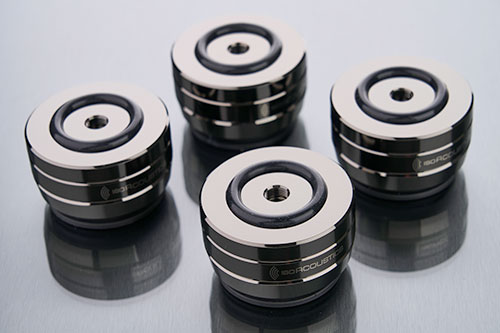
IsoAcoustics GAIA Neo I
Erinnern Sie sich noch? Es ist bereits eine ganze Weile her, da haben Hifi-Fans ihre Lautsprecher auf Tennisbälle gestellt, um einen besseren Klang aus ihnen herauszukitzeln. Oder sie haben abenteuerliche Selfmade-Konstruktionen gebastelt, auf denen die vielleicht nicht ganz highendigen Schallwandler platziert wurden. Das ist lange her und in der Zwischenzeit hat sich in Sachen Lautsprecher-Füße einiges getan. Es gibt eine große Zahl an Herstellern, die Basen, Spikes oder Ständer mit unterschiedlichen Konzepten und Materialien produzieren,…09.10.2026 -
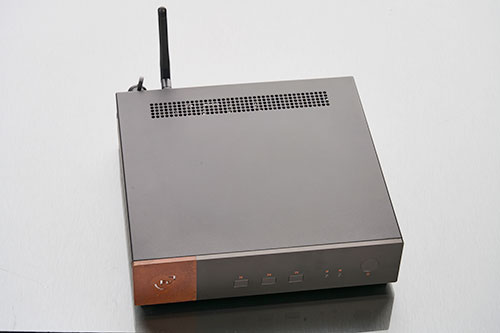
Ferrum BROEN
Auf der High End 2025 ließ man bei Ferrum durchblicken, dass an einem Streamer gearbeitet wird. Die Ferrum Streaming Control Technology, mit der die Musikwiedergabe mittels der Fernbedienung Ferrums DAC WANDLA steuerbar ist, war bereits eine Vorbereitung auf den Streamer und das Schaffen eines gesamten Ferrum-Ökosystems. Im Oktober 2025, wenige Monate nach der High End letzten Jahres waren auf der Audio Video Show in Warschau dann bereits erste BROEN Vorserienmodelle in Betrieb. Auf der diesjährige…06.10.2026 


-
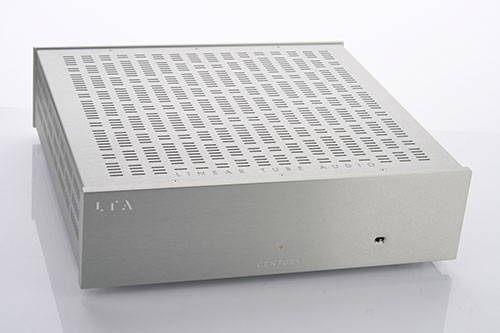
Linear Tube Audio Century
Century heißen die Röhren-Mono-Endverstärker von Linear Tube Audio, die ohne Ausgangsübertrager auskommen und sich dennoch grundlegend von anderen OTL-Konzepten unterscheiden. Wir haben uns intensiv damit beschäftigt, was die patentierte ZOTL-Technologie des Entwicklers so besonders macht und wie sie sich klanglich auswirkt. Für diesen Test haben Dirk Sommer und ich uns eine Arbeitsteilung vorgenommen, bei der ich (Carsten Bussler) mich auf die Technik der Century-Monos sowie die Hintergründe zu Linear Tube Audio und die Zusammenarbeit mit…29.09.2026 -
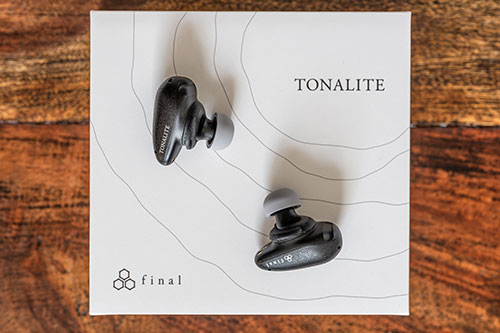
Final Tonalite
Finals Tonalite ist nicht nur ein neuer In-Ear, sondern macht gleichzeitig Finals Timbreanpassung jedem Nutzer mittels einer App zugänglich. Seit der noch etwas kryptischen Ankündigung dieser Technologie auf der High End 2022 habe ich Ihnen über den Entwicklungsprozess berichtet. Das fertige Produkt halte ich persönlich für einen Meilenstein. Tonalite ist eine grundlegende Neuentwicklung mit neuem Formfaktor und neuer Technik. Die Tonalite In-Ears verfügen über eine eher ovale Form, in der die gesamte Elektronik untergebracht ist.…25.09.2026 -
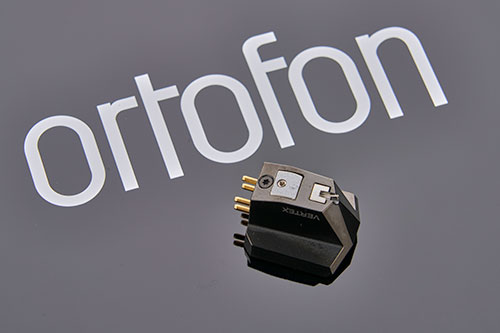
Ortofon MC Vertex
Die bisherigen Topmodelle von Ortofon, das Anna, das Anna Diamond und das Diamond, ähnelten einander auch optisch stark. Das Vertex macht schon durch sein Erscheinungsbild klar, dass es anders ist. Es ist der erste Tonabnehmer mit einem Diamanten mit Vertex-Schliff. Soweit mir bekannt, ist das der erste neue Nadelschliff seit rund 40 Jahren. Aber das ist nicht die einzige Veränderung gegenüber dem MC Diamond: Der Generator des Vertex besitzt einen deutlich höheren Innenwiderstand, die Nadelnachgiebigkeit…15.09.2026
© 2026 | HIFISTATEMENT | netmagazine | Alle Rechte vorbehalten | Impressum | Datenschutz


Einige Hifistatement-Autoren benutzen
Qobuz Sublime+ Abonnements.

Einige Hifistatement-Autoren besitzen
eine roon Mitgliedschaft.

Einige Hifistatement-Autoren besitzen
die JPLAY hi-fi app.

Einige Hifistatement-Autoren besitzen
den Audirvana Plus 3 Music Player.