


 |
|
The second movement of Albéniz-Frühbeck de Burgos' Suite Española is a musical and sonic delight when heard through Etna, Thiele TA01 and the R-580: The orchestra performs on a large stage, the brass entries are right on the mark with the necessary attack, and the timpani are easy to differentiate in their diversity. Even throughout the fortissimo passages the claves can be very well distinguished. Resolution, dynamics and definition are on an extremely high level. This is not much different with Einstein's The Turntable's Choice, which briefly replaces the R-580: It fascinates with even a tad more impetus in the lower octaves, but doesn't quite reach the excellent transparency and openness of the Aavik R-580. Instead of carrying forward the comparison with other records, I'd rather try a few other cartridges on the R-580. The Transrotor JR Tamino, which is manufactured by My Sonic Lab, is already waiting to be used in in the twelve-inch version of Einstein's The Tonearm. Since the Tamino comes up with a very low internal resistance despite its output voltage of 0.5 millivolts, I opt for the lowest load impedance available on the R-580: 50 ohms. And the Tamino feels audibly comfortable with the selected value. Although I must have heard "God Bless The Child" a thousand times from record - and as a 192 kilohertz file for years, too - this title captivates me from the very first notes: Timbres, ambience and intensity are a touch more fascinating than with the digital variant - and that, although the record might be slightly worn and not free of crackles. The space, openness, and rich detail offered by the R-580 are truly something special. I have never heard - if memory serves - this standard with the Tamino so finely depicted and yet emotional. So I'll switch briefly to The Turntable's Choice to verify this impression: No, I don't need to withdraw my statement at all. However, the Einstein performs rhythmically with a touch more excitement. Maybe setting the R-580 to a higher terminating impedance will prompt the Tamino to more groove. And yes, at 100 ohms, the enthusiasm intensifies a lot, but without reducing the pressure of the bass drum.

In the following I facilitate myself the installation of new cartridges by mounting the Transrotor TRA 9, which has recently been presented a Statement-in-High-Fidelity Award, on the LaGrange's nine-inch tonearm position instead of the Thiele TA01. Meanwhile, the 3D-printed bridge to indicate the TRA 9's tonearm pivot point has arrived, making overhang adjustment much more convenient in conjunction with all the gauges that need to be aligned to that point. This way it's easy to find the right position for the Allaerts MC Finish Gold using the Dennesen adjustment protractor. By the way, this is the cartridge with the lowest output voltage in my small collection - even if the manufacturer's specifications say something different. Although it sounds excellent, I haven't used it for a long time, because even with the balanced Einstein phono stage, its noise level lies only minimally below the groove noise of the needle and is a bit annoying in play breaks at the appropriate volume still. By the way, Jan Allaerts is quite strict in specifying the load impedance: It should be exactly 845 ohms. Since the R-580 only offers 800 or 900 ohms, I start with the minimal closer value and let the Finish Gold after its long inactivity find relief over four record sides. This already shows the potential of the Allaerts: it spoils with a very good spatial imaging, an enormously powerful and well contoured low frequency range and inspiring dynamics, while in the empty grooves there is no disturbing noise to be heard at all: The Finish Gold harmonizes excellently with the R-580!
Since I had listened to Steve Tibbet's Safe Journey quite loudly, it happened that when changing the record there was very slight hiss audible at the listening position with the tonearm raised, which I didn't find in no way annoying. Since I really enjoyed listening to the Allaerts through the Aavik, I didn't start with "Malinye" right away, but listened to the first side of Codana 2 in its entirety: The timbres were in parts exotic, the dynamics abundant, the sound fresh and of good transparency. Don Cherry's trumpet attacks with vigour but without the slightest trace of sharpness, added by the imaginary three-dimensional stage designed by Martin Wieland, where you can also sense the height of the room: What a delight! If the R-580 were a consistent member of my system, I would put the Allaerts much more often to use. I came to like the combination so much that I simply refrained from experimenting with a terminating impedance of 900 ohms.


-
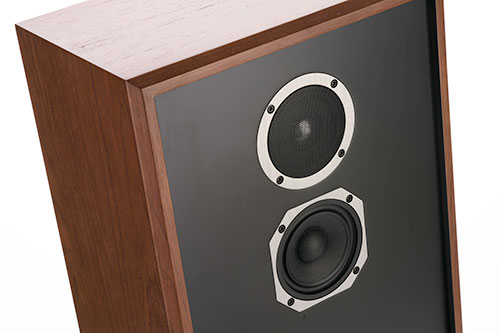
KLH Audio Model Four
Endlich steht mal etwas ganz anderes in meinem Hörraum. Der Lautsprecher des traditionsreichen amerikanischen Herstellers KLH entspricht einem Design von vor mehr als 50 Jahren, wie man es auch heutzutage bei Edelmarken wie Harbeth oder Audio Note findet. Bislang hatte ich nicht das Vergnügen, einen solchen Lautsprecher im Hörraum zu erleben. Neben dem Design mit breiter Schallwand und geringer Bautiefe macht der Paarpreis von knapp 2000 Euro die KLH Model Four hochgradig interessant. Auf zum…19.10.2026 -
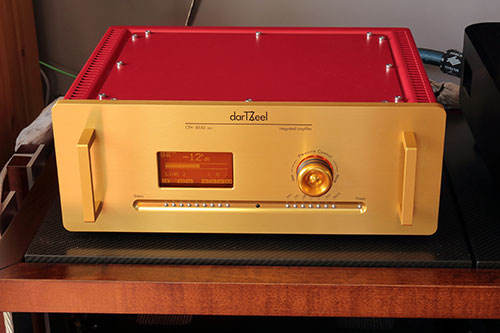

darTZeel Audio CTH-8550 Mk II
darTZeel ist ein Schweizer Unternehmen, das 2001 in Genf von Hervé Delétraz gegründet wurde. Der Name ist ein Anagramm des Nachnamens Delétraz. Die Arbeit an den ersten Geräten begann bereits 1984 im Rahmen einer Diplomarbeit, und nach 18 Jahren Forschung wurde 2002 der Leistungsverstärker NHB-108 offiziell vorgestellt. Es gibt Marken, auf die man viele Jahre warten muss, aber man wartet trotzdem weiter. So war es für mich bei der Marke darTZeel. Zufällig traf ich ihren…13.10.2026 -
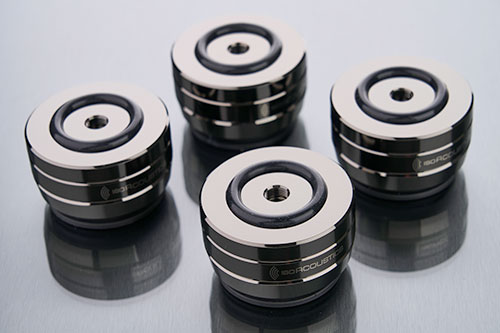
IsoAcoustics GAIA Neo I
Erinnern Sie sich noch? Es ist bereits eine ganze Weile her, da haben Hifi-Fans ihre Lautsprecher auf Tennisbälle gestellt, um einen besseren Klang aus ihnen herauszukitzeln. Oder sie haben abenteuerliche Selfmade-Konstruktionen gebastelt, auf denen die vielleicht nicht ganz highendigen Schallwandler platziert wurden. Das ist lange her und in der Zwischenzeit hat sich in Sachen Lautsprecher-Füße einiges getan. Es gibt eine große Zahl an Herstellern, die Basen, Spikes oder Ständer mit unterschiedlichen Konzepten und Materialien produzieren,…09.10.2026 


-
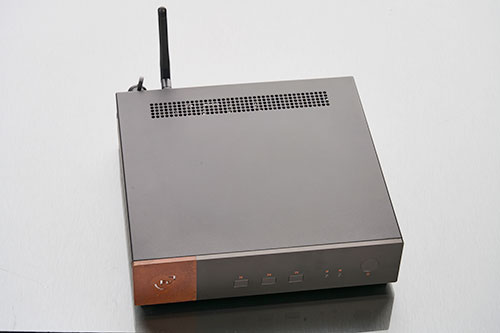
Ferrum BROEN
Auf der High End 2025 ließ man bei Ferrum durchblicken, dass an einem Streamer gearbeitet wird. Die Ferrum Streaming Control Technology, mit der die Musikwiedergabe mittels der Fernbedienung Ferrums DAC WANDLA steuerbar ist, war bereits eine Vorbereitung auf den Streamer und das Schaffen eines gesamten Ferrum-Ökosystems. Im Oktober 2025, wenige Monate nach der High End letzten Jahres waren auf der Audio Video Show in Warschau dann bereits erste BROEN Vorserienmodelle in Betrieb. Auf der diesjährige…06.10.2026 -
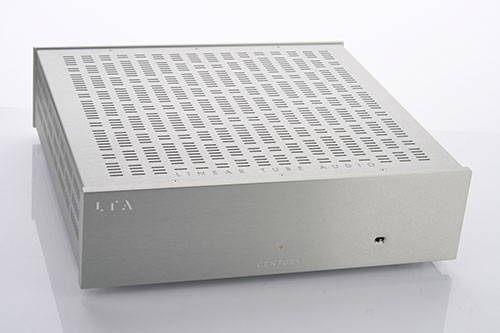
Linear Tube Audio Century
Century heißen die Röhren-Mono-Endverstärker von Linear Tube Audio, die ohne Ausgangsübertrager auskommen und sich dennoch grundlegend von anderen OTL-Konzepten unterscheiden. Wir haben uns intensiv damit beschäftigt, was die patentierte ZOTL-Technologie des Entwicklers so besonders macht und wie sie sich klanglich auswirkt. Für diesen Test haben Dirk Sommer und ich uns eine Arbeitsteilung vorgenommen, bei der ich (Carsten Bussler) mich auf die Technik der Century-Monos sowie die Hintergründe zu Linear Tube Audio und die Zusammenarbeit mit…29.09.2026 -
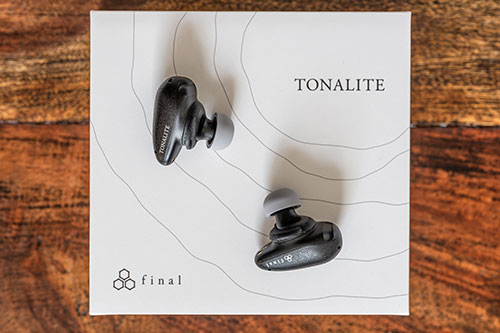
Final Tonalite
Finals Tonalite ist nicht nur ein neuer In-Ear, sondern macht gleichzeitig Finals Timbreanpassung jedem Nutzer mittels einer App zugänglich. Seit der noch etwas kryptischen Ankündigung dieser Technologie auf der High End 2022 habe ich Ihnen über den Entwicklungsprozess berichtet. Das fertige Produkt halte ich persönlich für einen Meilenstein. Tonalite ist eine grundlegende Neuentwicklung mit neuem Formfaktor und neuer Technik. Die Tonalite In-Ears verfügen über eine eher ovale Form, in der die gesamte Elektronik untergebracht ist.…25.09.2026
© 2026 | HIFISTATEMENT | netmagazine | Alle Rechte vorbehalten | Impressum | Datenschutz


Einige Hifistatement-Autoren benutzen
Qobuz Sublime+ Abonnements.

Einige Hifistatement-Autoren besitzen
eine roon Mitgliedschaft.

Einige Hifistatement-Autoren besitzen
die JPLAY hi-fi app.

Einige Hifistatement-Autoren besitzen
den Audirvana Plus 3 Music Player.