


 |
|A special music server stems from the New Zealand manufacturer Antipodes Audio. Not only does it sound remarkably good, but it also opens up ways of expansion to meet the highest demands. And, it also shows how important a qualified dealer or distributor is.
The Antipodes EX isn’t meant as a plug-and-play device. Just plug it in and all the options will open by themselves, it's not the concept for Antipodes EX. But even the comfort oriented music lover shouldn’t be scared, as the purism has its sense and the installation isn’t a problem at all, even if you are not familiar with the world of network and device configuration. This is because the distributor CM-Audio takes care of that for every customer. Already in my test reviews about the Gordian mains filter and the Merason D/A-converter I reported about the exemplary service of CM-Audio. With the Antipodes EX, the service goes far beyond that. Company director Markus Flöter also makes the Antipodes music server available to the potential customer as a complete set in a ready-to-play configuration in order to be tested in the customer’s home system. Apart from the return postage (9.90 euros by parcel service) in an environmentally friendly, reusable shipping box, there are no other expenses. The test package includes a respectable Knack power cable, proper USB and Ethernet cables from Viablue and an Apple iPad with charger set. All you have to do is to register the tablet in your own wireless network, and the Antipodes EX will instantly play.
Aboard there is also a large selection of examplary music tracks stored on an SSD in one of the two hard drive bays. In addition, the EX is already logged in to the extensive streaming offerings of Qobuz and Tidal. So you are able to explore the Antipodes right away, preferably using the versatile Roon player. If you don't want to operate the comfortable Roon for some reason, the New Zealand device can also be controlled with a variety of other software. Some of these installed players are sonically quite competitive, but in regard to versatility they are not comparable to Roon. So in the end it’s up to you. For my review I have limited myself to Roon, because I assume that you, dear reader, know about fundamental differences of player software in terms of both sound and user interface. Besides Audirvana Plus, Roon is my usual player software and so I am quite familiar with it. Even when using Roon, there are still variation possibilities, such as outputting PCM as a native file or converting it to the DSD format to an external, DSD-capable D/A converter. This also has an effect on the sound. Antipodes recommends removing unused software so that the computer is not unnecessarily burdened by software procedures. Purism, this is the creed of Antipodes Audio.

The Antipodes EX is a music server featuring two hard drive bays which are prepared to take 2.5-inch Sata SSDs or other suitable HDD media. Each one of them can have up to eight terabytes, so you can increase the total to 16 terabytes, if you want to. The Antipodes’ controlling computer treats the two hard disks as one unit and stores to them at will. Thus the hard disks cannot be linked together in any raid mode for data backup purposes. On their website, the New Zealand specialists currently recommend the use of Samsung EVO SSDs. For sonic reasons, at Antipodes Audio a Sata SSD is preferred to mSATA or m.2 SSDs. The storage media are not included in the purchase price and can be added at any time. If you order them directly from the distributor, CM-Audio passes them on without a surcharge. The installation of the disks requires a configuration by the distributor, and can be effected using CM-Audio’s cost-free remote online service.


-
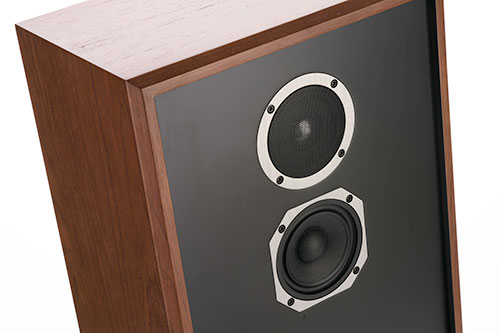
KLH Audio Model Four
Endlich steht mal etwas ganz anderes in meinem Hörraum. Der Lautsprecher des traditionsreichen amerikanischen Herstellers KLH entspricht einem Design von vor mehr als 50 Jahren, wie man es auch heutzutage bei Edelmarken wie Harbeth oder Audio Note findet. Bislang hatte ich nicht das Vergnügen, einen solchen Lautsprecher im Hörraum zu erleben. Neben dem Design mit breiter Schallwand und geringer Bautiefe macht der Paarpreis von knapp 2000 Euro die KLH Model Four hochgradig interessant. Auf zum…19.10.2026 -
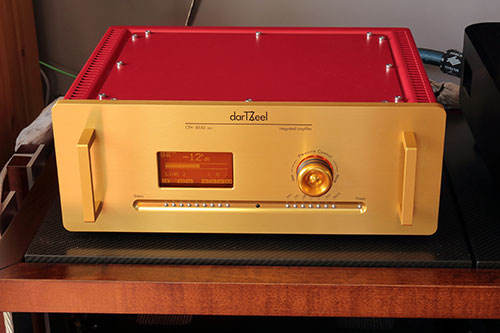

darTZeel Audio CTH-8550 Mk II
darTZeel ist ein Schweizer Unternehmen, das 2001 in Genf von Hervé Delétraz gegründet wurde. Der Name ist ein Anagramm des Nachnamens Delétraz. Die Arbeit an den ersten Geräten begann bereits 1984 im Rahmen einer Diplomarbeit, und nach 18 Jahren Forschung wurde 2002 der Leistungsverstärker NHB-108 offiziell vorgestellt. Es gibt Marken, auf die man viele Jahre warten muss, aber man wartet trotzdem weiter. So war es für mich bei der Marke darTZeel. Zufällig traf ich ihren…13.10.2026 -
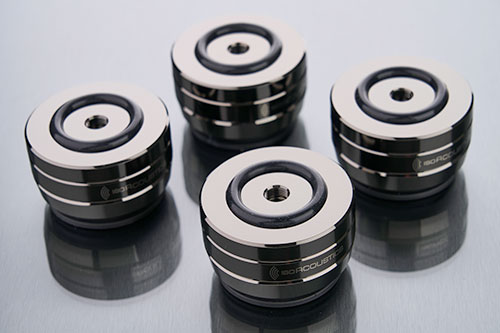
IsoAcoustics GAIA Neo I
Erinnern Sie sich noch? Es ist bereits eine ganze Weile her, da haben Hifi-Fans ihre Lautsprecher auf Tennisbälle gestellt, um einen besseren Klang aus ihnen herauszukitzeln. Oder sie haben abenteuerliche Selfmade-Konstruktionen gebastelt, auf denen die vielleicht nicht ganz highendigen Schallwandler platziert wurden. Das ist lange her und in der Zwischenzeit hat sich in Sachen Lautsprecher-Füße einiges getan. Es gibt eine große Zahl an Herstellern, die Basen, Spikes oder Ständer mit unterschiedlichen Konzepten und Materialien produzieren,…09.10.2026 


-
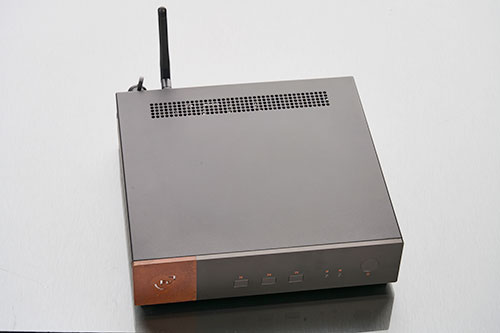
Ferrum BROEN
Auf der High End 2025 ließ man bei Ferrum durchblicken, dass an einem Streamer gearbeitet wird. Die Ferrum Streaming Control Technology, mit der die Musikwiedergabe mittels der Fernbedienung Ferrums DAC WANDLA steuerbar ist, war bereits eine Vorbereitung auf den Streamer und das Schaffen eines gesamten Ferrum-Ökosystems. Im Oktober 2025, wenige Monate nach der High End letzten Jahres waren auf der Audio Video Show in Warschau dann bereits erste BROEN Vorserienmodelle in Betrieb. Auf der diesjährige…06.10.2026 -
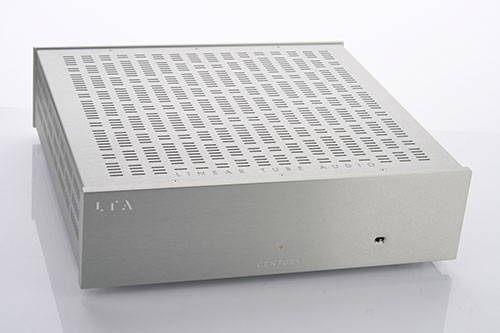
Linear Tube Audio Century
Century heißen die Röhren-Mono-Endverstärker von Linear Tube Audio, die ohne Ausgangsübertrager auskommen und sich dennoch grundlegend von anderen OTL-Konzepten unterscheiden. Wir haben uns intensiv damit beschäftigt, was die patentierte ZOTL-Technologie des Entwicklers so besonders macht und wie sie sich klanglich auswirkt. Für diesen Test haben Dirk Sommer und ich uns eine Arbeitsteilung vorgenommen, bei der ich (Carsten Bussler) mich auf die Technik der Century-Monos sowie die Hintergründe zu Linear Tube Audio und die Zusammenarbeit mit…29.09.2026 -
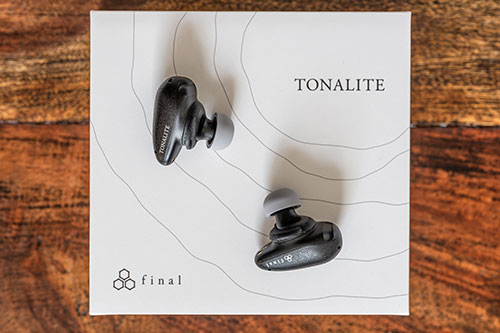
Final Tonalite
Finals Tonalite ist nicht nur ein neuer In-Ear, sondern macht gleichzeitig Finals Timbreanpassung jedem Nutzer mittels einer App zugänglich. Seit der noch etwas kryptischen Ankündigung dieser Technologie auf der High End 2022 habe ich Ihnen über den Entwicklungsprozess berichtet. Das fertige Produkt halte ich persönlich für einen Meilenstein. Tonalite ist eine grundlegende Neuentwicklung mit neuem Formfaktor und neuer Technik. Die Tonalite In-Ears verfügen über eine eher ovale Form, in der die gesamte Elektronik untergebracht ist.…25.09.2026
© 2026 | HIFISTATEMENT | netmagazine | Alle Rechte vorbehalten | Impressum | Datenschutz


Einige Hifistatement-Autoren benutzen
Qobuz Sublime+ Abonnements.

Einige Hifistatement-Autoren besitzen
eine roon Mitgliedschaft.

Einige Hifistatement-Autoren besitzen
die JPLAY hi-fi app.

Einige Hifistatement-Autoren besitzen
den Audirvana Plus 3 Music Player.