


 |
|Luis Fernandes spent a lot of time to find out whether the material he used for the old Pagode shelves is still the best possible option or another material would do a better job by offering acoustic advantages. It became apparent that the component shelves offered potential for optimisation, and that to a considerable extent. The shelves of the old Pagode featured a sandwich design with two eight millimetre thick MDF layers, between which a silicone layer, enclosed by two thin layers of paper, took care of the damping. All round the shelf had a glued edging. These shelves were comparatively heavy and caused a high grade of damping. The sandwich construction of the MKII shelves has now been improved to such an extent that an ultra-light polymer honeycomb core between two thin layers of MDF assume the absorbing task. This results in an improved resonance behaviour and leads to less damping thanks to reduced energy storage. Compared with silicone, the new material features a very good absorption capability, but avoids its softness correlating with a certain degree of marshyness. With regard to sound, the new honeycomb sandwich leads to less musically relevant energy dissipation, and therefore to more dynamics. I learned this not only from the technical explanations of Luis Fernandes, but when comparing the two stands I could easily perceive considerably increased fine dynamics and other positive acoustic effects without knowing the technical background, i.e. the new material mix, at the time of listening. For owners of an old Pagode, as I am one of them, the obvious way to go would be to replace the old component shelves with the new ones. However, this thought can be well dropped, as the whole resonance damping system of the old Pagode wouldn’t any longer work.

For the listening test, the Soul music server preamp was placed on the upper of the four levels of the old Pagode rack, while each of the two lower ones accomodated for my Air Tight mono tube power amplifiers respectively. In the compartment above, i.e. below the Soul, the Soul E power amplifier awaited its later use. We started our listening journey with the track Sotho Blue by Abdullah Ibrahim & Ekaya, which, like all the other musical material, originated from the Soul’s internal hard drive. In the first step we only moved the Soul to the new Pagode MKII, while the Air Tights remained in place. The gain in detail resolution and spatial imaging was striking. The snare drum and also the cymbals sounded more nuanced, colourful and sculptural. All the more I was struck by the unmistakable gain in dynamics. So the attacking entry of the wind instruments with their saxophones and the trombone, which were so appealingly captured on this album, manifested themselves much more ardently in their lush timbres. And when the mono power amps switched their location onto the same levels in the new Pagode stand, this brought a distinct qualitative leap as well, and this time particularly in terms of coherence. Although the acoustic image now presented itself more closed in a positive sense, the extra bit of detail resolution could not be ignored. This especially proved true for the powerful, low registers of the bass, whose strings now intoned with even more contour and grip.

The differences between the two Pagode stands were of similar nature when it came to Luigi Boccherini's "Sonata for Violoncello in G major", played by Bruno Cocset and Les Basses Réunies, although this piece of music appeared to be much calmer and more solemn than the jazz piece. With the new Pagode, the finely detailed lower registered string instruments not only became more dynamic, slender and orderly, but also depicted a pleasantly coherent atmospheric picture throughout the fundatmental range, much more adequate to the instrumentation in play. No doubt, this was musically convincing, and above all it was more exciting to listen and immerse oneself in the music. When we transferred the Soul music server together with the Soul E power amp instead of the Air Tights from the old onto the new Pagode in the same way, the improvement was exactly identical, but in some aspects a little less pronounced. Actually, the Soul E retails at about a sixth of the Air Tights, or let’s put it this way: The Soul and Soul E combo costs less than the tested Pagode MKII. But, to draw the conclusion from this aspect that such an investment in an equipment support is somewhat disproportionate may prove fatally deceptive. Because the advantages heard were not small and should increase the musical enjoyment in the long run, as simply more incidents happen within the music. This quickly became even more obvious as soon as we swapped the Soul and Soul E back onto the old Pagode. The backfall was even more brute than I expected. As sad as it might be: The music always seemed tedious and tired. And so did the suspense and pithiness of the vocals in the Ween song "Buenas Tardes Amigo", which the MKII had just mapped out in a captivating and poignant way, get lost as well.


-
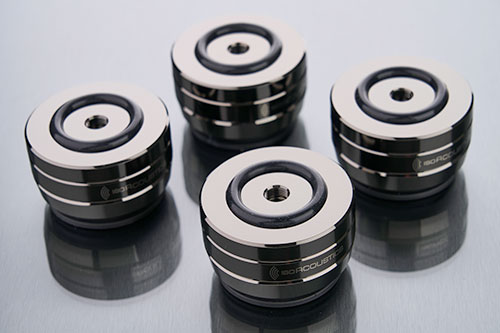
IsoAcoustics GAIA Neo I
Erinnern Sie sich noch? Es ist bereits eine ganze Weile her, da haben Hifi-Fans ihre Lautsprecher auf Tennisbälle gestellt, um einen besseren Klang aus ihnen herauszukitzeln. Oder sie haben abenteuerliche Selfmade-Konstruktionen gebastelt, auf denen die vielleicht nicht ganz highendigen Schallwandler platziert wurden. Das ist lange her und in der Zwischenzeit hat sich in Sachen Lautsprecher-Füße einiges getan. Es gibt eine große Zahl an Herstellern, die Basen, Spikes oder Ständer mit unterschiedlichen Konzepten und Materialien produzieren,…09.10.2026 -
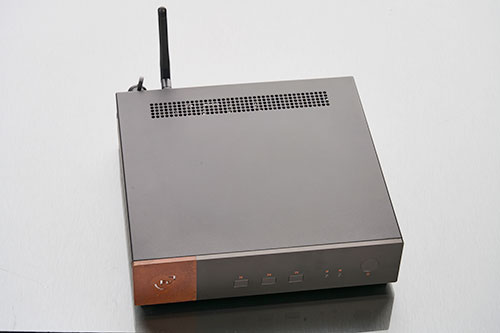
Ferrum BROEN
Auf der High End 2025 ließ man bei Ferrum durchblicken, dass an einem Streamer gearbeitet wird. Die Ferrum Streaming Control Technology, mit der die Musikwiedergabe mittels der Fernbedienung Ferrums DAC WANDLA steuerbar ist, war bereits eine Vorbereitung auf den Streamer und das Schaffen eines gesamten Ferrum-Ökosystems. Im Oktober 2025, wenige Monate nach der High End letzten Jahres waren auf der Audio Video Show in Warschau dann bereits erste BROEN Vorserienmodelle in Betrieb. Auf der diesjährige…06.10.2026 -
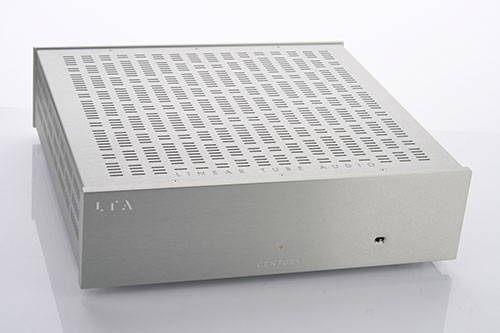
Linear Tube Audio Century
Century heißen die Röhren-Mono-Endverstärker von Linear Tube Audio, die ohne Ausgangsübertrager auskommen und sich dennoch grundlegend von anderen OTL-Konzepten unterscheiden. Wir haben uns intensiv damit beschäftigt, was die patentierte ZOTL-Technologie des Entwicklers so besonders macht und wie sie sich klanglich auswirkt. Für diesen Test haben Dirk Sommer und ich uns eine Arbeitsteilung vorgenommen, bei der ich (Carsten Bussler) mich auf die Technik der Century-Monos sowie die Hintergründe zu Linear Tube Audio und die Zusammenarbeit mit…29.09.2026 


-
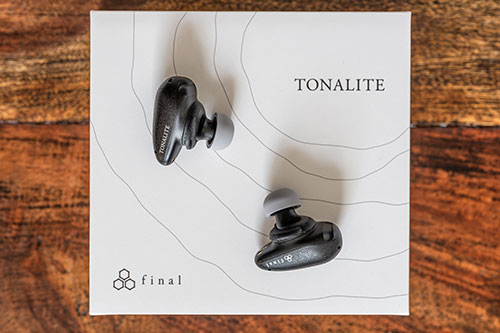
Final Tonalite
Finals Tonalite ist nicht nur ein neuer In-Ear, sondern macht gleichzeitig Finals Timbreanpassung jedem Nutzer mittels einer App zugänglich. Seit der noch etwas kryptischen Ankündigung dieser Technologie auf der High End 2022 habe ich Ihnen über den Entwicklungsprozess berichtet. Das fertige Produkt halte ich persönlich für einen Meilenstein. Tonalite ist eine grundlegende Neuentwicklung mit neuem Formfaktor und neuer Technik. Die Tonalite In-Ears verfügen über eine eher ovale Form, in der die gesamte Elektronik untergebracht ist.…25.09.2026 -
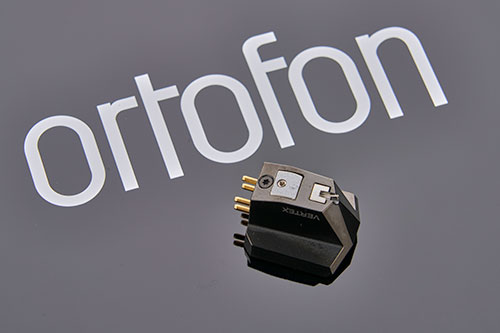
Ortofon MC Vertex
Die bisherigen Topmodelle von Ortofon, das Anna, das Anna Diamond und das Diamond, ähnelten einander auch optisch stark. Das Vertex macht schon durch sein Erscheinungsbild klar, dass es anders ist. Es ist der erste Tonabnehmer mit einem Diamanten mit Vertex-Schliff. Soweit mir bekannt, ist das der erste neue Nadelschliff seit rund 40 Jahren. Aber das ist nicht die einzige Veränderung gegenüber dem MC Diamond: Der Generator des Vertex besitzt einen deutlich höheren Innenwiderstand, die Nadelnachgiebigkeit…15.09.2026 -
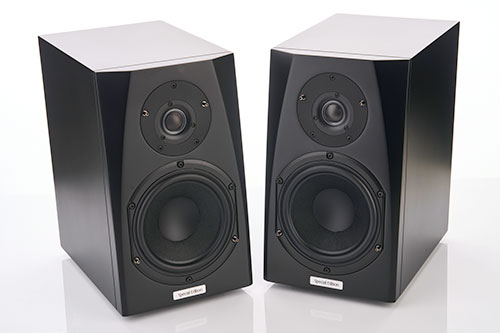
Phonar Veritas M4.2 SE
Es hat mir bislang stets Vergnügen bereitet, mich mit Phonar Lautsprechern zu beschäftigen. Nach einem Test kaufte ich die Veritas 9.2 SE und genieße seitdem ihre Musikalität. Phonar überzeugte immer wieder mit einem außergewöhnlich attraktiven Preis-Klang-Verhältnis. Bestätigt die neue, kompakte Phonar Veritas M4.2 SE diese Erfahrungen? Mein eindrucksvollstes Phonar-Erlebnis hatte ich vor zwei Jahren mit der Standbox Veritas p4.2 Next, die aktuell für einen Paarpreis von 2400 Euro auf der Phonar-Website zu sehen ist. Genau…08.09.2026
© 2026 | HIFISTATEMENT | netmagazine | Alle Rechte vorbehalten | Impressum | Datenschutz


Einige Hifistatement-Autoren benutzen
Qobuz Sublime+ Abonnements.

Einige Hifistatement-Autoren besitzen
eine roon Mitgliedschaft.

Einige Hifistatement-Autoren besitzen
die JPLAY hi-fi app.

Einige Hifistatement-Autoren besitzen
den Audirvana Plus 3 Music Player.