


 |
|This review not only deals with the Ansuz switch and its sonic effects when setting up a LAN network, but also the question of the sequence in which a home audio network has to be set up in order to gradually obtain musical enhancement.
Maybe you feel the same way as I do. At some point, in addition to sourcing music in analogue or in digital form through the CD player, I started to implement computer hi-fi as another sound source for listening to high-resolution music files in my system. It is commonly known that there exist two ways to get there. One of them is the one I chose with the music originating in my computer, while being controlled by a player software, running via USB to the D/A converter, and taking the optional detour through a reclocker for means of sonic improvement. Alternatively, the musically superior way, according to prevailing opinions, would use a streamer hardware to source music from a NAS, an integrated hard disk, a computer or a high-quality server via the home network.

My personal way is quite easy to accomplish and can already be upgraded with a high-quality USB cable. Apart from that, it doesn't require much mental or material effort, neither with an Apple nor with a Windows computer. My colleague Roland Dietl, who is very well versed in digital matters, once said in a review a few months ago that a good CD player can sound better if you take a sloppy approach to music streaming. At that point, at the latest, I asked myself which sequence of setup steps is advisable when building up a music network, since we have to consider that there are various variables in play: router, cables, external linear power supplies, streaming bridge and the currently somewhat hyped device category LAN switch. Therefor is a good reason, however, because there are now a number of switches in various price categories populating the market that are particularly suitable for audio applications. The second cheapest switch of the noble Danish audio company Ansuz has taken seat as my mainstay to explore a reasonable approach to the matter, which fortunately should turn out of not being so complicated at all.
As a source for the internet I am at the mercy of a Telekom hybrid router, which in turn cannot be replaced by another device and, according to the operating instructions, must not be improved with a better external power supply. Since the countryside with its pitiful reception conditions forces me to hinge on this DSL/LTE technology, by having seldomly at best four (!) Mbit of download rate, I, as an enthusiastic Qobuz user, have to rely on a feature that, to my knowledge, only Audirvana Plus offers in this form. This versatile player software runs on my computer under Windows 10 Professional, which is optimized for audio applications with AudiophileOptimizer 3 and used solely for music. In order to listen to high-res files, I need a data buffer that I can easily generate with Audirvana by using the pause button or by moving back the progress bar when dropouts due to the bad Telekom data supply interrupt the music flow. Unfortunately, neither Roon nor the sonically excellent internet streaming software from Highresaudio.com offer this option.


-
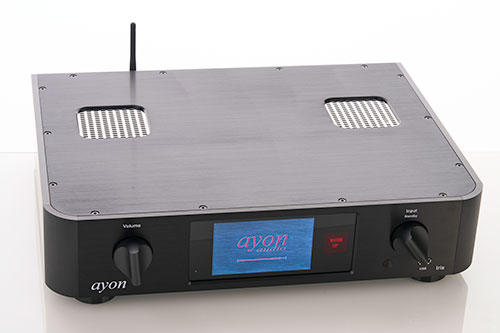
Ayon Iris Signature Streamer
Auf der High End Vienna haben Dirk Sommer und ich den Ayon Iris erstmals entdeckt – nun steht der außergewöhnliche Streaming-Player bei uns bereits zum Test. So frisch ist der Iris, dass selbst die Roon-Zertifizierung zum Testzeitpunkt noch läuft. Brandneu, doch der Iris kommt keineswegs aus dem Nichts: Wer die Entwicklung der digitalen Ayon-Komponenten verfolgt hat, erkennt eine kontinuierliche Beschäftigung mit dem Thema Streaming. Auch wir konnten diesen Weg begleiten – nach dem S3 und…01.09.2026 -
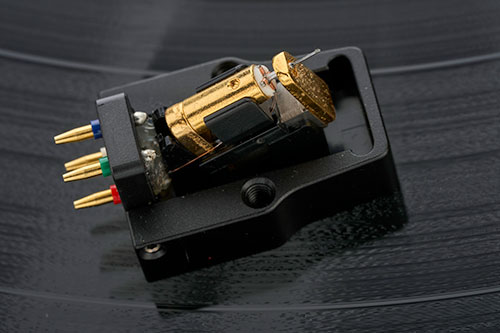
Sumiko Starling
Mein letzter Test eines Tonabnehmersystems befasste sich mit dem Sumiko Oriole. Nun drehen sich für diesen Test meine Schallplatten unter dem Sumiko Starling, dem teuersten System aus der Sumiko Referenz Serie. Nachdem ich überaus positiv überrascht vom Test des Oriole war und dies Peter Laitenberger vom deutschen ATR Vertrieb mitteilte, empfahl mir dieser mir doch einmal das Sumiko Starling anzuhören. Gesagt, getan und bereits wenige Tage später kam das kleine Päckchen mit dem Starling zu…28.08.2026 -
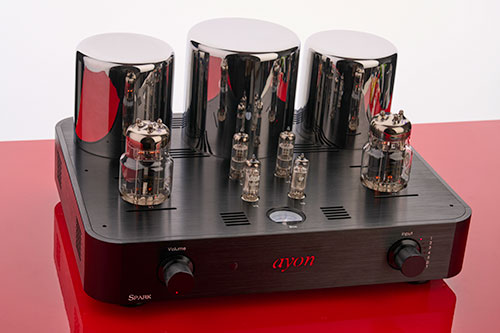
Ayon Spark V
Der Röhrenvollverstärker Spark ist mittlerweile seit über 20 Jahren ein fester Bestandteil des Produktportfolios von Ayon. Preislich eher im Einstiegssegment der Österreicher und nominell unterhalb der Evolution-Serie angesiedelt, hat dieses Gerät aufgrund der eingesetzten russischen Triode 6C33 das Potenzial zum Hidden Champion. Spätestens seit meinem Test des Boliden Ayon Crossfire Evo maße ich mir an, ein Kenner der Marke Ayon zu sein, zumal mir diverse andere Geräte der Marke im Laufe der Jahre zu Gehör…25.08.2026 


-
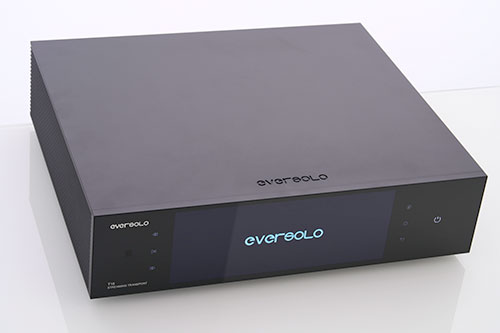
Eversolo T10
Eversolos Streamer DMP-A10 beeindruckte mit seinem hervorragenden Preis/Leistungsverhältnis und seiner prallen Ausstattungsfülle. Aber in meiner Kette im Wohnzimmer mit M-Scaler und HUGO 2 arbeitet er nur als reiner Datenlieferant. Kann das Eversolos neuer Streaming Transport T10 noch besser? Zumindest nach dem ersten Blick auf das rückseitige Anschlussfeld darf man das vermuten, denn dort befinden sich wie beim Eversolo DAC-Z10 zwei BNC-Anschlüsse für die Verbindung mit einer externen Clock, entweder mit einer Impedanz von 75 oder…21.08.2026 -
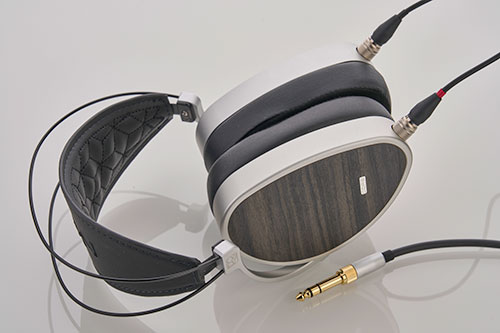
Dan Clark Audio Aeon Core
Anfang letzten Jahres stellte ich den Dan Clark Audio Noire X vor, dessen Klangsignatur der meines absoluten Favoriten, dem Stealth, sehr nahe kommt – und das zu einem Viertel des Preises des Dan Clark Audio-Topmodells. Jetzt charakterisiert der kalifornische Kopfhörerspezialist den Aeon Core sehr ähnlich: „Flagship Performance. Breakthrough Price.“ Dazu, wie sich die Hierarchie zwischen Stealth, Noire X und Aeon Core darstellt, möchte ich später kommen, denn bei seiner Arbeit für den Aeon Core ging…14.08.2026 -
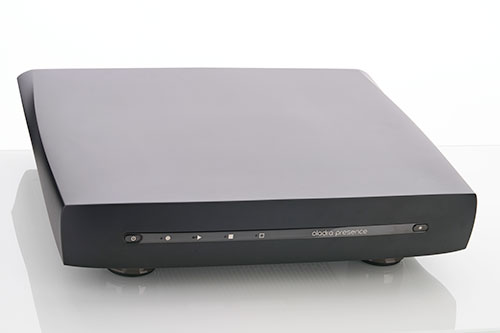
Oladra Presence
Die Server und Streamer von Antipodes Audio sind kostspielig. Das ist nicht neu. Sie bieten für's Geld eine hervorragende Klangqualität. Das begann seinerzeit für mich mit dem EX, ging über die S-Serie zum K50 und schließlich sogar bis zum Oladra G4. Jetzt steht der brandneue Oladra Presence bei mir zum Test. Der Oladra Presence kostet enorme 58.000 Euro. Das ist für mich eigentlich Grund genug, mich nicht mit ihm zu befassen. Aber mein Interesse und…11.08.2026
© 2026 | HIFISTATEMENT | netmagazine | Alle Rechte vorbehalten | Impressum | Datenschutz


Einige Hifistatement-Autoren benutzen
Qobuz Sublime+ Abonnements.

Einige Hifistatement-Autoren besitzen
eine roon Mitgliedschaft.

Einige Hifistatement-Autoren besitzen
die JPLAY hi-fi app.

Einige Hifistatement-Autoren besitzen
den Audirvana Plus 3 Music Player.