


 |
|When dealing with media converters, it was noticeable that the one installed in the Melco S100 switch could keep up with even the audiophile Sonores in terms of sound. When asked whether the converters from the S100 would also be available separately, Alan Ainslie, Melco's European representative, asked for patience: Now the first Fibre Kit from ADOT - arrived at the editorial office.
The fact that optical transmission paths with two media converters and one optical fibre can be sonically superior to electrical Ethernet connections in digital playback chains has already been explained in detail in Hifistatement in four articles about media converters and accessories. Therefore, I will not mention the advantages of the complete galvanic isolation of the audio components from the Internet and of reclocking - provided the media converter has a good clock - again here and refer to the reviews mentioned. By the way, the Audiophile Digital Optical Technology - ADOT - Fibre Kit mentioned in the introduction is ideal if you want to use it together with the Melco S100, which was awarded a Statement In High Fidelity, or another switch with a built-in media converter such as the SOtM sNH-10G i. Of course, I would also like to try out the Fibre Kit with the PowerSwitch from Ansuz for example. For this, you need a second media converter, which Alan Ainslie also brought on the way to Gröbenzell some time ago. The second ADOT Media Converter and power lead is supplied in the ADOT accessory kit allowing ADOT fibre kits to be used with any dataswitch even if there is no SFP port. Probably thanks to Brexit, however, it has been flickering around for more than a month in the UPS warehouse in Nuremberg or at customs. I fear that we will have to get used to such delays. So for the time being we will make do with one media converter and in a second part we will compare the second converter from ADOT with the one built into the Melco switch.

When I asked Alan Ainslie last year about media converters that could be purchased individually, I assumed that Buffalo, the Japanese computer peripheral specialists, of which Melco is a subsidiary, had such converters in their portfolio. That is indeed the case, as I later found out from the Amazon Japan website. But it is not a Buffalo media converter that has now arrived in my place. The manufacturer is ADOT, or by its full name "Audiophile Digital Optical Technology", and our test object trades under the name "Audiophile Grade Optical Fibre Kit". The company's organisation is based in England, where the concept for the products was also developed. The manufacturing is, how could it be otherwise, in China. That the kit is intended for use with a Melco switch is already suggested by the scope of delivery: In addition to the one media converter, there are two SFP adapters - SFP stands for "Small Form-factor Pluggable" - which convert the electrical signal provided by the media converter into light waves. As described in the first article on media converters, there are different adapters for single or multimode optical fibres, each with different wavelengths. The SFP adapters included in the kit carry a label identifying them as ADOT products. Alan Ainslie notes that it was not easy to find adapters with good characteristics for audiophile purposes, as they were usually designed for IT applications. The optical fibres also had to be of good quality to avoid transmission losses and jitter. Duplex multimode optical fibres with a wavelength of 850 nanometres were chosen because they were more reliable at a reasonable cost. However, jitter increases with short multimode optical fibres due to path length differences or modes. Measurements have shown that jitter above one metre is reduced to an acceptable level. Therefore, the fibre optic cables of the kits have a standard length of 1.5 metres. Lengths of up to 50 metres are available from stock, and lengths of up to one kilometre are available upon customer request. Each fibre optic cable is supplied with an individual test report, after all, it is impossible to use an ohmmeter for an optical cable! At a later date, a single-mode update will be offered for a fee. ADOT ist still looking for a reliable provider for short connections.


-
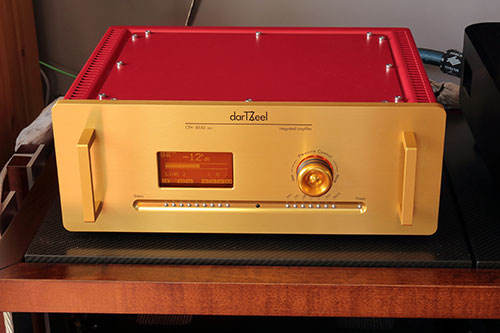

darTZeel Audio CTH-8550 Mk II
darTZeel ist ein Schweizer Unternehmen, das 2001 in Genf von Hervé Delétraz gegründet wurde. Der Name ist ein Anagramm des Nachnamens Delétraz. Die Arbeit an den ersten Geräten begann bereits 1984 im Rahmen einer Diplomarbeit, und nach 18 Jahren Forschung wurde 2002 der Leistungsverstärker NHB-108 offiziell vorgestellt. Es gibt Marken, auf die man viele Jahre warten muss, aber man wartet trotzdem weiter. So war es für mich bei der Marke darTZeel. Zufällig traf ich ihren…13.10.2026 -
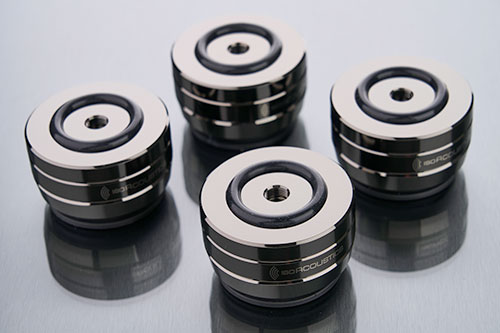
IsoAcoustics GAIA Neo I
Erinnern Sie sich noch? Es ist bereits eine ganze Weile her, da haben Hifi-Fans ihre Lautsprecher auf Tennisbälle gestellt, um einen besseren Klang aus ihnen herauszukitzeln. Oder sie haben abenteuerliche Selfmade-Konstruktionen gebastelt, auf denen die vielleicht nicht ganz highendigen Schallwandler platziert wurden. Das ist lange her und in der Zwischenzeit hat sich in Sachen Lautsprecher-Füße einiges getan. Es gibt eine große Zahl an Herstellern, die Basen, Spikes oder Ständer mit unterschiedlichen Konzepten und Materialien produzieren,…09.10.2026 -
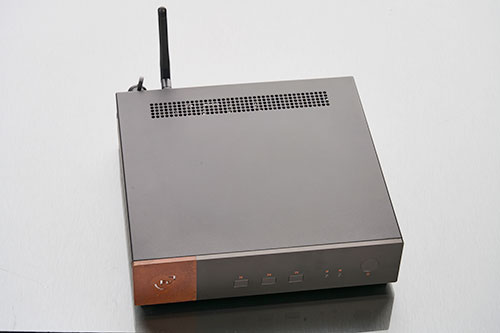
Ferrum BROEN
Auf der High End 2025 ließ man bei Ferrum durchblicken, dass an einem Streamer gearbeitet wird. Die Ferrum Streaming Control Technology, mit der die Musikwiedergabe mittels der Fernbedienung Ferrums DAC WANDLA steuerbar ist, war bereits eine Vorbereitung auf den Streamer und das Schaffen eines gesamten Ferrum-Ökosystems. Im Oktober 2025, wenige Monate nach der High End letzten Jahres waren auf der Audio Video Show in Warschau dann bereits erste BROEN Vorserienmodelle in Betrieb. Auf der diesjährige…06.10.2026 


-
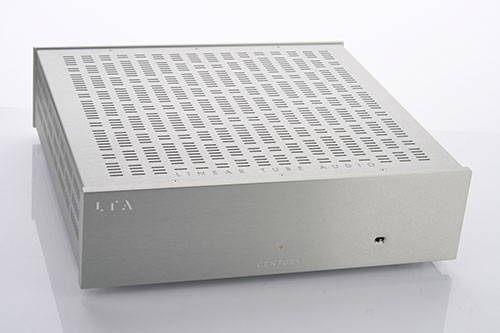
Linear Tube Audio Century
Century heißen die Röhren-Mono-Endverstärker von Linear Tube Audio, die ohne Ausgangsübertrager auskommen und sich dennoch grundlegend von anderen OTL-Konzepten unterscheiden. Wir haben uns intensiv damit beschäftigt, was die patentierte ZOTL-Technologie des Entwicklers so besonders macht und wie sie sich klanglich auswirkt. Für diesen Test haben Dirk Sommer und ich uns eine Arbeitsteilung vorgenommen, bei der ich (Carsten Bussler) mich auf die Technik der Century-Monos sowie die Hintergründe zu Linear Tube Audio und die Zusammenarbeit mit…29.09.2026 -
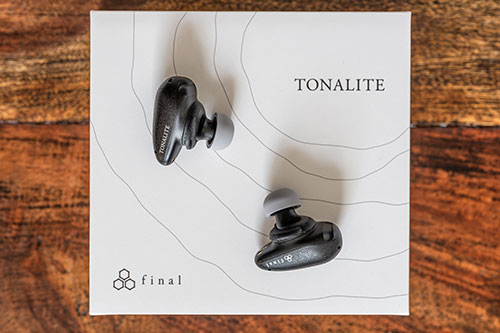
Final Tonalite
Finals Tonalite ist nicht nur ein neuer In-Ear, sondern macht gleichzeitig Finals Timbreanpassung jedem Nutzer mittels einer App zugänglich. Seit der noch etwas kryptischen Ankündigung dieser Technologie auf der High End 2022 habe ich Ihnen über den Entwicklungsprozess berichtet. Das fertige Produkt halte ich persönlich für einen Meilenstein. Tonalite ist eine grundlegende Neuentwicklung mit neuem Formfaktor und neuer Technik. Die Tonalite In-Ears verfügen über eine eher ovale Form, in der die gesamte Elektronik untergebracht ist.…25.09.2026 -
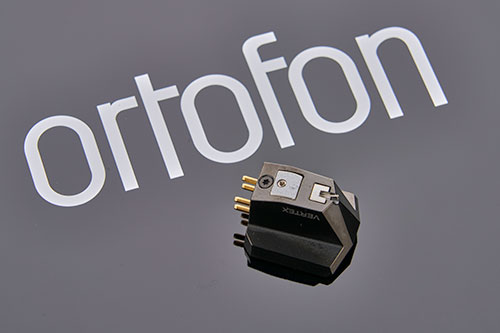
Ortofon MC Vertex
Die bisherigen Topmodelle von Ortofon, das Anna, das Anna Diamond und das Diamond, ähnelten einander auch optisch stark. Das Vertex macht schon durch sein Erscheinungsbild klar, dass es anders ist. Es ist der erste Tonabnehmer mit einem Diamanten mit Vertex-Schliff. Soweit mir bekannt, ist das der erste neue Nadelschliff seit rund 40 Jahren. Aber das ist nicht die einzige Veränderung gegenüber dem MC Diamond: Der Generator des Vertex besitzt einen deutlich höheren Innenwiderstand, die Nadelnachgiebigkeit…15.09.2026
© 2026 | HIFISTATEMENT | netmagazine | Alle Rechte vorbehalten | Impressum | Datenschutz


Einige Hifistatement-Autoren benutzen
Qobuz Sublime+ Abonnements.

Einige Hifistatement-Autoren besitzen
eine roon Mitgliedschaft.

Einige Hifistatement-Autoren besitzen
die JPLAY hi-fi app.

Einige Hifistatement-Autoren besitzen
den Audirvana Plus 3 Music Player.