


 |
|
“Further, in some applications, these laboratory instruments have become worse at their intended jobs. The Audio Precision, for example, is a fabulous digital test instrument, respected industry-wide for its ability to provide insight into the performance capabilities of many audio circuits and components. However, its design inherently limits its high-frequency sensitivity to well below 500kHz. This is just below the AM radio band! Analog test benches could have been much better in this regard, but most tests were done with both high- and low-frequency filters in place. Why? To get consistent readings, and because almost nothing does well when all the induced noise is shown. ... However, if we wish to make technological strides forwards, we must see, acknowledge, and consider the full extent of the problems in play (warts and all). We must accept that there is simply too much induced noise to fully dissipate. Rather, we will need to both dissipate and drain the noise in the most efficacious way possible — and in the most even, consistent, or linear means possible. … The characteristic impedance (ie, 50, 75, or 110 ohm) of an interconnect cable has to do with the geometric spacing of the topology’s high- to low-signal conductors and their dielectric constant. (It has nothing to do with series resistance, by the way.) These designs go back to broadcast radio and video — specifically, transmission lines. When matched with source and load electrical circuits of the exact same impedance, many inherent losses and distortions are either eliminated or greatly reduced. However, for many reasons that are both practical and directly related to circuit performance, that idea was abandoned by most of the audiophile industry almost from the beginning.
So, would there be any benefit in eliminating (as best we could), the cable’s characteristic impedance? Absolutely! Could it be done? Yes — the issue is markedly reduced by eliminating the cable’s dielectric constant via 100% electrostatic screening. This is a technology that I developed for AudioQuest’s Storm Series of AC power cables as an offshoot of technologies developed for our Niagara Series power products. In those applications, the fundamental issue was minimizing any distortion or compression of transient current. For an analog interconnect, no such issue exists. However, the need for predictable linear behavior is still paramount. In fact, it’s even more vital as the primary audio signal reaches far lower into the noise-floor. ... Through considerable testing and work, we have created a repeatable method for establishing a level of Permanent Molecular Optimization of both the cable contacts and the dielectric, the effects of which no existing system or method could possibly achieve after any length of time. The process optimally stresses the associated materials in a fashion similar to the purposeful run-in of a fine race engine …."
(Excerpted from "AudioQuest Mythical Creature Analog Interconnects – A Technological Leap Forward by Garth Powell | 2-22-2022)

Richard Drees and Rob Hay brought also two RCA cables, one of which had been treated according to Garth Powell's process. However, we could not hear the differences since my chain is wired symmetrically. However, in the not too distant future, a treated and an untreated XLR connection should arrive at my house. I will tell you about my experiences with them in a supplement to this article. But let's finally get to the first mythical creature, the ThunderBird. Its conductors are "Perfect-Surface Copper," i.e., high-purity copper with a special surface treatment. As a reference to this material, the surfaces of the special XLR connectors – the three individual signal conductors have to be accommodated in them, after all – are copper-coated, which is also supposed to benefit RF conduction. The two 1.5-meter cables replace the Goebel High End Lacorde Statement between my D/A converter, Chord Electronics' DAVE, and the Audio Exklusiv's Reference line-preamp.


-
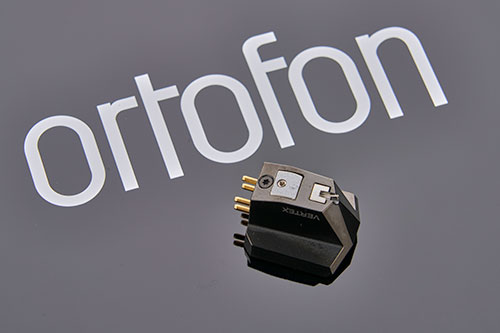
Ortofon MC Vertex
Die bisherigen Topmodelle von Ortofon, das Anna, das Anna Diamond und das Diamond, ähnelten einander auch optisch stark. Das Vertex macht schon durch sein Erscheinungsbild klar, dass es anders ist. Es ist der erste Tonabnehmer mit einem Diamanten mit Vertex-Schliff. Soweit mir bekannt, ist das der erste neue Nadelschliff seit rund 40 Jahren. Aber das ist nicht die einzige Veränderung gegenüber dem MC Diamond: Der Generator des Vertex besitzt einen deutlich höheren Innenwiderstand, die Nadelnachgiebigkeit…15.09.2026 -
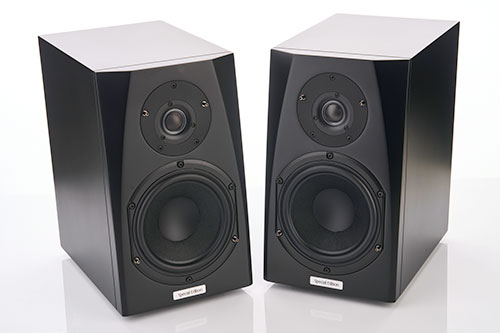
Phonar Veritas M4.2 SE
Es hat mir bislang stets Vergnügen bereitet, mich mit Phonar Lautsprechern zu beschäftigen. Nach einem Test kaufte ich die Veritas 9.2 SE und genieße seitdem ihre Musikalität. Phonar überzeugte immer wieder mit einem außergewöhnlich attraktiven Preis-Klang-Verhältnis. Bestätigt die neue, kompakte Phonar Veritas M4.2 SE diese Erfahrungen? Mein eindrucksvollstes Phonar-Erlebnis hatte ich vor zwei Jahren mit der Standbox Veritas p4.2 Next, die aktuell für einen Paarpreis von 2400 Euro auf der Phonar-Website zu sehen ist. Genau…08.09.2026 -
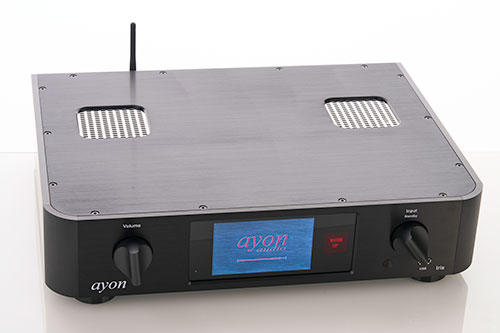
Ayon Iris Signature Streamer
Auf der High End Vienna haben Dirk Sommer und ich den Ayon Iris erstmals entdeckt – nun steht der außergewöhnliche Streaming-Player bei uns bereits zum Test. So frisch ist der Iris, dass selbst die Roon-Zertifizierung zum Testzeitpunkt noch läuft. Brandneu, doch der Iris kommt keineswegs aus dem Nichts: Wer die Entwicklung der digitalen Ayon-Komponenten verfolgt hat, erkennt eine kontinuierliche Beschäftigung mit dem Thema Streaming. Auch wir konnten diesen Weg begleiten – nach dem S3 und…01.09.2026 


-
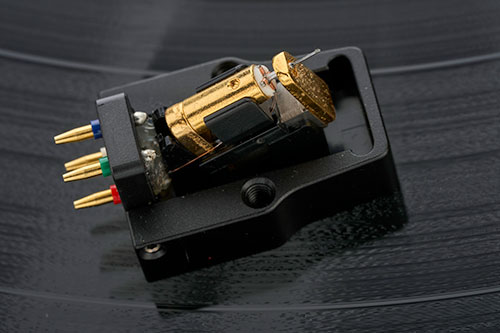
Sumiko Starling
Mein letzter Test eines Tonabnehmersystems befasste sich mit dem Sumiko Oriole. Nun drehen sich für diesen Test meine Schallplatten unter dem Sumiko Starling, dem teuersten System aus der Sumiko Referenz Serie. Nachdem ich überaus positiv überrascht vom Test des Oriole war und dies Peter Laitenberger vom deutschen ATR Vertrieb mitteilte, empfahl mir dieser mir doch einmal das Sumiko Starling anzuhören. Gesagt, getan und bereits wenige Tage später kam das kleine Päckchen mit dem Starling zu…28.08.2026 -
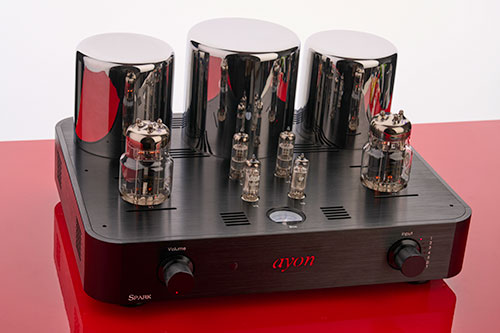
Ayon Spark V
Der Röhrenvollverstärker Spark ist mittlerweile seit über 20 Jahren ein fester Bestandteil des Produktportfolios von Ayon. Preislich eher im Einstiegssegment der Österreicher und nominell unterhalb der Evolution-Serie angesiedelt, hat dieses Gerät aufgrund der eingesetzten russischen Triode 6C33 das Potenzial zum Hidden Champion. Spätestens seit meinem Test des Boliden Ayon Crossfire Evo maße ich mir an, ein Kenner der Marke Ayon zu sein, zumal mir diverse andere Geräte der Marke im Laufe der Jahre zu Gehör…25.08.2026 -
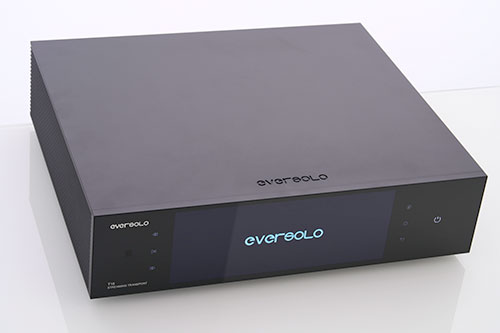
Eversolo T10
Eversolos Streamer DMP-A10 beeindruckte mit seinem hervorragenden Preis/Leistungsverhältnis und seiner prallen Ausstattungsfülle. Aber in meiner Kette im Wohnzimmer mit M-Scaler und HUGO 2 arbeitet er nur als reiner Datenlieferant. Kann das Eversolos neuer Streaming Transport T10 noch besser? Zumindest nach dem ersten Blick auf das rückseitige Anschlussfeld darf man das vermuten, denn dort befinden sich wie beim Eversolo DAC-Z10 zwei BNC-Anschlüsse für die Verbindung mit einer externen Clock, entweder mit einer Impedanz von 75 oder…21.08.2026
© 2026 | HIFISTATEMENT | netmagazine | Alle Rechte vorbehalten | Impressum | Datenschutz


Einige Hifistatement-Autoren benutzen
Qobuz Sublime+ Abonnements.

Einige Hifistatement-Autoren besitzen
eine roon Mitgliedschaft.

Einige Hifistatement-Autoren besitzen
die JPLAY hi-fi app.

Einige Hifistatement-Autoren besitzen
den Audirvana Plus 3 Music Player.