


 |
|
Let's close the two covers of the superbly crafted case again and turn our attention to the music: After having thought to have noticed a slight roughness in the sound when played out-of-the-box, it now looks quite different after a week in standby mode connected to the unfiltered power outlet of my Mudra Max and accompanied by several hours of casual music listening. However, this clearly depicted sonic image is somewhat unusual and impressive at the same time. In the past months I had the opportunity to have several top-class amplifiers in the price range above 6000 euros performing on my full-range ribbon loudspeakers. They all differed from each other sonically. But only very few of them were able to generate such a controlled and contoured bass as the Forté1. It obviously doesn't allow my Analysis Audio Epsylon to show any uncontrolled reverberation. This not only offers a precise and deep bass response, but it also affects transparency and fine detail throughout the whole frequency spectrum. So I am happy about this kind of clear and clean sound, which I did not expect from a device in this price range in the first place. When I streamed the album Life Goes On from Qobuz in CD quality, Carla Bley's grand piano sounded beautifully full-bodied woody, clear without thickening up and completely free of unwelcome artifacts. In a powerful and equally filigree manner, the Forté makes the grand piano sound credibly proportioned. The instruments of the two fellow musicians Steve Swallow on the bass and Andy Sheppard alternatingly on both tenor and soprano saxophone join in colourfully and well contoured. The Forté1 lets the music flow and caresses the listener despite all its accuracy. This is an ability that one cannot really expect from such a low-priced component - even if 5000 euros is not chicken feed. Compared to the experiences I had in the same acoustic environment with completely different calibers, I should note, however, that the Forté can certainly not keep up with them in all points.

Thus, the Forté does not embrace the listener with the cozy musical warmth as a Cayin CS-805A does, for example, and it certainly does not achieve the grandeur of Marco Manunta's Larson mono amps either. How could that be, given the price differences? But even if you take the just mentioned antagonists as standards, there still is something special, pleasing, sonically appealing in the tonal character of the smallest delegate of the Axxess range. It’s the accuracy, which is particularly impressive in the lows and in the fundamental tone. Still, it is not accompanied by a particular graduation in the spatial imaging. It’s there, but not in such a way as to astonish: The Forté outlines the imaginary stage in a contoured and credible manner. More is not necessary here. As with all audio components, the decisive factor for me is the enjoyment factor, as well as the answer to the question: Does the music touch me emotionally? With the Forté1, I can happily say yes to that.
Even when I connected my Wadia CD transport via a Toslink cable and inserted The In Crowd by the Ramsey Lewis Trio, the basic musical character of the Forté remained the same, and it was real fun listening to the music. It satisfies me with its enthusiasm and the immediacy with which it renders the music. I mainly used it as a streamer and as a DAC fed by the Roon computer. The latter combination made the sound a bit warmer, more rounded off, which I personally liked very much, but may not necessarily be considered better. As a stand-alone component in the network, the Forté1 lets its strengths shine entirely and independently of the music genre. Imposing and immensely colourful, powerful and decisive, tonally with a minimal unstable iridescence, as probably desired by the composer, do the eight horns sound in the intro of Symphony No. 3 by Gustav Mahler with the Bavarian Radio Symphony Orchestra, conducted by Mariss Jansons. This excellent recording then lets the low-frequent percussion roll punchily into the room from behind. The Forté1's accuracy takes nothing whatsoever away from the instruments' colourfulness and sonority. Accuracy and tonal splendor find a thrilling synthesis in the Forté1, and particularly so in "classical" music. I have rarely enjoyed this symphony in such a state of excitement. The dynamics leave nothing to be desired here either, and the spatial imaging, while not overly deep, is large on a cleanly delineated, wide stage.


-
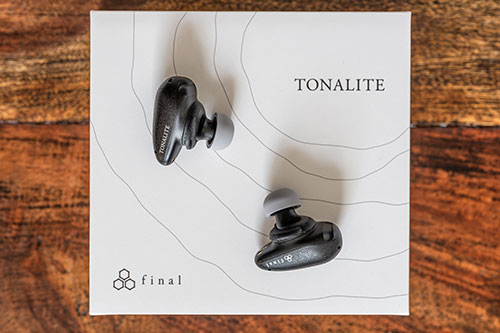
Final Tonalite
Finals Tonalite ist nicht nur ein neuer In-Ear, sondern macht gleichzeitig Finals Timbreanpassung jedem Nutzer mittels einer App zugänglich. Seit der noch etwas kryptischen Ankündigung dieser Technologie auf der High End 2022 habe ich Ihnen über den Entwicklungsprozess berichtet. Das fertige Produkt halte ich persönlich für einen Meilenstein. Tonalite ist eine grundlegende Neuentwicklung mit neuem Formfaktor und neuer Technik. Die Tonalite In-Ears verfügen über eine eher ovale Form, in der die gesamte Elektronik untergebracht ist.…25.09.2026 -
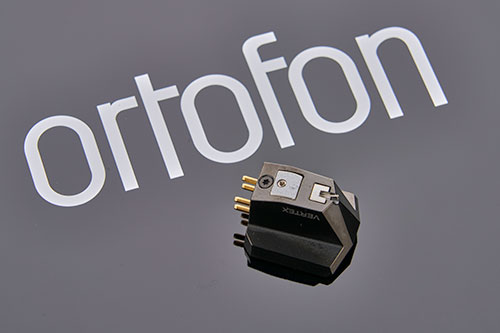
Ortofon MC Vertex
Die bisherigen Topmodelle von Ortofon, das Anna, das Anna Diamond und das Diamond, ähnelten einander auch optisch stark. Das Vertex macht schon durch sein Erscheinungsbild klar, dass es anders ist. Es ist der erste Tonabnehmer mit einem Diamanten mit Vertex-Schliff. Soweit mir bekannt, ist das der erste neue Nadelschliff seit rund 40 Jahren. Aber das ist nicht die einzige Veränderung gegenüber dem MC Diamond: Der Generator des Vertex besitzt einen deutlich höheren Innenwiderstand, die Nadelnachgiebigkeit…15.09.2026 -
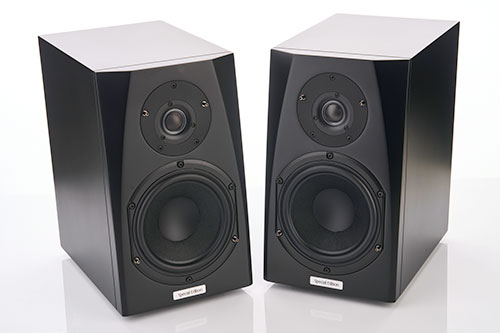
Phonar Veritas M4.2 SE
Es hat mir bislang stets Vergnügen bereitet, mich mit Phonar Lautsprechern zu beschäftigen. Nach einem Test kaufte ich die Veritas 9.2 SE und genieße seitdem ihre Musikalität. Phonar überzeugte immer wieder mit einem außergewöhnlich attraktiven Preis-Klang-Verhältnis. Bestätigt die neue, kompakte Phonar Veritas M4.2 SE diese Erfahrungen? Mein eindrucksvollstes Phonar-Erlebnis hatte ich vor zwei Jahren mit der Standbox Veritas p4.2 Next, die aktuell für einen Paarpreis von 2400 Euro auf der Phonar-Website zu sehen ist. Genau…08.09.2026 


-
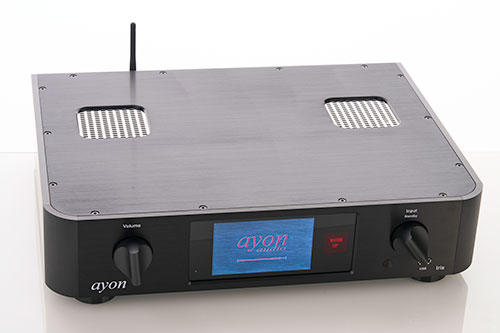
Ayon Iris Signature Streamer
Auf der High End Vienna haben Dirk Sommer und ich den Ayon Iris erstmals entdeckt – nun steht der außergewöhnliche Streaming-Player bei uns bereits zum Test. So frisch ist der Iris, dass selbst die Roon-Zertifizierung zum Testzeitpunkt noch läuft. Brandneu, doch der Iris kommt keineswegs aus dem Nichts: Wer die Entwicklung der digitalen Ayon-Komponenten verfolgt hat, erkennt eine kontinuierliche Beschäftigung mit dem Thema Streaming. Auch wir konnten diesen Weg begleiten – nach dem S3 und…01.09.2026 -
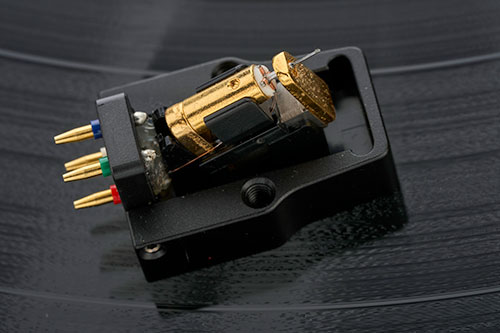
Sumiko Starling
Mein letzter Test eines Tonabnehmersystems befasste sich mit dem Sumiko Oriole. Nun drehen sich für diesen Test meine Schallplatten unter dem Sumiko Starling, dem teuersten System aus der Sumiko Referenz Serie. Nachdem ich überaus positiv überrascht vom Test des Oriole war und dies Peter Laitenberger vom deutschen ATR Vertrieb mitteilte, empfahl mir dieser mir doch einmal das Sumiko Starling anzuhören. Gesagt, getan und bereits wenige Tage später kam das kleine Päckchen mit dem Starling zu…28.08.2026 -
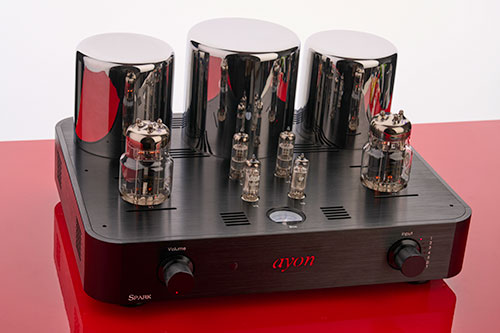
Ayon Spark V
Der Röhrenvollverstärker Spark ist mittlerweile seit über 20 Jahren ein fester Bestandteil des Produktportfolios von Ayon. Preislich eher im Einstiegssegment der Österreicher und nominell unterhalb der Evolution-Serie angesiedelt, hat dieses Gerät aufgrund der eingesetzten russischen Triode 6C33 das Potenzial zum Hidden Champion. Spätestens seit meinem Test des Boliden Ayon Crossfire Evo maße ich mir an, ein Kenner der Marke Ayon zu sein, zumal mir diverse andere Geräte der Marke im Laufe der Jahre zu Gehör…25.08.2026
© 2026 | HIFISTATEMENT | netmagazine | Alle Rechte vorbehalten | Impressum | Datenschutz


Einige Hifistatement-Autoren benutzen
Qobuz Sublime+ Abonnements.

Einige Hifistatement-Autoren besitzen
eine roon Mitgliedschaft.

Einige Hifistatement-Autoren besitzen
die JPLAY hi-fi app.

Einige Hifistatement-Autoren besitzen
den Audirvana Plus 3 Music Player.