


 |
|The E14 model presented here in natural Canadian maple veneer has four levels and a height of 85 centimetres, whereby the bottom level can hold up to 75 kilograms and the upper levels up to 25 kilograms each. The upper levels can be positioned in three-centimetre increments using a grid of micro-holes in the side pillars for the side spikes. In terms of the overall height, I found the 85 centimetres to be ergonomically perfect for me; however, heights of 45, 60, 70 or 110 centimetres and a minimum of two to a maximum of five levels are also possible. So, everyone should find the right model or combination for their components.

Thanks to what I consider to be a very convincing, simple and timeless design in combination with the various finish options, the E14 model blends easily into any existing living environment. All well and good so far, but in the past I've had my fair share of experience with hi-fi racks from a wide range of manufacturers and price ranges when it comes to proper horizontal alignment and I've occasionally wondered why it has to be so fiddly. Not so with Finite Elemente! Here, height-adjustable conical feet with an integrated protective plate are used, which are easily accessible and have sufficient height clearance. Thanks to the high-quality tool supplied, which is worthy of the name, this challenge is also child's play: instead of having to screw the thread by hand, the floor cones are turned using a small steel rod that is inserted into a hole in the cone. So it's all sunshine and roses here!
After the compulsory part now comes the optional part: the technology. In principle, the design of the Signature line is based on that of the Edition series ranging above it in the hierarchy, but dispenses with the "Resonator Technology" used there, which was developed in collaboration with Prof. Dr Borchert from Dortmund University of Applied Sciences and Arts. The elaborate frame construction with shelves resting on ceramic ball bearings has also been cancelled. Instead, resonance-optimized HCCT component shelves are used, which are not only lightweight but also very torsion-resistant thanks to honeycomb core technology. A multi-layer wood panel forms the core of each bottom level, with a honeycomb core matrix of hexagonal elements made of polymer plastic on the top and bottom. This construction is encased by an HDF layer, on which the veneer or lacquer is then applied. For the upper levels, only a honeycomb core matrix is used instead of the multiplex board with a double honeycomb core structure as in the bottom level element.

Incidentally, Finite Elemente uses Canadian maple wood because it has particularly important properties in terms of resonance behaviour. Because this type of tree grows particularly slowly, the structure of the wood is demonstrably homogeneous and even and, for example, harder than European maple woods or the even softer cherry woods. It is therefore no coincidence that Canadian maple is also used as tonewood or instrument wood. Each of the upper levels has two recessed stainless steel spikes with counter discs on both sides. These fit exactly into the micro holes arranged in a grid in the side aluminum pillars. The very detailed and well-made assembly instructions recommend masking the aluminum surfaces with masking tape during assembly to prevent the spikes from scratching them incidently during assembly.


-
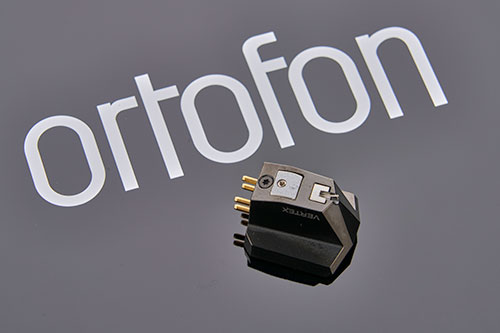
Ortofon MC Vertex
Die bisherigen Topmodelle von Ortofon, das Anna, das Anna Diamond und das Diamond, ähnelten einander auch optisch stark. Das Vertex macht schon durch sein Erscheinungsbild klar, dass es anders ist. Es ist der erste Tonabnehmer mit einem Diamanten mit Vertex-Schliff. Soweit mir bekannt, ist das der erste neue Nadelschliff seit rund 40 Jahren. Aber das ist nicht die einzige Veränderung gegenüber dem MC Diamond: Der Generator des Vertex besitzt einen deutlich höheren Innenwiderstand, die Nadelnachgiebigkeit…15.09.2026 -
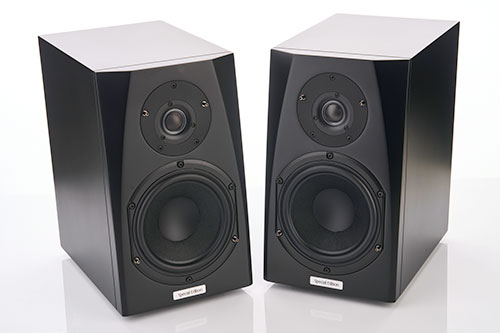
Phonar Veritas M4.2 SE
Es hat mir bislang stets Vergnügen bereitet, mich mit Phonar Lautsprechern zu beschäftigen. Nach einem Test kaufte ich die Veritas 9.2 SE und genieße seitdem ihre Musikalität. Phonar überzeugte immer wieder mit einem außergewöhnlich attraktiven Preis-Klang-Verhältnis. Bestätigt die neue, kompakte Phonar Veritas M4.2 SE diese Erfahrungen? Mein eindrucksvollstes Phonar-Erlebnis hatte ich vor zwei Jahren mit der Standbox Veritas p4.2 Next, die aktuell für einen Paarpreis von 2400 Euro auf der Phonar-Website zu sehen ist. Genau…08.09.2026 -
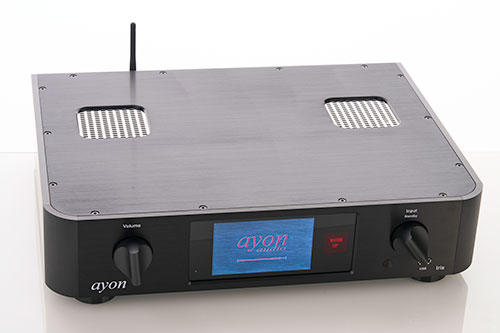
Ayon Iris Signature Streamer
Auf der High End Vienna haben Dirk Sommer und ich den Ayon Iris erstmals entdeckt – nun steht der außergewöhnliche Streaming-Player bei uns bereits zum Test. So frisch ist der Iris, dass selbst die Roon-Zertifizierung zum Testzeitpunkt noch läuft. Brandneu, doch der Iris kommt keineswegs aus dem Nichts: Wer die Entwicklung der digitalen Ayon-Komponenten verfolgt hat, erkennt eine kontinuierliche Beschäftigung mit dem Thema Streaming. Auch wir konnten diesen Weg begleiten – nach dem S3 und…01.09.2026 


-
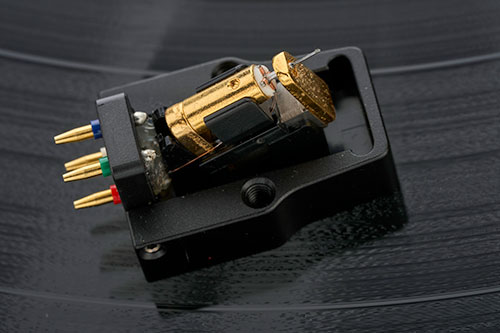
Sumiko Starling
Mein letzter Test eines Tonabnehmersystems befasste sich mit dem Sumiko Oriole. Nun drehen sich für diesen Test meine Schallplatten unter dem Sumiko Starling, dem teuersten System aus der Sumiko Referenz Serie. Nachdem ich überaus positiv überrascht vom Test des Oriole war und dies Peter Laitenberger vom deutschen ATR Vertrieb mitteilte, empfahl mir dieser mir doch einmal das Sumiko Starling anzuhören. Gesagt, getan und bereits wenige Tage später kam das kleine Päckchen mit dem Starling zu…28.08.2026 -
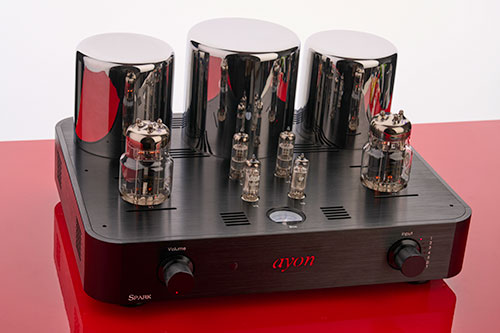
Ayon Spark V
Der Röhrenvollverstärker Spark ist mittlerweile seit über 20 Jahren ein fester Bestandteil des Produktportfolios von Ayon. Preislich eher im Einstiegssegment der Österreicher und nominell unterhalb der Evolution-Serie angesiedelt, hat dieses Gerät aufgrund der eingesetzten russischen Triode 6C33 das Potenzial zum Hidden Champion. Spätestens seit meinem Test des Boliden Ayon Crossfire Evo maße ich mir an, ein Kenner der Marke Ayon zu sein, zumal mir diverse andere Geräte der Marke im Laufe der Jahre zu Gehör…25.08.2026 -
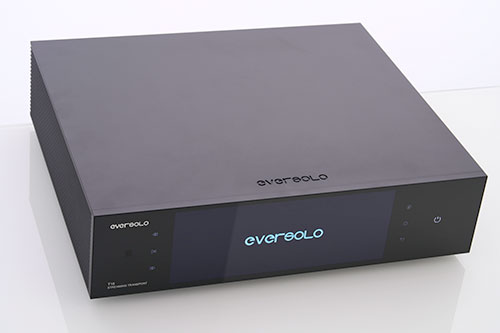
Eversolo T10
Eversolos Streamer DMP-A10 beeindruckte mit seinem hervorragenden Preis/Leistungsverhältnis und seiner prallen Ausstattungsfülle. Aber in meiner Kette im Wohnzimmer mit M-Scaler und HUGO 2 arbeitet er nur als reiner Datenlieferant. Kann das Eversolos neuer Streaming Transport T10 noch besser? Zumindest nach dem ersten Blick auf das rückseitige Anschlussfeld darf man das vermuten, denn dort befinden sich wie beim Eversolo DAC-Z10 zwei BNC-Anschlüsse für die Verbindung mit einer externen Clock, entweder mit einer Impedanz von 75 oder…21.08.2026
© 2026 | HIFISTATEMENT | netmagazine | Alle Rechte vorbehalten | Impressum | Datenschutz


Einige Hifistatement-Autoren benutzen
Qobuz Sublime+ Abonnements.

Einige Hifistatement-Autoren besitzen
eine roon Mitgliedschaft.

Einige Hifistatement-Autoren besitzen
die JPLAY hi-fi app.

Einige Hifistatement-Autoren besitzen
den Audirvana Plus 3 Music Player.