


 |
When I put on the purple vinyl, I was a little alarmed to see a fairly wide scratch running across the entire first track. It appears to be quite superficial, however, because the Vertex-profile stylus glides through the groove completely unaffected: not a single disturbing noise can be heard. “Third Call” brings back memories of what, to me, are the classic first six albums. It begins with a delicate Hammond introduction, continues with an irresistible mid-tempo groove and a clearly articulated guitar solo, before Don Airey puts his instrument through its paces in true John Lord style. The MC Vertex, together with Christoph Stickel’s mastering, ensures that the sound is bursting with energy while remaining exceptionally transparent and open: hard rock and high-end audio at their finest!

I still greatly enjoy the title track of Carla Bley’s Life Goes On. Yet its naturally recorded acoustics, the deep-reaching acoustic electric bass, the resonant low notes of the grand piano, and the energetic blowing sounds of the otherwise mellifluous saxophone make this track the perfect test piece. The MC Vertex conveys all these sonic pleasures, and a little more besides. The large hall seems even more spacious, the sparse piano introduction even more rhythmically precise and almost tangible in its three-dimensional presence. The bass sounds as powerful as ever yet is so well defined that it no longer sets anything in my listening room vibrating in sympathy. I have never heard the track sound this good in my own home. The first two tracks on the virtually indispensable Bang, Barroom And Harp also demonstrate the MC Vertex’s exceptional qualities. It offers a little more in every respect: more dynamics, more space, more definition, more transparency, more tonal color, and quite simply more enjoyment. Because this flagship Ortofon’s extraordinary abilities are distributed so evenly across all aspects of reproduction, it does not develop a characteristic sonic signature of its own. Its performance is remarkably coherent and homogeneous.

Finally, I put on Shostakovich’s Symphony No. 15 with the Duisburg Philharmonic: here, too, the MC Vertex captivates with a soundstage completely detached from the loudspeakers and extending far into the depth of the room. Tonal colors, separation and focus of the individual instruments and instrumental groups leave nothing to be desired, demonstrating just how well the cartridge works with Ortofon’s own tonearm. Nevertheless, the AS-309R has to make way for the 12-inch version of Einstein’s The Tonearm. The repeated adjustment work pays off sonically: with The Tonearm, the Ortofon creates a soundstage that extends just a touch further in every dimension, instrumental colors glow a little more intensely, and the bass seems slightly more powerful while also displaying greater tonal variety. Although I had been entirely satisfied in these respects with the Vertex and AS-309R combination, I now enjoy an even slightly more stable image and sharper focus. Einstein’s very rigid tonearm draws just a little more sonic beauty from the Ortofon. I could happily live with the MC Vertex in the AS-309R, but The Tonearm allows even more of its extraordinary capabilities to shine through. As I let the LP continue and enjoy the second movement of Symphony No. 15, I notice almost in passing that the near-total disappearance of groove noise frees the reproduction from mechanical artefacts. The MC Vertex allows the music to unfold very naturally: simply magnificent.


-
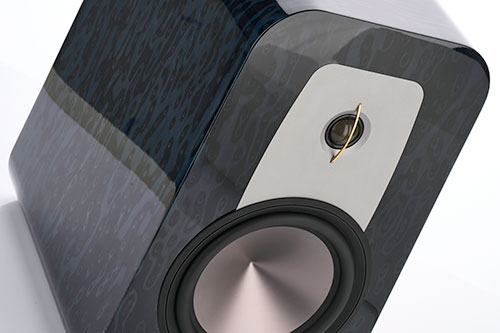
AperionAudio Grandis GR8
Das vielseitige Lautsprecher-Programm des amerikanischen Herstellers AperionAudio wird hierzulande von HiFi-Pilot importiert und direkt dem Endkunden angeboten. Das sorgt für ein attraktives Preisniveau, da die Fachhandelsspanne entfällt. Allerdings findet man AperionAudio deshalb ausschließlich im Netz oder kann sie auf Ausstellungen erleben. Es war mir unlängst ein großes Vergnügen, mich mit den Phonar Veritas M4.2 SE und den KLH Model Four zu beschäftigen. Bei soviel klanglichem Niveau für relativ bescheidenes Geld kommt eigentlich keine Sehnsucht nach…23.11.2026 -
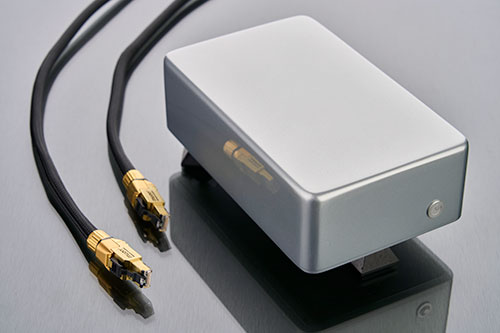
Muon2 Ethernet Filter
Netzwerk-Audio hat die HiFi-Welt verändert und zugleich die Bedeutung der Netzwerkinfrastruktur in den Fokus gerückt. Mit dem Muon2 Ethernet Filter stellt Network Acoustics sein neues Referenzmodell vor – eine konsequente Lösung zur Optimierung anspruchsvoller Streaming-Ketten. Wer noch vor einigen Jahren behauptet hat, ein Ethernet-Kabel oder ein Switch im Netzwerkpfad könne den Klang einer HiFi-Anlage beeinflussen, ist vermutlich auf erhebliche Skepsis gestoßen. Schließlich gilt bei der digitalen Übertragung zunächst ein einfaches Prinzip: Die Daten kommen entweder…17.11.2026 -
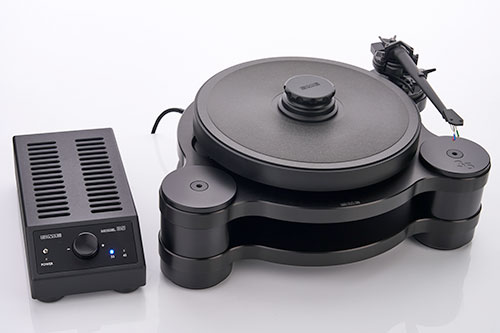
SME Model 35
Bei einem Treffen mit Mansour Mamaghani Anfang des Jahres in seinem Hamburger Unternehmenssitz kam das Gespräch schnell auf seinen neuesten Coup: Audio Reference hatte 2025 den Vertrieb für die britische Edel-Marke SME übernommen. Ganz klar, dass Hifistatement eins der neuen Modelle testen wollte. Voilà, es ist so weit: Ein SME Model 35 hat auf meinem Copulare-Rack Platz genommen und will zeigen, warum die Marke im Analogbereich ganz oben mitspielt. Schon der erste Eindruck lässt einiges…09.11.2026 


-
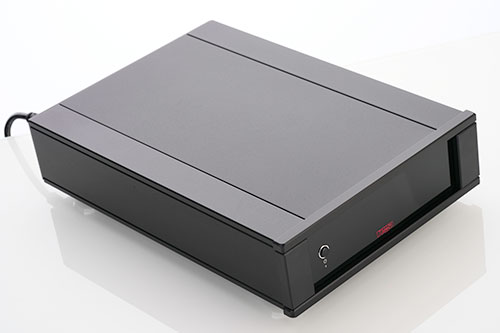
Rega Aos MC
Rega schließt die Lücke in seinem Portfolio für MC-Phonovorstufen. Die neue Aos positioniert sich zwischen der vergleichsweise einfachen Fono MC und der Referenz-Phonovorstufe Aura MC. Mit von der Aura abgeleiteter Technik und einem Preis von 2000 Euro dürfte sie im interessanten Sweet Spot für die meisten MC-Fans liegen. Schon allein aufgrund ihrer bloßen Abmessungen wickelt mich dieses Gerät sofort um den Finger. Mit der ungefähren Grundfläche eines DIN-A4-Blatts und der schmalen Seite als Front entspricht…03.11.2026 -
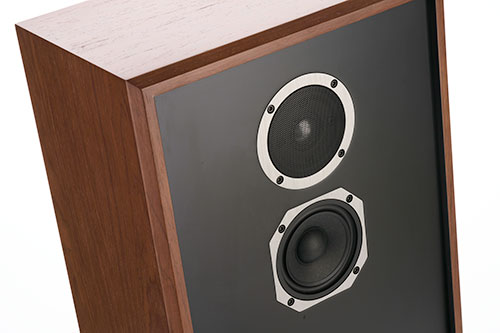
KLH Audio Model Four
Endlich steht mal etwas ganz anderes in meinem Hörraum. Der Lautsprecher des traditionsreichen amerikanischen Herstellers KLH entspricht einem Design von vor mehr als 50 Jahren, wie man es auch heutzutage bei Edelmarken wie Harbeth oder Audio Note findet. Bislang hatte ich nicht das Vergnügen, einen solchen Lautsprecher im Hörraum zu erleben. Neben dem Design mit breiter Schallwand und geringer Bautiefe macht der Paarpreis von knapp 2000 Euro die KLH Model Four hochgradig interessant. Auf zum…19.10.2026 -
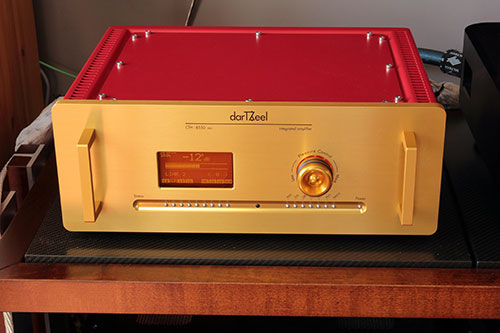

darTZeel Audio CTH-8550 Mk II
darTZeel ist ein Schweizer Unternehmen, das 2001 in Genf von Hervé Delétraz gegründet wurde. Der Name ist ein Anagramm des Nachnamens Delétraz. Die Arbeit an den ersten Geräten begann bereits 1984 im Rahmen einer Diplomarbeit, und nach 18 Jahren Forschung wurde 2002 der Leistungsverstärker NHB-108 offiziell vorgestellt. Es gibt Marken, auf die man viele Jahre warten muss, aber man wartet trotzdem weiter. So war es für mich bei der Marke darTZeel. Zufällig traf ich ihren…13.10.2026
© 2026 | HIFISTATEMENT | netmagazine | Alle Rechte vorbehalten | Impressum | Datenschutz


Einige Hifistatement-Autoren benutzen
Qobuz Sublime+ Abonnements.

Einige Hifistatement-Autoren besitzen
eine roon Mitgliedschaft.

Einige Hifistatement-Autoren besitzen
die JPLAY hi-fi app.

Einige Hifistatement-Autoren besitzen
den Audirvana Plus 3 Music Player.