


 |
|The constructive concept of the Antipodes EX is the key to its sonic abilities. The 24 centimeter wide housing excels through order. You won't find a disturbing fan. The massive, extremely solid case is designed in such a way that sufficient ventilation is provided through openings in the bottom, lid and on the back as well as through appealingly styled cooling fins on the sides. So annoying fan noises surely won’t be the outcome of what the Antipodes sends out into the listening room. For high-grade music playback, the noise behaviour of the computer itself is a decisive factor. And, the mechanical construction as well is relevant to the sonic quality. There are manufacturers who separate complex power supplies in order to avoid interference with the device’s audio section. This, however, increases the risk of losses due to the length of the low-voltage power cable. With the Antipodes, the computer and converter section occupy their own massive compartment in the housing. In the remaining separate chamber, the supply of electricity is generated by elaborate means. So even the low-scatter transformer with its copper shield alone is a real eye-catcher.
From the New Zealand creatives I came to know the following (quotation translated, shortened and slightly changed): "Here an R-core transformer is involved, which is superior to the use of a toroidal core in conjunction with a digital component. The advantage of a toroidal transformer lies in its comparatively lowest external stray magnetic field. But it has the highest primary to secondary parasitic capacitance. High capacitance means that high-frequency EMI and RFI on the AC power line can move more easily from the primary to the secondary side, and can therefore load the power supply with high-frequency noise – really a very bad thing in the world of digital electronics. An EI transformer as an alternative can be designed with a split coil. Primary and secondary sections are quite distant from one another. Thus, the EI can have the lowest primary to secondary parasitic capacitance. However, the EI features a large external stray magnetic field, and by nature it will always interplay with a degree of vibration and hum that is large enough to be problematic in a demanding audio application. The R core is the happy medium. It as separates the primary coil on one side of the half toroid and the secondary coil on the other side, so that it has a much lower primary to secondary parasitic capacitance than a toroidal transformer and is therefore much more capable of blocking RFI and EMI on the AC line. The R-core transformer, that Antipodes Audio has opted for, features high-quality silicon steel core and copper shielding, and is wound with ultra-high purity copper wire. All parts are sourced from highly respected Japanese suppliers. The decision to use the R-core transformer was not only determined by measurement reasons, but also and ultimately by evaluation of its sonic properties". In addition, two gold-black Nichicon electrolytic capacitors with 15,000 picofarads each are located on the rectifier PCB.

I have never seen such an internal walled-up concept using a metal housing as with the Antipodes EX anywhere in this field. Altogether it features four separate chambers. The thick aluminum plates and struts with sockets for the connectors impress with their solidity. In the computer, a HDA Intel PCH ALC233 converts the signal from digital to analogue. This is merely the DAC incorporated in the Intel chipset on the motherboard trimmed for audio purposes, so basically this seems nothing special. But what emerges sonically is remarkable. The fact that the converter transforms the signal as free of jitter as possible is a matter of course for the New Zealander manufacturer. Mechanical solidity is part of the concept of their low-interference digital signal processing, as is the omission of plug-and-play functions. Because every circuit that remains ready for use is always active and disturbs the cleanliness of the digital audio signal processing. This is comparable, for example, to a car battery where keyless go or other radio signal receivers strain the system. To the greatest possible extent, the EX is designed to minimise the load on the computer.


-
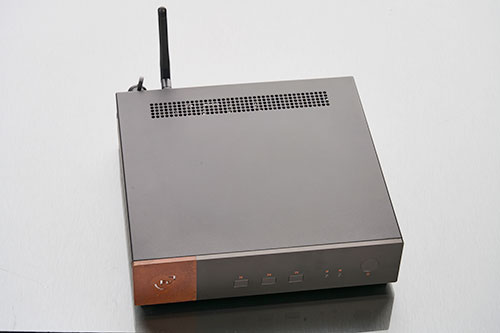
Ferrum BROEN
Auf der High End 2025 ließ man bei Ferrum durchblicken, dass an einem Streamer gearbeitet wird. Die Ferrum Streaming Control Technology, mit der die Musikwiedergabe mittels der Fernbedienung Ferrums DAC WANDLA steuerbar ist, war bereits eine Vorbereitung auf den Streamer und das Schaffen eines gesamten Ferrum-Ökosystems. Im Oktober 2025, wenige Monate nach der High End letzten Jahres waren auf der Audio Video Show in Warschau dann bereits erste BROEN Vorserienmodelle in Betrieb. Auf der diesjährige…06.10.2026 -
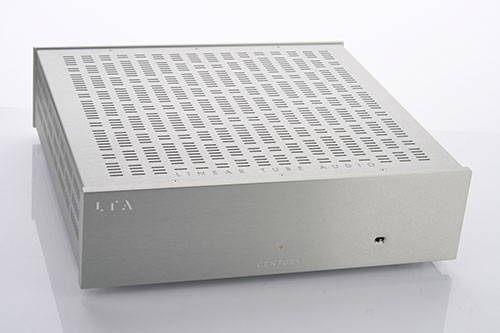
Linear Tube Audio Century
Century heißen die Röhren-Mono-Endverstärker von Linear Tube Audio, die ohne Ausgangsübertrager auskommen und sich dennoch grundlegend von anderen OTL-Konzepten unterscheiden. Wir haben uns intensiv damit beschäftigt, was die patentierte ZOTL-Technologie des Entwicklers so besonders macht und wie sie sich klanglich auswirkt. Für diesen Test haben Dirk Sommer und ich uns eine Arbeitsteilung vorgenommen, bei der ich (Carsten Bussler) mich auf die Technik der Century-Monos sowie die Hintergründe zu Linear Tube Audio und die Zusammenarbeit mit…29.09.2026 -
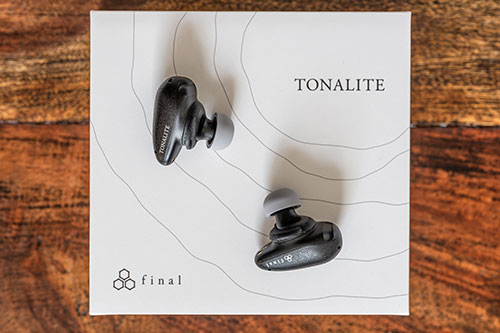
Final Tonalite
Finals Tonalite ist nicht nur ein neuer In-Ear, sondern macht gleichzeitig Finals Timbreanpassung jedem Nutzer mittels einer App zugänglich. Seit der noch etwas kryptischen Ankündigung dieser Technologie auf der High End 2022 habe ich Ihnen über den Entwicklungsprozess berichtet. Das fertige Produkt halte ich persönlich für einen Meilenstein. Tonalite ist eine grundlegende Neuentwicklung mit neuem Formfaktor und neuer Technik. Die Tonalite In-Ears verfügen über eine eher ovale Form, in der die gesamte Elektronik untergebracht ist.…25.09.2026 


-
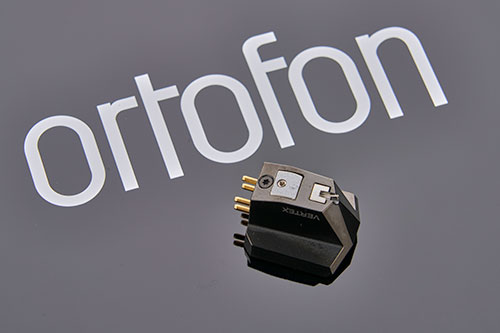
Ortofon MC Vertex
Die bisherigen Topmodelle von Ortofon, das Anna, das Anna Diamond und das Diamond, ähnelten einander auch optisch stark. Das Vertex macht schon durch sein Erscheinungsbild klar, dass es anders ist. Es ist der erste Tonabnehmer mit einem Diamanten mit Vertex-Schliff. Soweit mir bekannt, ist das der erste neue Nadelschliff seit rund 40 Jahren. Aber das ist nicht die einzige Veränderung gegenüber dem MC Diamond: Der Generator des Vertex besitzt einen deutlich höheren Innenwiderstand, die Nadelnachgiebigkeit…15.09.2026 -
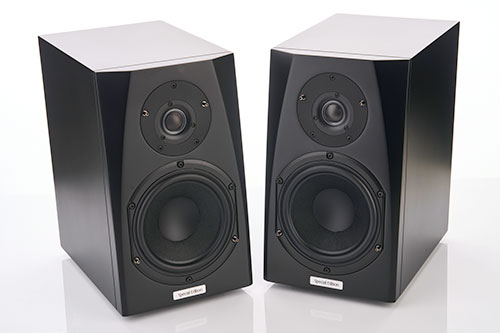
Phonar Veritas M4.2 SE
Es hat mir bislang stets Vergnügen bereitet, mich mit Phonar Lautsprechern zu beschäftigen. Nach einem Test kaufte ich die Veritas 9.2 SE und genieße seitdem ihre Musikalität. Phonar überzeugte immer wieder mit einem außergewöhnlich attraktiven Preis-Klang-Verhältnis. Bestätigt die neue, kompakte Phonar Veritas M4.2 SE diese Erfahrungen? Mein eindrucksvollstes Phonar-Erlebnis hatte ich vor zwei Jahren mit der Standbox Veritas p4.2 Next, die aktuell für einen Paarpreis von 2400 Euro auf der Phonar-Website zu sehen ist. Genau…08.09.2026 -
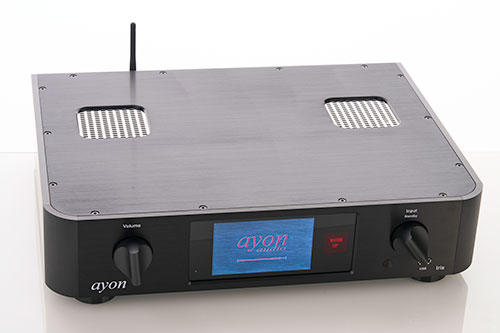
Ayon Iris Signature Streamer
Auf der High End Vienna haben Dirk Sommer und ich den Ayon Iris erstmals entdeckt – nun steht der außergewöhnliche Streaming-Player bei uns bereits zum Test. So frisch ist der Iris, dass selbst die Roon-Zertifizierung zum Testzeitpunkt noch läuft. Brandneu, doch der Iris kommt keineswegs aus dem Nichts: Wer die Entwicklung der digitalen Ayon-Komponenten verfolgt hat, erkennt eine kontinuierliche Beschäftigung mit dem Thema Streaming. Auch wir konnten diesen Weg begleiten – nach dem S3 und…01.09.2026
© 2026 | HIFISTATEMENT | netmagazine | Alle Rechte vorbehalten | Impressum | Datenschutz


Einige Hifistatement-Autoren benutzen
Qobuz Sublime+ Abonnements.

Einige Hifistatement-Autoren besitzen
eine roon Mitgliedschaft.

Einige Hifistatement-Autoren besitzen
die JPLAY hi-fi app.

Einige Hifistatement-Autoren besitzen
den Audirvana Plus 3 Music Player.