


 |
|Any USB drive can be connected to the blue USB ports to rip your CDs to the EX's internal hard disk. For this, Antipodes-Audio offers its own P-1 drive, which due to its dimensions fits the EX as a base. Whatever drive you may choose for ripping, the software recognizes it and offers either lossless compressed FLAC or uncompressed FLAC as format alternatives for storage on the internal hard drive(s). Since storage space nowadays no longer costs the earth, it is recommended to save in uncompressed FLAC format, as the data does not have to be unpacked when being read. This again reduces the load on the computer, which can lead to audible sound differences. I ripped my Mobile Fidelity CD from Patricia Barber's album Companion in this way and compared it to the CD played back on the Wadia transport via the Mutec re-clocker connected to the AES/EBU input of my PS Audio DirectStream DAC. For this first listening test I connected my PS-Audio DAC to the Antipodes by means of an Audioquest USB cable. In this first step I wanted to know how good the EX server sounds in order to be able to evaluate its sonic properties. I consider myself to be one of those listeners who usually prefer direct playback from a CD player to a ripped CD played back as a file using a computer or server.
Without a doubt, the Antipodes EX has changed my "view of the world“. Astonishing how much the New Zealand apparatus stands out from the CD player configuration in terms of sound quality. There is no need for comparative repetitions at all. The Antipodes projects the voice of Patricia Barber unmistakably in a much freer manner and with even cleaner articulation into the room. It resembles the lifting of a veil or curtain. The depth of the imaginary stage even gains a little. Also the dynamic behaviour benefits in a striking way. For example, the track "Touch of Trash", exuberant in percussion, sounds liberated and more explosive. At the same time, the transparency increases significantly and the individual percussion tones add a touch of timbre. The sonic image of the Antipodes played through the PS Audio converter is very similar both in native format, here 16 bit and 44.1 kilohertz, and in the alternative Roon conversion to DSD 128, while in both cases the sound is rendered impressively clear and full of energy. This kind of explosive candour can also be experienced quite clearly in the lows. Here the precision of the Antipodes combines with tones that fade out way deep in the room. The upper registers sound equally convincing due to their rich shading and openness in front of the famous black background. The EX serves a lot of detail and accuracy, but never comes up with anything like annoyance.
All in all, the gain in musicality the Antipodes EX offers is remarkable: Musically, it’s better in all aspects. And this is not about merely consituting a different sound character. The EX simply makes better music. After enjoying this listening experience, the logical comparison with my Apple computer is pending, also equipped with Roon and alternatively with Audirvana Plus as players. Anyway, the computer lacks the impressive liveliness and the playfulness of the Antipodes EX. The familiar fine nuancing isn’t the same, too, and I have the sensation that everything coming from the Mac is a little too superficial. The openness and fantastic, explosive presentation of the Antipodes really makes me feel bad about the computer configuration. If I switch to classical music, Tchaikovsky's Violin Concerto, the Nutcracker Ballet or the Organ Symphony by Camille Saint-Saëns, for example, the EX makes a clear difference to the playback through Apple’s Mac Mini. At first glance, the sound is exceptionally clear. The usual anodyne, slightly chubby shallowness has got lost. The Antipodes creates a great deal more exciting performance. The music sounds more accurate and transparent, almost purified. Now I experience the individual instruments clearly contoured and feel called out to listen carefully. Yes, this is much more fun.


The price of almost 5000 euros for the Antipodes EX, plus the extra hard drives, includes, as already aforementioned, a built-in D/A-converter and is designed as a full working component that only needs the house-made P1 or another USB CD drive to rip the CDs. High-res files, as you can purchase them from highresaudio.com or Qobuz, can easily be transferred from the network-attached computer to the "Storage" folder of the Antipodes. There you have the total volume of one or two installed hard disks at your command. In subfolders you can separate music from video material if you want to store photos or movies on the EX. After having experienced the Antipodes EX in combination with my PS-Audio DAC in such an impressive way, it’s difficult and almost a bit unfair to describe the much cheaper integrated solution of Antipodes EX with built-in converter. Logically, the previous quality level isn’t to be expected. And that's true. But I don't want to hide my amazement and delight about what the EX is capable of bringing to our ears on its own. However, it's not that far away from the PS Audio. Especially if tonality, liveliness, colourfulness and dynamics left their marks in your mind, or better, in your ears, the EX as an integrated solution is really fun. Admittedly, you get a little less of everything, while the openness and depth of focus offered through the aforementioned fallen curtain is a bit reduced, overall it's a great sound and with regard to the price a positive surprise for me. Thus, I rate the Antipodes EX much higher than just an entry-level model from Antipodes Audio.


-
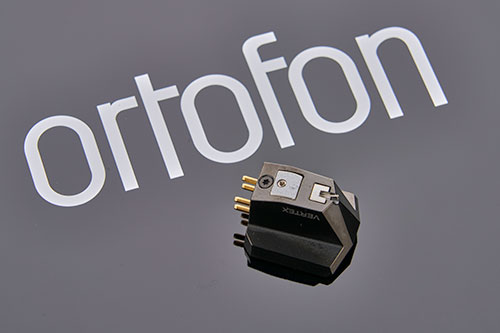
Ortofon MC Vertex
Die bisherigen Topmodelle von Ortofon, das Anna, das Anna Diamond und das Diamond, ähnelten einander auch optisch stark. Das Vertex macht schon durch sein Erscheinungsbild klar, dass es anders ist. Es ist der erste Tonabnehmer mit einem Diamanten mit Vertex-Schliff. Soweit mir bekannt, ist das der erste neue Nadelschliff seit rund 40 Jahren. Aber das ist nicht die einzige Veränderung gegenüber dem MC Diamond: Der Generator des Vertex besitzt einen deutlich höheren Innenwiderstand, die Nadelnachgiebigkeit…15.09.2026 -
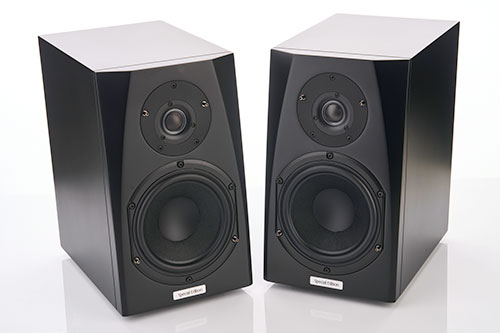
Phonar Veritas M4.2 SE
Es hat mir bislang stets Vergnügen bereitet, mich mit Phonar Lautsprechern zu beschäftigen. Nach einem Test kaufte ich die Veritas 9.2 SE und genieße seitdem ihre Musikalität. Phonar überzeugte immer wieder mit einem außergewöhnlich attraktiven Preis-Klang-Verhältnis. Bestätigt die neue, kompakte Phonar Veritas M4.2 SE diese Erfahrungen? Mein eindrucksvollstes Phonar-Erlebnis hatte ich vor zwei Jahren mit der Standbox Veritas p4.2 Next, die aktuell für einen Paarpreis von 2400 Euro auf der Phonar-Website zu sehen ist. Genau…08.09.2026 -
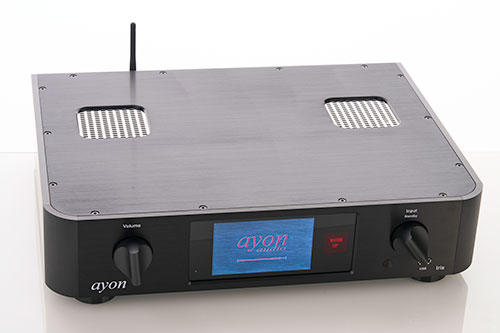
Ayon Iris Signature Streamer
Auf der High End Vienna haben Dirk Sommer und ich den Ayon Iris erstmals entdeckt – nun steht der außergewöhnliche Streaming-Player bei uns bereits zum Test. So frisch ist der Iris, dass selbst die Roon-Zertifizierung zum Testzeitpunkt noch läuft. Brandneu, doch der Iris kommt keineswegs aus dem Nichts: Wer die Entwicklung der digitalen Ayon-Komponenten verfolgt hat, erkennt eine kontinuierliche Beschäftigung mit dem Thema Streaming. Auch wir konnten diesen Weg begleiten – nach dem S3 und…01.09.2026 


-
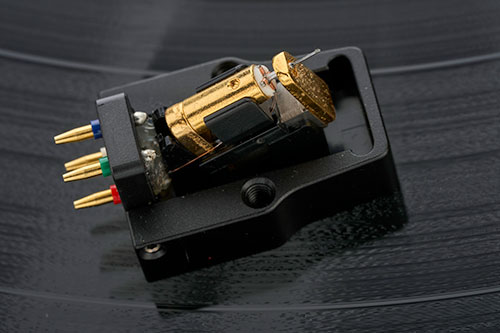
Sumiko Starling
Mein letzter Test eines Tonabnehmersystems befasste sich mit dem Sumiko Oriole. Nun drehen sich für diesen Test meine Schallplatten unter dem Sumiko Starling, dem teuersten System aus der Sumiko Referenz Serie. Nachdem ich überaus positiv überrascht vom Test des Oriole war und dies Peter Laitenberger vom deutschen ATR Vertrieb mitteilte, empfahl mir dieser mir doch einmal das Sumiko Starling anzuhören. Gesagt, getan und bereits wenige Tage später kam das kleine Päckchen mit dem Starling zu…28.08.2026 -
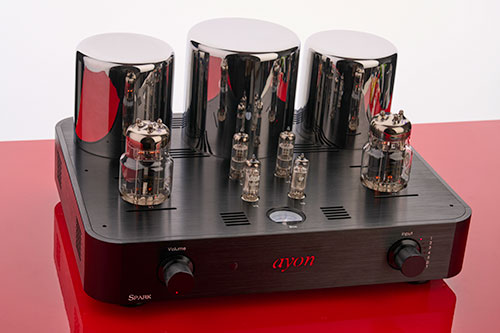
Ayon Spark V
Der Röhrenvollverstärker Spark ist mittlerweile seit über 20 Jahren ein fester Bestandteil des Produktportfolios von Ayon. Preislich eher im Einstiegssegment der Österreicher und nominell unterhalb der Evolution-Serie angesiedelt, hat dieses Gerät aufgrund der eingesetzten russischen Triode 6C33 das Potenzial zum Hidden Champion. Spätestens seit meinem Test des Boliden Ayon Crossfire Evo maße ich mir an, ein Kenner der Marke Ayon zu sein, zumal mir diverse andere Geräte der Marke im Laufe der Jahre zu Gehör…25.08.2026 -
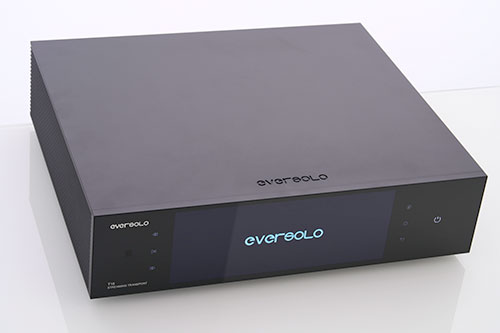
Eversolo T10
Eversolos Streamer DMP-A10 beeindruckte mit seinem hervorragenden Preis/Leistungsverhältnis und seiner prallen Ausstattungsfülle. Aber in meiner Kette im Wohnzimmer mit M-Scaler und HUGO 2 arbeitet er nur als reiner Datenlieferant. Kann das Eversolos neuer Streaming Transport T10 noch besser? Zumindest nach dem ersten Blick auf das rückseitige Anschlussfeld darf man das vermuten, denn dort befinden sich wie beim Eversolo DAC-Z10 zwei BNC-Anschlüsse für die Verbindung mit einer externen Clock, entweder mit einer Impedanz von 75 oder…21.08.2026
© 2026 | HIFISTATEMENT | netmagazine | Alle Rechte vorbehalten | Impressum | Datenschutz


Einige Hifistatement-Autoren benutzen
Qobuz Sublime+ Abonnements.

Einige Hifistatement-Autoren besitzen
eine roon Mitgliedschaft.

Einige Hifistatement-Autoren besitzen
die JPLAY hi-fi app.

Einige Hifistatement-Autoren besitzen
den Audirvana Plus 3 Music Player.