


 |
|Michael Plessmann's penchant for unusual solutions is in particular evident in the mid-woofer unit. The Supravox has an exponentially shaped, lightweight paper cone, and is said to have a high sensitivity and low distortion. These ought to be further reduced by removing the dust cap. The small pressure chamber in front of the driver helps to improve linearity and also eliminates resonance and distortion, which is an unintentional by-product of the surround. An opening in the rear wall of the cabinet, which has approximately the same diameter as the driver, allows it to breathe freely, while its activity is not even restricted by a crossover. The designer wants to get by with as few components as possible in and around the signal path. That's why the Pirol gets away without any drain circuits and impedance linearisations.
The high frequencies are entrusted to an Air Motion Transformer from German specialist Mundorf, which is assisted by a Tractrix horn – in the test sample made of solid wood – that allows for a low lower crossover frequency. The crossover features a slew rate of six decibels and is built with Mundorf capacitors. Silver/gold and silver/gold-oil types are used. The required value is realised by a parallel connection. A ribbon tweeter is located on the rear, covering the frequency range from four to 22 kilohertz, in order to provide more airiness in the sonic image. Its level can be adjusted depending on individual tastes or room situations.

If the outward dimensions of the speaker have to be kept at a reasonable room friendly level without waiving the frequencies down to 30 Hertz by at the same time following up with the efficiency of 97 decibels specified by tweeter and mid-woofer, then an active solution taking care of the low frequency range is indispensable. Soundspace Systems settled on two side-radiating twelve-inch woofers with carbon fibre cones provenient from the professional sector. DSP technology is used for both linearising the frequency response of the drivers in their sealed enclosure below 100 hertz and implementing the low-pass filter for coupling the mid-woofer. The DSP operates at a sampling rate of 96 kilohertz and could also be used to defeat room modes. Following Michael Plessmann's purist approach, we admittedly dispensed with room calibration in my listening room. Notwithstanding the many adjustment possibilities offered by the DSP, the developer contented himself with a filter of first-order for the lows as well. With a slope of only six decibels, the two woofers still radiate energy far into the fundamental range – a truly unconventional solution. As already mentioned before, the bass range is managed by a 500 watts Class D amplifier originating from the PA sector. So, there is absolutely no need to worry about control respectively damping factor and reliability.
Soundspace Systems manufactures the internal cabling, which is individually adapted to each driver, by hand. The standard version features solid wiring made of cryogenically treated copper, while a silver version is also available as an extra-cost option. Solid wood is used for routing the cables. Even though I probably may have given a lecture on only less than half of the information provided to me on the Pirol so far, it should have become clear that there is almost no detail that Michael Plessmann hasn’t pondered about – and that in some areas he has chosen solutions way beyond from the mainstream.


-
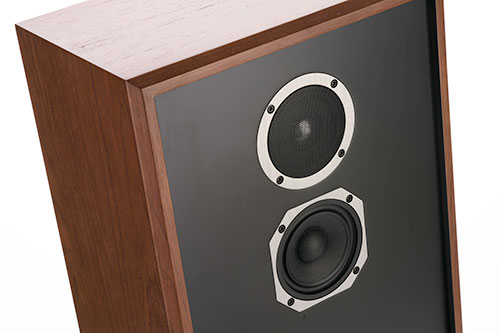
KLH Audio Model Four
Endlich steht mal etwas ganz anderes in meinem Hörraum. Der Lautsprecher des traditionsreichen amerikanischen Herstellers KLH entspricht einem Design von vor mehr als 50 Jahren, wie man es auch heutzutage bei Edelmarken wie Harbeth oder Audio Note findet. Bislang hatte ich nicht das Vergnügen, einen solchen Lautsprecher im Hörraum zu erleben. Neben dem Design mit breiter Schallwand und geringer Bautiefe macht der Paarpreis von knapp 2000 Euro die KLH Model Four hochgradig interessant. Auf zum…19.10.2026 -
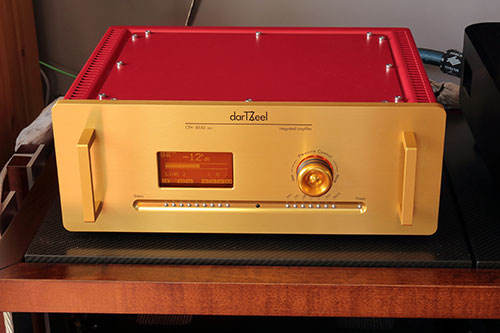

darTZeel Audio CTH-8550 Mk II
darTZeel ist ein Schweizer Unternehmen, das 2001 in Genf von Hervé Delétraz gegründet wurde. Der Name ist ein Anagramm des Nachnamens Delétraz. Die Arbeit an den ersten Geräten begann bereits 1984 im Rahmen einer Diplomarbeit, und nach 18 Jahren Forschung wurde 2002 der Leistungsverstärker NHB-108 offiziell vorgestellt. Es gibt Marken, auf die man viele Jahre warten muss, aber man wartet trotzdem weiter. So war es für mich bei der Marke darTZeel. Zufällig traf ich ihren…13.10.2026 -
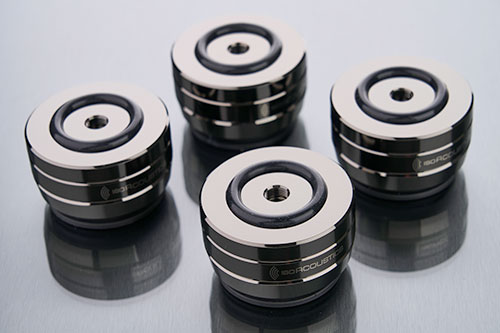
IsoAcoustics GAIA Neo I
Erinnern Sie sich noch? Es ist bereits eine ganze Weile her, da haben Hifi-Fans ihre Lautsprecher auf Tennisbälle gestellt, um einen besseren Klang aus ihnen herauszukitzeln. Oder sie haben abenteuerliche Selfmade-Konstruktionen gebastelt, auf denen die vielleicht nicht ganz highendigen Schallwandler platziert wurden. Das ist lange her und in der Zwischenzeit hat sich in Sachen Lautsprecher-Füße einiges getan. Es gibt eine große Zahl an Herstellern, die Basen, Spikes oder Ständer mit unterschiedlichen Konzepten und Materialien produzieren,…09.10.2026 


-
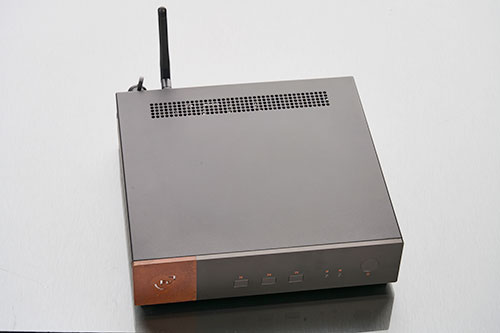
Ferrum BROEN
Auf der High End 2025 ließ man bei Ferrum durchblicken, dass an einem Streamer gearbeitet wird. Die Ferrum Streaming Control Technology, mit der die Musikwiedergabe mittels der Fernbedienung Ferrums DAC WANDLA steuerbar ist, war bereits eine Vorbereitung auf den Streamer und das Schaffen eines gesamten Ferrum-Ökosystems. Im Oktober 2025, wenige Monate nach der High End letzten Jahres waren auf der Audio Video Show in Warschau dann bereits erste BROEN Vorserienmodelle in Betrieb. Auf der diesjährige…06.10.2026 -
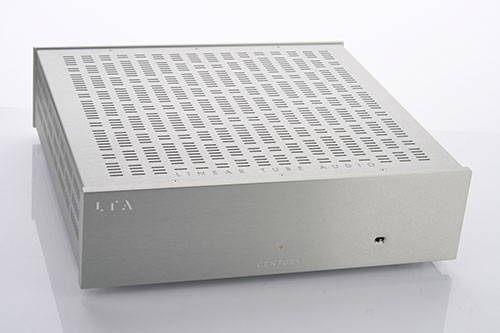
Linear Tube Audio Century
Century heißen die Röhren-Mono-Endverstärker von Linear Tube Audio, die ohne Ausgangsübertrager auskommen und sich dennoch grundlegend von anderen OTL-Konzepten unterscheiden. Wir haben uns intensiv damit beschäftigt, was die patentierte ZOTL-Technologie des Entwicklers so besonders macht und wie sie sich klanglich auswirkt. Für diesen Test haben Dirk Sommer und ich uns eine Arbeitsteilung vorgenommen, bei der ich (Carsten Bussler) mich auf die Technik der Century-Monos sowie die Hintergründe zu Linear Tube Audio und die Zusammenarbeit mit…29.09.2026 -
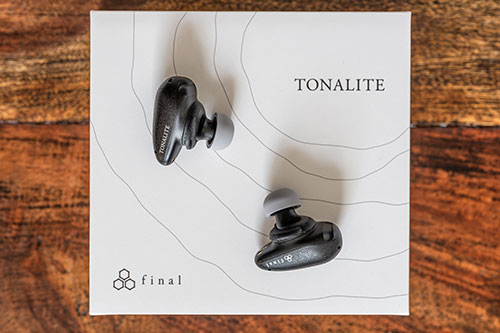
Final Tonalite
Finals Tonalite ist nicht nur ein neuer In-Ear, sondern macht gleichzeitig Finals Timbreanpassung jedem Nutzer mittels einer App zugänglich. Seit der noch etwas kryptischen Ankündigung dieser Technologie auf der High End 2022 habe ich Ihnen über den Entwicklungsprozess berichtet. Das fertige Produkt halte ich persönlich für einen Meilenstein. Tonalite ist eine grundlegende Neuentwicklung mit neuem Formfaktor und neuer Technik. Die Tonalite In-Ears verfügen über eine eher ovale Form, in der die gesamte Elektronik untergebracht ist.…25.09.2026
© 2026 | HIFISTATEMENT | netmagazine | Alle Rechte vorbehalten | Impressum | Datenschutz


Einige Hifistatement-Autoren benutzen
Qobuz Sublime+ Abonnements.

Einige Hifistatement-Autoren besitzen
eine roon Mitgliedschaft.

Einige Hifistatement-Autoren besitzen
die JPLAY hi-fi app.

Einige Hifistatement-Autoren besitzen
den Audirvana Plus 3 Music Player.