


 |
|
Apart from the cones, which are not so much an acoustic improvement as a practical one, there are two significant things that distinguish the MKII from its predecessor. Also with the MKII we find the maple frame of the lowest level firmly connected to the vertical pillars. All levels above are clamped with four spikes per side into the aluminum side beams. Mounting points are provided in the alu profiles for this purpose. This ensures a horizontal alignment as soon as the bottom level of the equipment stand has been balanced out. Each level is therefore firmly and securely connected to the supports with only minimal contact at two by four points. In the maple frames, the actual component shelves rest on the H-shaped internal bracing construction in a point-centred manner. Here we run across difference number one: In the original Pagode, spikes, almost identical to those described for lateral clamping, but somewhat shorter, secured the contact to a stainless steel cup. The spikes were centered in the cups by means of a foam rubber ring. The MKII now no longer uses spikes at these important contact points. Instead there now operates a ceramic ball as contact element. This ball is firmly beaded into a height-adjustable stainless steel bolt, and therefore cannot be lost. The stainless steel bolt with the ceramic ball is centered by a foam rubber ring pressed into the cup. This fits so precisely that a displacement of the component shelf is impossible. In general, the grade of manufacturing precision at all points of a Pagode stand is remarkable. However, this also applied to the previous generation. The acoustic advantage of this new ceramic ball solution results above all in the improved coupling of the component shelf to the frame construction. The important resonators are mounted to the frame, and are carefully selected from a variety of existing lengths and thus frequencies, in order to individually tune the individual levels. Four resonators per level, namely two on the left and two on the right, are located inside the H-shaped bracing, into which the stainless steel cups for holding the ceramic ball bolts are also inserted. This H-beam construction made of Canadian maple is firmly dowelled and glued to the wooden frame, as are all direct wooden connections.

The four resonators are embedded horizontally in a cavity in order to be able to vibrate freely without causing audible radiation themselves. The more pronounced the excitation by sound of the rack system, the greater the compensating vibration amplitude of the resonators. This is a major distinguishing feature compared to competitor designs. This is because the Pagode and its resonators behave dynamically depending on the grade of mechanical excitation. Because the resonators are precisely tuned to the position of the levels within the overarching acoustic unit of each Pagode, the levels must not be interchanged, as already mentioned. According to Luis Fernandes, the effective range of the resonators in the four-level version is 200 to 400 Hertz for the top level, 400 to 600 Hertz for the intermediate levels and 600 to 900 Hertz for the bottom level. However, a bandwidth tolerance of plus/minus ten percent of the oscillation frequency of each resonator, which was deliberately included in the design, allows the mounting height of a level to be changed to a practical extent. The resonators are matched to loaded component levels and their oscillation frequency is not dependent on the resonance properties of the audio components placed on them. However, due to their weight, they do have an influence on the amplitude of the vibration frequency. The greater the physical mass of a component, the lower the amplitude. This is why the component shelves slightly resonate when they are not loaded. To avoid this happening, five to seven GEO magazines were placed on the unused levels of the total of eight levels of both racks during the listening test.


-
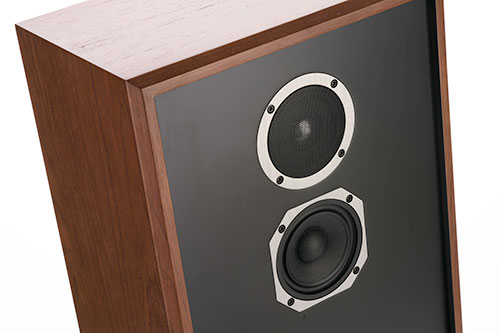
KLH Audio Model Four
Endlich steht mal etwas ganz anderes in meinem Hörraum. Der Lautsprecher des traditionsreichen amerikanischen Herstellers KLH entspricht einem Design von vor mehr als 50 Jahren, wie man es auch heutzutage bei Edelmarken wie Harbeth oder Audio Note findet. Bislang hatte ich nicht das Vergnügen, einen solchen Lautsprecher im Hörraum zu erleben. Neben dem Design mit breiter Schallwand und geringer Bautiefe macht der Paarpreis von knapp 2000 Euro die KLH Model Four hochgradig interessant. Auf zum…19.10.2026 -
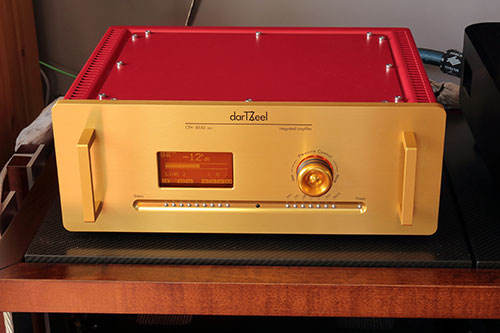

darTZeel Audio CTH-8550 Mk II
darTZeel ist ein Schweizer Unternehmen, das 2001 in Genf von Hervé Delétraz gegründet wurde. Der Name ist ein Anagramm des Nachnamens Delétraz. Die Arbeit an den ersten Geräten begann bereits 1984 im Rahmen einer Diplomarbeit, und nach 18 Jahren Forschung wurde 2002 der Leistungsverstärker NHB-108 offiziell vorgestellt. Es gibt Marken, auf die man viele Jahre warten muss, aber man wartet trotzdem weiter. So war es für mich bei der Marke darTZeel. Zufällig traf ich ihren…13.10.2026 -
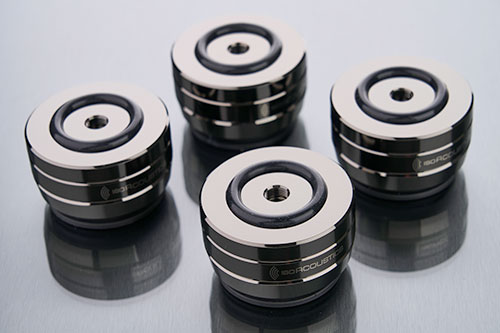
IsoAcoustics GAIA Neo I
Erinnern Sie sich noch? Es ist bereits eine ganze Weile her, da haben Hifi-Fans ihre Lautsprecher auf Tennisbälle gestellt, um einen besseren Klang aus ihnen herauszukitzeln. Oder sie haben abenteuerliche Selfmade-Konstruktionen gebastelt, auf denen die vielleicht nicht ganz highendigen Schallwandler platziert wurden. Das ist lange her und in der Zwischenzeit hat sich in Sachen Lautsprecher-Füße einiges getan. Es gibt eine große Zahl an Herstellern, die Basen, Spikes oder Ständer mit unterschiedlichen Konzepten und Materialien produzieren,…09.10.2026 


-
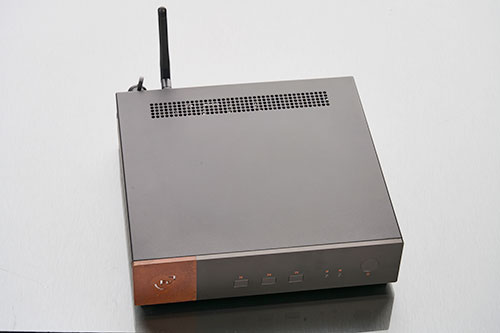
Ferrum BROEN
Auf der High End 2025 ließ man bei Ferrum durchblicken, dass an einem Streamer gearbeitet wird. Die Ferrum Streaming Control Technology, mit der die Musikwiedergabe mittels der Fernbedienung Ferrums DAC WANDLA steuerbar ist, war bereits eine Vorbereitung auf den Streamer und das Schaffen eines gesamten Ferrum-Ökosystems. Im Oktober 2025, wenige Monate nach der High End letzten Jahres waren auf der Audio Video Show in Warschau dann bereits erste BROEN Vorserienmodelle in Betrieb. Auf der diesjährige…06.10.2026 -
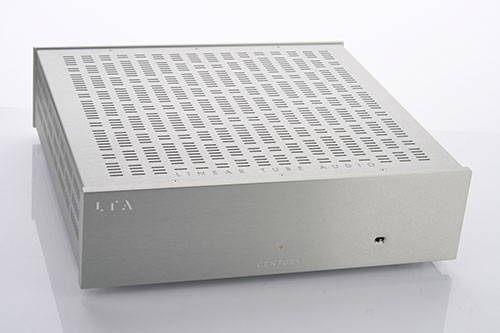
Linear Tube Audio Century
Century heißen die Röhren-Mono-Endverstärker von Linear Tube Audio, die ohne Ausgangsübertrager auskommen und sich dennoch grundlegend von anderen OTL-Konzepten unterscheiden. Wir haben uns intensiv damit beschäftigt, was die patentierte ZOTL-Technologie des Entwicklers so besonders macht und wie sie sich klanglich auswirkt. Für diesen Test haben Dirk Sommer und ich uns eine Arbeitsteilung vorgenommen, bei der ich (Carsten Bussler) mich auf die Technik der Century-Monos sowie die Hintergründe zu Linear Tube Audio und die Zusammenarbeit mit…29.09.2026 -
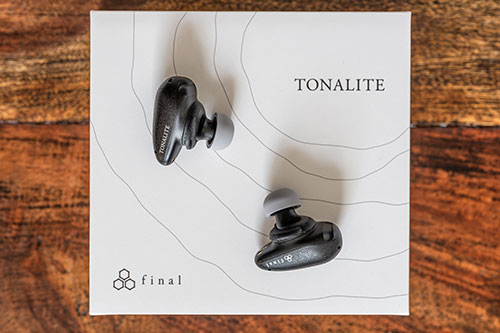
Final Tonalite
Finals Tonalite ist nicht nur ein neuer In-Ear, sondern macht gleichzeitig Finals Timbreanpassung jedem Nutzer mittels einer App zugänglich. Seit der noch etwas kryptischen Ankündigung dieser Technologie auf der High End 2022 habe ich Ihnen über den Entwicklungsprozess berichtet. Das fertige Produkt halte ich persönlich für einen Meilenstein. Tonalite ist eine grundlegende Neuentwicklung mit neuem Formfaktor und neuer Technik. Die Tonalite In-Ears verfügen über eine eher ovale Form, in der die gesamte Elektronik untergebracht ist.…25.09.2026
© 2026 | HIFISTATEMENT | netmagazine | Alle Rechte vorbehalten | Impressum | Datenschutz


Einige Hifistatement-Autoren benutzen
Qobuz Sublime+ Abonnements.

Einige Hifistatement-Autoren besitzen
eine roon Mitgliedschaft.

Einige Hifistatement-Autoren besitzen
die JPLAY hi-fi app.

Einige Hifistatement-Autoren besitzen
den Audirvana Plus 3 Music Player.