


 |
|
From the growing range of high-quality switches offered for audio purposes, the Ansuz Acoustics PowerSwitch A2 for my liking stands out positively due to its size. The elaborate, large-volume enclosure has its purpose. It consists of a special composite material with a high degree of internal damping around the metal chassis. This housing is said to have an ideal resonance behaviour and to be better suited for avoiding disturbing influences than any metal representative of its kind. Thanks to its size and weight, it also opposes the pulling forces of both the massive Ethernet and power cables, thus ensuring stability. Unlike its more expensive siblings, the Digitalz A2 that I have at my disposal is an Ethernet cable that doesn’t yet boast the Ansuz technology of the dielectric influenced by AC current from the switch. This is intended to improve the transmission characteristics. You can read more about this topic in Dirk Sommer's Ansuz review.
However, the A2 switch already shows off ten of these connections on the rear panel and features inwardly also the corresponding power supply. Which of the LAN ports can or should be used for which of the connections is irrelevant. Unlike the Melco S100, the same conditions apply for each of them. These sockets include the green and orange LEDs that flash when data is flowing in the network, added by a single green power LED. Because there isn’t any kind of display on the front panel, the A2 remains visually unobtrusive. Neither the illumination nor the device itself can be switched off, a feature that it has in common with its expensive siblings. Also the housings of the four PowerSwitches currently on offer are identical. When taking an inward look, it becomes clear that the interior of the bigger and wickedly expensive D-TC Supreme is completely filled with components. Inside the smallest Ansuz switch, the X-TC, there is a lot of space, while our A2 is already more generously equipped. I am pleased with it featuring an integrated power supply, which most switches from other manufacturers do not have, since they merely work with an external power supply, which in many cases gives reason for optimizing them with an Sbooster or Keces power supply. With Ansuz, I know that the integrated power supply is optimally matched to the function and requirements of the switch. The special resonance mode power supply delivers stable current and, according to Ansuz, has a much better efficiency than complex linear power supplies of the same power class. However, I am pleased that I do not need to add another external power supply to my already overloaded equipment pool. There is no rocket science here: In such a switch optimized for audio, filters work against interference and the data packets are buffered for distribution to the ports. In the A2, ninety square, active Tesla coils ensure a clean signal. They serve for noise suppression. Two dither circuits work on the suppression of quantization noise, while two active cable Tesla coils act directly on the power lines. At Ansuz you may read the following: "These active cable Tesla coils are noise eliminating elements based on the suppression of mains peak noise. They work by connecting a double inverted coil to the power lines. When the double coil encounters a voltage peak, an opposite peak is generated in the counter-wound section of the coil. Since noise peaks are pure voltage and practically carry no charge, the effacement effect is quite good, but not 100%. Adding more parallel coils increases the performance, ...which greatly improves the perceived blackness in the music."

Will the switch and the associated Ethernet cable have an audible effect in the signal path? Yes, they make a clearly perceptible difference. While this may not be overwhelming in the case of the Cécile Verny Quartet's song "There is No Way Back" from the album Of Moons and Dreams by letting the bass become more intense and the spatial order in the depths of the soundstage sound more fanned out, this evidently changes in Lisa Batiashvili and Nikoloz Rachveli’s new album City Lights, comprising compositions from different genres. After listening to the "Furioso Galopp" by Johann Strauss the First, it’s very hard to find a way back: The now even more convincing spatiality and locatability are much more pronounced. But also the resolution scales to a different level. Without the Ansuz switch, the strings sound relatively compact, not very structured, even a little jammed, I would say. With the A2 the music persuades with more lightness and transparency. The qualitative leap is of a similar magnitude as before when the cables were exchanged.


-
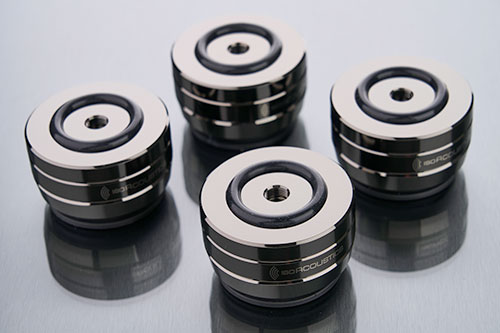
IsoAcoustics GAIA Neo I
Erinnern Sie sich noch? Es ist bereits eine ganze Weile her, da haben Hifi-Fans ihre Lautsprecher auf Tennisbälle gestellt, um einen besseren Klang aus ihnen herauszukitzeln. Oder sie haben abenteuerliche Selfmade-Konstruktionen gebastelt, auf denen die vielleicht nicht ganz highendigen Schallwandler platziert wurden. Das ist lange her und in der Zwischenzeit hat sich in Sachen Lautsprecher-Füße einiges getan. Es gibt eine große Zahl an Herstellern, die Basen, Spikes oder Ständer mit unterschiedlichen Konzepten und Materialien produzieren,…09.10.2026 -
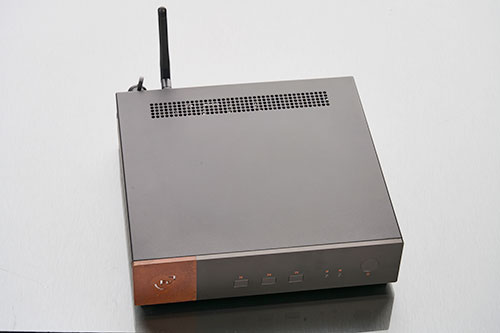
Ferrum BROEN
Auf der High End 2025 ließ man bei Ferrum durchblicken, dass an einem Streamer gearbeitet wird. Die Ferrum Streaming Control Technology, mit der die Musikwiedergabe mittels der Fernbedienung Ferrums DAC WANDLA steuerbar ist, war bereits eine Vorbereitung auf den Streamer und das Schaffen eines gesamten Ferrum-Ökosystems. Im Oktober 2025, wenige Monate nach der High End letzten Jahres waren auf der Audio Video Show in Warschau dann bereits erste BROEN Vorserienmodelle in Betrieb. Auf der diesjährige…06.10.2026 -
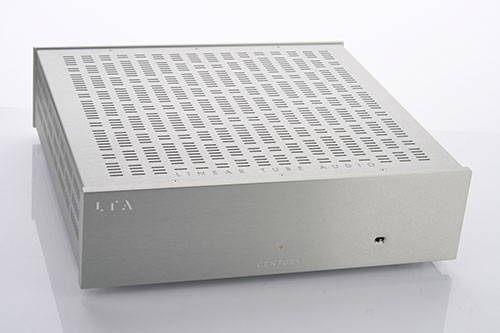
Linear Tube Audio Century
Century heißen die Röhren-Mono-Endverstärker von Linear Tube Audio, die ohne Ausgangsübertrager auskommen und sich dennoch grundlegend von anderen OTL-Konzepten unterscheiden. Wir haben uns intensiv damit beschäftigt, was die patentierte ZOTL-Technologie des Entwicklers so besonders macht und wie sie sich klanglich auswirkt. Für diesen Test haben Dirk Sommer und ich uns eine Arbeitsteilung vorgenommen, bei der ich (Carsten Bussler) mich auf die Technik der Century-Monos sowie die Hintergründe zu Linear Tube Audio und die Zusammenarbeit mit…29.09.2026 


-
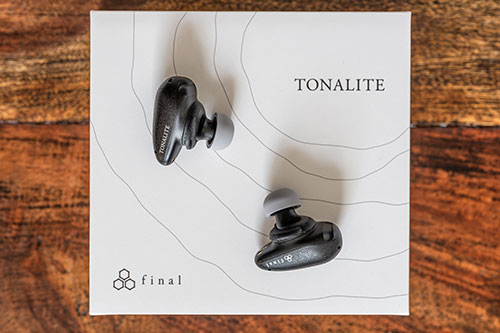
Final Tonalite
Finals Tonalite ist nicht nur ein neuer In-Ear, sondern macht gleichzeitig Finals Timbreanpassung jedem Nutzer mittels einer App zugänglich. Seit der noch etwas kryptischen Ankündigung dieser Technologie auf der High End 2022 habe ich Ihnen über den Entwicklungsprozess berichtet. Das fertige Produkt halte ich persönlich für einen Meilenstein. Tonalite ist eine grundlegende Neuentwicklung mit neuem Formfaktor und neuer Technik. Die Tonalite In-Ears verfügen über eine eher ovale Form, in der die gesamte Elektronik untergebracht ist.…25.09.2026 -
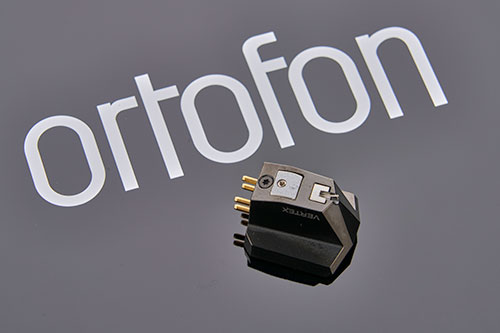
Ortofon MC Vertex
Die bisherigen Topmodelle von Ortofon, das Anna, das Anna Diamond und das Diamond, ähnelten einander auch optisch stark. Das Vertex macht schon durch sein Erscheinungsbild klar, dass es anders ist. Es ist der erste Tonabnehmer mit einem Diamanten mit Vertex-Schliff. Soweit mir bekannt, ist das der erste neue Nadelschliff seit rund 40 Jahren. Aber das ist nicht die einzige Veränderung gegenüber dem MC Diamond: Der Generator des Vertex besitzt einen deutlich höheren Innenwiderstand, die Nadelnachgiebigkeit…15.09.2026 -
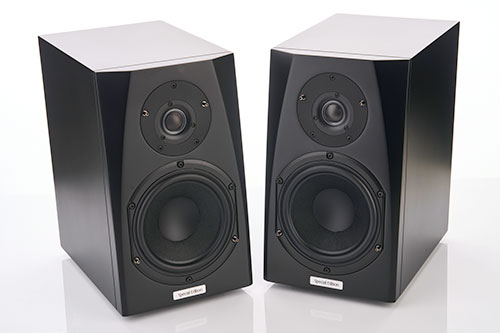
Phonar Veritas M4.2 SE
Es hat mir bislang stets Vergnügen bereitet, mich mit Phonar Lautsprechern zu beschäftigen. Nach einem Test kaufte ich die Veritas 9.2 SE und genieße seitdem ihre Musikalität. Phonar überzeugte immer wieder mit einem außergewöhnlich attraktiven Preis-Klang-Verhältnis. Bestätigt die neue, kompakte Phonar Veritas M4.2 SE diese Erfahrungen? Mein eindrucksvollstes Phonar-Erlebnis hatte ich vor zwei Jahren mit der Standbox Veritas p4.2 Next, die aktuell für einen Paarpreis von 2400 Euro auf der Phonar-Website zu sehen ist. Genau…08.09.2026
© 2026 | HIFISTATEMENT | netmagazine | Alle Rechte vorbehalten | Impressum | Datenschutz


Einige Hifistatement-Autoren benutzen
Qobuz Sublime+ Abonnements.

Einige Hifistatement-Autoren besitzen
eine roon Mitgliedschaft.

Einige Hifistatement-Autoren besitzen
die JPLAY hi-fi app.

Einige Hifistatement-Autoren besitzen
den Audirvana Plus 3 Music Player.