


 |
|During a visit to Essen in 2013 to the offices shared by Fink Audio Consulting and the design studio dwx Thiele, I can still remember holding the prototype of the TA01 in my hands – which Helmut Thiele also brought along for a few photos during his visit to Gröbenzell. At that time, the tangentially tracking aluminum arm still had the slideable counterweight that, as measured with a laser device, had proved very effective in damping resonances during the development of the arm tube for the TD 309. In the TA01, Helmut Thiele now uses two concentric carbon fibre tubes. The space between the two, which accounts for 0.5 millimetres, is filled with a gel. This construction combines fast sound dissipation with a low self-resonance. Unlike the prototype, the cantilever that supports the tonearm bearing now happens to be a closed frame with significantly more mass. Helmut Thiele explains that this design increases both the stability of the construction and improves resonance dissipation.

In order to avoid the cantilever of the cartridge having to move the entire mass, he somewhat alleviates the process by having the arm tend towards the centre of the turntable platter by means of the design itself. This kind of "preloading" is achieved by aligning the mounting plate accordingly. He adjusts the integrated bubble level in such a way that when it is perfectly in the middle position, it does not indicate that the platform is "standing level", but is aligned with the optimal inclination. While the adjustment in an almost right angle in relation to the arm must not be changed under any circumstances, the adjustment in the longitudinal direction of the tonearm can be varied in such a way that the cantilever does not move to the right or left when the needle is lowered into the groove. This ensures that harmful lateral forces have no impact on the cantilever and the coils move centrically in the magnetic field.

The two levers that pull the frame with the tonearm bearing into position are made by Helmut Thiele from solid ebony. In the counterweight, there is an inlay made of the same material to dampen vibrations. A small ebony plate is also glued onto the aluminum headshell. It damps the headshell according to the principle of "Constrained Layer Damping": The two hard materials are damped by the viscoelastic glue, as the shearing forces that occur dissipate the energy of the resonance. Let's take another look at the force-fitting connection between the headshell and the tonearm tube: A negative cone made of metal is connected to the latter using a two-component glue, the former ends in a positive cone and is tightened with a screw at the end of the headshell. When it comes to resonance dissipation, this certainly is an ideal solution. However, if the azimuth needs to be adjusted as finely as possible, tightening a screw in the just-aligned headshell is unfortunately a bit fiddly. In case of doubt, Helmut Thiele opted for sonic advantages instead of simple handling: Brutally fixed instead of clatterly loose is the maxim here. And those who change their cartridge every couple of years or have it installed by their dealer will gladly overlook this small shortcoming in terms of operational comfort.


-
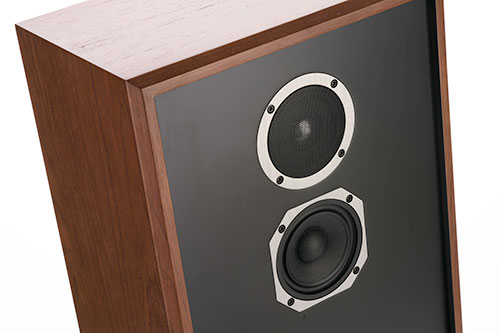
KLH Audio Model Four
Endlich steht mal etwas ganz anderes in meinem Hörraum. Der Lautsprecher des traditionsreichen amerikanischen Herstellers KLH entspricht einem Design von vor mehr als 50 Jahren, wie man es auch heutzutage bei Edelmarken wie Harbeth oder Audio Note findet. Bislang hatte ich nicht das Vergnügen, einen solchen Lautsprecher im Hörraum zu erleben. Neben dem Design mit breiter Schallwand und geringer Bautiefe macht der Paarpreis von knapp 2000 Euro die KLH Model Four hochgradig interessant. Auf zum…19.10.2026 -
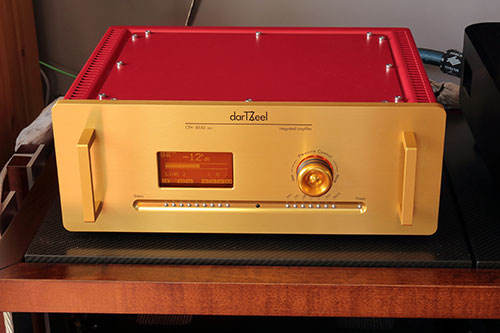

darTZeel Audio CTH-8550 Mk II
darTZeel ist ein Schweizer Unternehmen, das 2001 in Genf von Hervé Delétraz gegründet wurde. Der Name ist ein Anagramm des Nachnamens Delétraz. Die Arbeit an den ersten Geräten begann bereits 1984 im Rahmen einer Diplomarbeit, und nach 18 Jahren Forschung wurde 2002 der Leistungsverstärker NHB-108 offiziell vorgestellt. Es gibt Marken, auf die man viele Jahre warten muss, aber man wartet trotzdem weiter. So war es für mich bei der Marke darTZeel. Zufällig traf ich ihren…13.10.2026 -
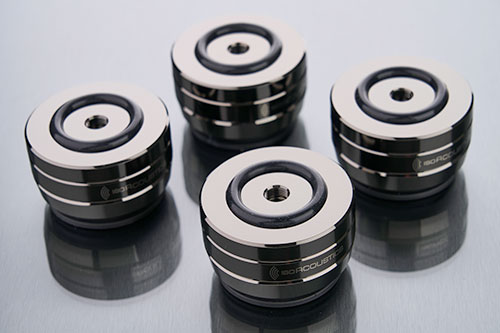
IsoAcoustics GAIA Neo I
Erinnern Sie sich noch? Es ist bereits eine ganze Weile her, da haben Hifi-Fans ihre Lautsprecher auf Tennisbälle gestellt, um einen besseren Klang aus ihnen herauszukitzeln. Oder sie haben abenteuerliche Selfmade-Konstruktionen gebastelt, auf denen die vielleicht nicht ganz highendigen Schallwandler platziert wurden. Das ist lange her und in der Zwischenzeit hat sich in Sachen Lautsprecher-Füße einiges getan. Es gibt eine große Zahl an Herstellern, die Basen, Spikes oder Ständer mit unterschiedlichen Konzepten und Materialien produzieren,…09.10.2026 


-
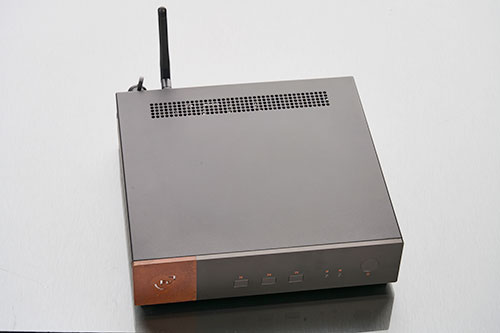
Ferrum BROEN
Auf der High End 2025 ließ man bei Ferrum durchblicken, dass an einem Streamer gearbeitet wird. Die Ferrum Streaming Control Technology, mit der die Musikwiedergabe mittels der Fernbedienung Ferrums DAC WANDLA steuerbar ist, war bereits eine Vorbereitung auf den Streamer und das Schaffen eines gesamten Ferrum-Ökosystems. Im Oktober 2025, wenige Monate nach der High End letzten Jahres waren auf der Audio Video Show in Warschau dann bereits erste BROEN Vorserienmodelle in Betrieb. Auf der diesjährige…06.10.2026 -
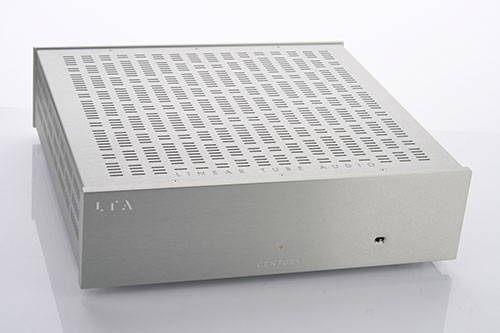
Linear Tube Audio Century
Century heißen die Röhren-Mono-Endverstärker von Linear Tube Audio, die ohne Ausgangsübertrager auskommen und sich dennoch grundlegend von anderen OTL-Konzepten unterscheiden. Wir haben uns intensiv damit beschäftigt, was die patentierte ZOTL-Technologie des Entwicklers so besonders macht und wie sie sich klanglich auswirkt. Für diesen Test haben Dirk Sommer und ich uns eine Arbeitsteilung vorgenommen, bei der ich (Carsten Bussler) mich auf die Technik der Century-Monos sowie die Hintergründe zu Linear Tube Audio und die Zusammenarbeit mit…29.09.2026 -
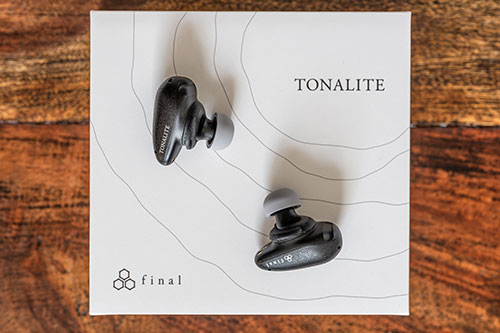
Final Tonalite
Finals Tonalite ist nicht nur ein neuer In-Ear, sondern macht gleichzeitig Finals Timbreanpassung jedem Nutzer mittels einer App zugänglich. Seit der noch etwas kryptischen Ankündigung dieser Technologie auf der High End 2022 habe ich Ihnen über den Entwicklungsprozess berichtet. Das fertige Produkt halte ich persönlich für einen Meilenstein. Tonalite ist eine grundlegende Neuentwicklung mit neuem Formfaktor und neuer Technik. Die Tonalite In-Ears verfügen über eine eher ovale Form, in der die gesamte Elektronik untergebracht ist.…25.09.2026
© 2026 | HIFISTATEMENT | netmagazine | Alle Rechte vorbehalten | Impressum | Datenschutz


Einige Hifistatement-Autoren benutzen
Qobuz Sublime+ Abonnements.

Einige Hifistatement-Autoren besitzen
eine roon Mitgliedschaft.

Einige Hifistatement-Autoren besitzen
die JPLAY hi-fi app.

Einige Hifistatement-Autoren besitzen
den Audirvana Plus 3 Music Player.