


 |
|
The sonic comparison of this integrated amplifier will be drawn from memory here. My previous, much more expensive reference combo comprising the Audio-gd preamplifier and the Air Tight ATM-3 tube monos ranges musically on an equal level in many aspects, but cannot keep up with the airiness of the sonic image and the colourful fine detailing of the completely handmade Power III. The marvelous musical enjoyment, once offered by the Cayin CS-805A and the Soundastic Reference, the amp from Lauffen is able to exceed from the musical perspective. It’s above all its sovereignty, which was immediately perceptible at first listening, and not even at high volume. Throughout all disciplines it doesn’t show any weaknesses when experiencing it as an integrated amplifier in conjunction with its digital converter stage. For this purpose, I chose my aged Wadia transport to supply the music from the CD via an S/PDIF connection. The Power III makes music very pleasantly and performs very filigree and homogeneous at the same time, independent of the volume. It is agile in terms of both fine and coarse dynamics and allows for or even gives the music its exciting fascination. Listening to the Power III or, more correctly, its playback of music in this configuration for hours on end is pure pleasure. Above all, it’s the airiness and depth of the spatial imaging that hoists it clearly ahead of my reference gear. At the same time, it doesn't thin out the sonic image, even if the bass range is reproduced enormously precise and slag-free. Thus, cellos and other low-frequent string instruments are rendered in a punchy and physically perceptible way. The music gets flowing and conveys a sense of rhythm.

To be able to evaluate the quality of the converter stage separately, I connect the Wadia transport to my Mutec re-clocker, which provides the newly clocked signal to my Antelope converter via a high-quality digital cable from Habst. I connect its output to the corresponding inputs on the Power III using equivalent balanced XLR cables and unbalanced RCA cables. This way I can assess the quality of the D/A converter and also determine if there are any audible sonic differences between balanced and unbalanced inputs using the chosen 1.5 meter cable length. Regarding the latter, I can sum it up briefly: I can't notice anything here that would be worth describing. To my ears, the inputs are sonically indistinguishable. Very noticeable, however, is the swapping to cables of higher quality, namely to the Siltech Classic Legend 680i. The musical performance rewarded this endeavour with finer resolution and structure. This external D/A converter alternative was quite expensive though. Almost 7000 euros would mark the expense also thanks to the high-quality Habst AES/EBU and Siltech cabling. But that makes no sense at all. The internal DAC sounds considerably better. Much more airiness and sense of space make the performance more appealing. The tonal balance features a less heavy bass end response, which definitely feels more authentic. On the Verve album The In Crowd performed by the Ramsey Lewis Trio, the spatial atmosphere and the musicians' enthusiasm is really palpable. The drum set sounds punchy and the different drum types are easily identifiable thanks to their individual timbres. There isn’t any doubt that listening through the integrated converter is more enjoyable in the end. The fine resolution lets the timbres bloom, thus conveying an exciting as well as easily accessible experience. To me, the compelling synthesis of converter and amplifier seems to be of particular importance, as probably the Power III will primarily attract owners of a digital sound source such as a streamer or a CD player/transport. In addition, there is still the USB input to be evaluated, to which I connect my laptop equipped with Roon via a Habst USB cable. Again, The In Crowd, this time streamed from Qobuz, serves as a comparison and I would now have to try very hard to express any differences. Via USB I can really enjoy high-res files, which I then do with fun for some days. For example, I streamed the Symphonies 1 - 4 from Brahms with Herbert Blomstedt and the Leipzig Gewandhaus Orchestra: simply wonderful! I also immensely enjoyed the recording, albeit only in CD quality, of Robert Schumann's Piano Concerto in A minor and Tchaikovsky's First Piano Concerto with Daniel Barenboim at the piano and the Munich Philharmonic conducted by Sergiu Celibidache. The airiness and musical beauty conveyed by the Power III here is something I have yet to hear with such fine detail on these speakers. As an endurance test, I followed up with Clara Schumann's Piano Concerto in A minor from the album Romance with Isata Kanneh-Mason at the piano. This is beautiful music to my ears, but packed into a very dense recording that most amplifiers fail to resolve. But not the Power III. It succeeds in decoding the recording so transparently that I enjoyed listening to this concerto and also to the following pieces written by Clara Schumann. Possibly it’s the high damping factor, the developers of Accustic Arts amplifiers always pay attention to, which might be also involved in this. As for the missing indication of the PCM resolution on the display, I didn’t miss it at all while streaming through all the Qobuz formats. If you want, you can easily verify these values at Roon. At this point, I have to confess that I mainly used the Audioquest Hurricane HC power cable for the listening tests, because I could already tell during the burn-in phase how much superior it is compared to the inexpensive MudraAkustik and how it elicits the Power III's capabilities even better: Especially in the lower frequency spectrum, more spatial depth and graduation can be experienced, and overall, the timbres are rendered in a more pronounced way. The Audioquest harmonizes perfectly with the Power III on the Mudra mains filter.


-
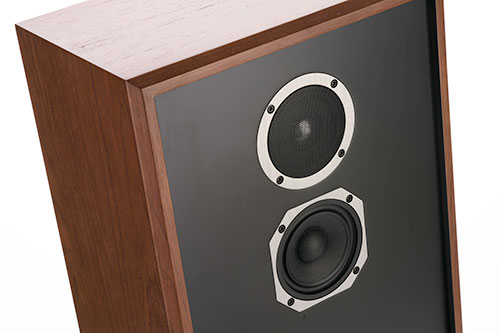
KLH Audio Model Four
Endlich steht mal etwas ganz anderes in meinem Hörraum. Der Lautsprecher des traditionsreichen amerikanischen Herstellers KLH entspricht einem Design von vor mehr als 50 Jahren, wie man es auch heutzutage bei Edelmarken wie Harbeth oder Audio Note findet. Bislang hatte ich nicht das Vergnügen, einen solchen Lautsprecher im Hörraum zu erleben. Neben dem Design mit breiter Schallwand und geringer Bautiefe macht der Paarpreis von knapp 2000 Euro die KLH Model Four hochgradig interessant. Auf zum…19.10.2026 -
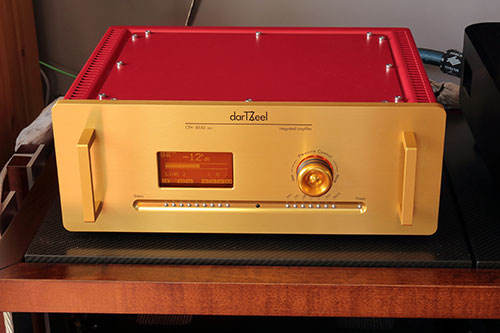

darTZeel Audio CTH-8550 Mk II
darTZeel ist ein Schweizer Unternehmen, das 2001 in Genf von Hervé Delétraz gegründet wurde. Der Name ist ein Anagramm des Nachnamens Delétraz. Die Arbeit an den ersten Geräten begann bereits 1984 im Rahmen einer Diplomarbeit, und nach 18 Jahren Forschung wurde 2002 der Leistungsverstärker NHB-108 offiziell vorgestellt. Es gibt Marken, auf die man viele Jahre warten muss, aber man wartet trotzdem weiter. So war es für mich bei der Marke darTZeel. Zufällig traf ich ihren…13.10.2026 -
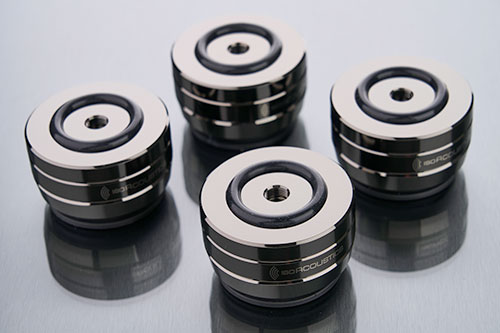
IsoAcoustics GAIA Neo I
Erinnern Sie sich noch? Es ist bereits eine ganze Weile her, da haben Hifi-Fans ihre Lautsprecher auf Tennisbälle gestellt, um einen besseren Klang aus ihnen herauszukitzeln. Oder sie haben abenteuerliche Selfmade-Konstruktionen gebastelt, auf denen die vielleicht nicht ganz highendigen Schallwandler platziert wurden. Das ist lange her und in der Zwischenzeit hat sich in Sachen Lautsprecher-Füße einiges getan. Es gibt eine große Zahl an Herstellern, die Basen, Spikes oder Ständer mit unterschiedlichen Konzepten und Materialien produzieren,…09.10.2026 


-
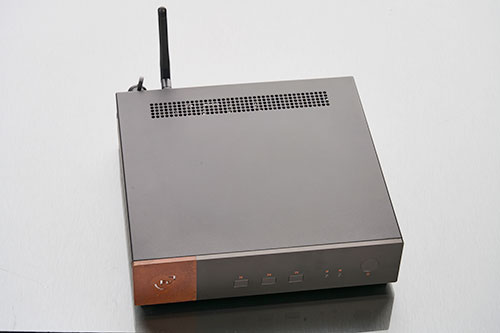
Ferrum BROEN
Auf der High End 2025 ließ man bei Ferrum durchblicken, dass an einem Streamer gearbeitet wird. Die Ferrum Streaming Control Technology, mit der die Musikwiedergabe mittels der Fernbedienung Ferrums DAC WANDLA steuerbar ist, war bereits eine Vorbereitung auf den Streamer und das Schaffen eines gesamten Ferrum-Ökosystems. Im Oktober 2025, wenige Monate nach der High End letzten Jahres waren auf der Audio Video Show in Warschau dann bereits erste BROEN Vorserienmodelle in Betrieb. Auf der diesjährige…06.10.2026 -
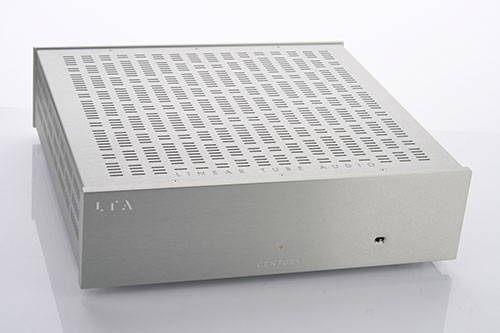
Linear Tube Audio Century
Century heißen die Röhren-Mono-Endverstärker von Linear Tube Audio, die ohne Ausgangsübertrager auskommen und sich dennoch grundlegend von anderen OTL-Konzepten unterscheiden. Wir haben uns intensiv damit beschäftigt, was die patentierte ZOTL-Technologie des Entwicklers so besonders macht und wie sie sich klanglich auswirkt. Für diesen Test haben Dirk Sommer und ich uns eine Arbeitsteilung vorgenommen, bei der ich (Carsten Bussler) mich auf die Technik der Century-Monos sowie die Hintergründe zu Linear Tube Audio und die Zusammenarbeit mit…29.09.2026 -
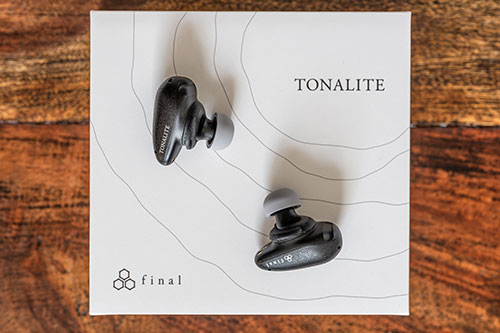
Final Tonalite
Finals Tonalite ist nicht nur ein neuer In-Ear, sondern macht gleichzeitig Finals Timbreanpassung jedem Nutzer mittels einer App zugänglich. Seit der noch etwas kryptischen Ankündigung dieser Technologie auf der High End 2022 habe ich Ihnen über den Entwicklungsprozess berichtet. Das fertige Produkt halte ich persönlich für einen Meilenstein. Tonalite ist eine grundlegende Neuentwicklung mit neuem Formfaktor und neuer Technik. Die Tonalite In-Ears verfügen über eine eher ovale Form, in der die gesamte Elektronik untergebracht ist.…25.09.2026
© 2026 | HIFISTATEMENT | netmagazine | Alle Rechte vorbehalten | Impressum | Datenschutz


Einige Hifistatement-Autoren benutzen
Qobuz Sublime+ Abonnements.

Einige Hifistatement-Autoren besitzen
eine roon Mitgliedschaft.

Einige Hifistatement-Autoren besitzen
die JPLAY hi-fi app.

Einige Hifistatement-Autoren besitzen
den Audirvana Plus 3 Music Player.