


 |
|Strictly speaking, there is not one, but two clock generators: one each for the 44.1 and 48 kilohertz sampling rate families. MSB uses two different oscillators in order to be able to dispense with circuits for generating the two clock rates from the signal of just one oscillator. This is because these circuits would add interference and distortion to the sensitive clock signal. The oscillator circuit of the frequency family that is not currently required is deactivated so that the active frequency family is not affected. The company website also explains once again that a clock for audio applications is not about clock accuracy over time, but about minimizing jitter and phase noise. The third component of the Cascade DAC system is the Powerbase, the sophisticated analog power supply for the Analog Converter. To reduce contamination of the current by local computers, lighting and household appliances, an additional AC filter is located in front of the three high-power transformers wound to MSB specifications. On the secondary side of the electrically and magnetically shielded transformers, coil and capacitor banks then remove a large part of the residual noise from the direct current after the discrete silicon carbide rectifiers. This is then stabilized by discrete, extremely low-noise linear power supplies. The five individual voltages are then available for the Cascade DAC at a ten-pin socket. MSB developed the sockets as well as the so-called "Summit cable" with the Swiss company Fischer Connectors.

As new interfaces are constantly being added in the comparatively fast-moving world of digital technology and previously tried and tested ones are becoming less important, devices with a certain number of fixed inputs would quickly become outdated and lose their value. This is why MSB has already equipped its earlier DACs and now the Director with slots for input modules. The Cascade system comes with an "Optical/Coaxial Module" with one RCA and one Toslink input each, which occupies one of four slots. As with the optionally available "Balanced XLR Module", there is a BNC socket as an isolated word sync output for clocking the devices supplying the signals. As the data and bit rates as well as the data formats for S/PDIF connections are limited, it is of course advisable to use more universally applicable modules. In my experience to date, data obtained via Ethernet produces better sound results than data supplied via USB. This is why the "Network Renderer V2" is the input of choice for my review. MSB has designed its own processor card and software with sonic performance and low noise in mind. The Renderer V2 interface, which is MQA and Roon compatible, replaces a high-quality external streaming bridge, is priced at a customer-friendly 2050 euros - not only by MSB standards - and runs completely stable with the JPLAY app.

Those who prefer a USB connection have a choice: On the one hand, there is the normal "USB input", which accepts data rates up to 384 kilohertz and DSD256 and of which there is also an MQA version. However, USB sounded better than via this input during the review of theReference DAC when it was equipped with the "ProISL Interface", which was connected to the "ProUSB Input" via a fiber optic cable. In the absence of a ProUSB input, I am unfortunately unable to judge whether this type of galvanic isolation between the USB source and the MSB converter is also advantageous for the Cascade system, in which data is only transmitted between the Director and the Analog Converter via optical fiber anyway. Finally, the American digital specialists also offer the "Dual ProI2S Input Module" for connection to older components of their own production. The assignment of the contacts is not compatible with standard HDMI interfaces. Fortunately, providing different input modules is not the only measure with which Jonathan and Daniel Gullman want to future-proof the investment in their components. As Jürgen Sachweh, head of German MSB distributor Hifi2Die4, noted, "old" DACs are taken back on very generous terms when an upgrade to a new, higher-quality device takes place. His example: If a customer has bought a Premier DAC for 31,000 euros and after 2 years would like to buy the Cascade DAC for 109,000 euros, then the 31,000 euros will be fully credited against the price of 109,000 euros.


-
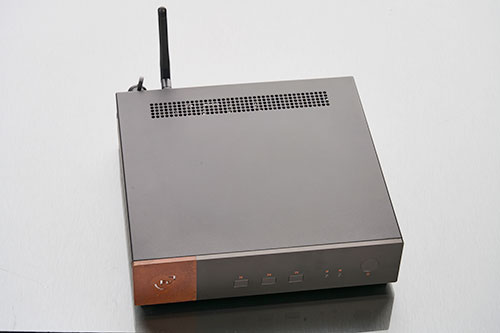
Ferrum BROEN
Auf der High End 2025 ließ man bei Ferrum durchblicken, dass an einem Streamer gearbeitet wird. Die Ferrum Streaming Control Technology, mit der die Musikwiedergabe mittels der Fernbedienung Ferrums DAC WANDLA steuerbar ist, war bereits eine Vorbereitung auf den Streamer und das Schaffen eines gesamten Ferrum-Ökosystems. Im Oktober 2025, wenige Monate nach der High End letzten Jahres waren auf der Audio Video Show in Warschau dann bereits erste BROEN Vorserienmodelle in Betrieb. Auf der diesjährige…06.10.2026 -
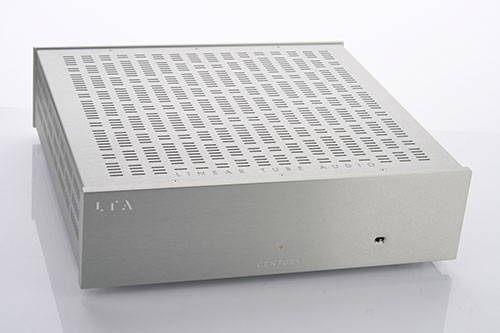
Linear Tube Audio Century
Century heißen die Röhren-Mono-Endverstärker von Linear Tube Audio, die ohne Ausgangsübertrager auskommen und sich dennoch grundlegend von anderen OTL-Konzepten unterscheiden. Wir haben uns intensiv damit beschäftigt, was die patentierte ZOTL-Technologie des Entwicklers so besonders macht und wie sie sich klanglich auswirkt. Für diesen Test haben Dirk Sommer und ich uns eine Arbeitsteilung vorgenommen, bei der ich (Carsten Bussler) mich auf die Technik der Century-Monos sowie die Hintergründe zu Linear Tube Audio und die Zusammenarbeit mit…29.09.2026 -
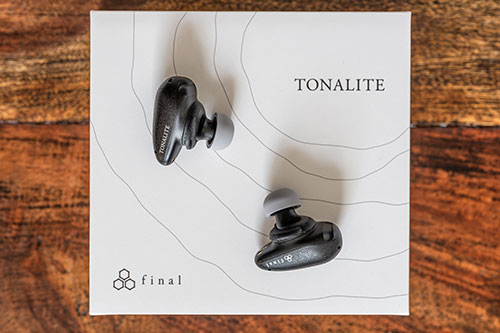
Final Tonalite
Finals Tonalite ist nicht nur ein neuer In-Ear, sondern macht gleichzeitig Finals Timbreanpassung jedem Nutzer mittels einer App zugänglich. Seit der noch etwas kryptischen Ankündigung dieser Technologie auf der High End 2022 habe ich Ihnen über den Entwicklungsprozess berichtet. Das fertige Produkt halte ich persönlich für einen Meilenstein. Tonalite ist eine grundlegende Neuentwicklung mit neuem Formfaktor und neuer Technik. Die Tonalite In-Ears verfügen über eine eher ovale Form, in der die gesamte Elektronik untergebracht ist.…25.09.2026 


-
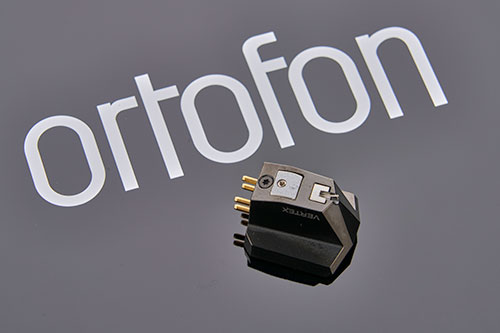
Ortofon MC Vertex
Die bisherigen Topmodelle von Ortofon, das Anna, das Anna Diamond und das Diamond, ähnelten einander auch optisch stark. Das Vertex macht schon durch sein Erscheinungsbild klar, dass es anders ist. Es ist der erste Tonabnehmer mit einem Diamanten mit Vertex-Schliff. Soweit mir bekannt, ist das der erste neue Nadelschliff seit rund 40 Jahren. Aber das ist nicht die einzige Veränderung gegenüber dem MC Diamond: Der Generator des Vertex besitzt einen deutlich höheren Innenwiderstand, die Nadelnachgiebigkeit…15.09.2026 -
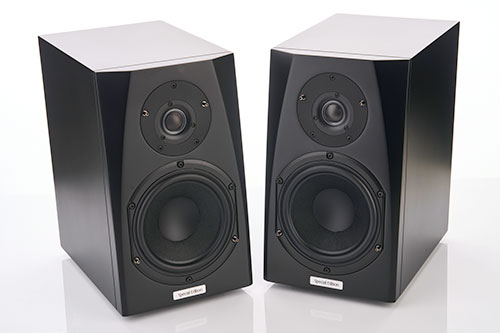
Phonar Veritas M4.2 SE
Es hat mir bislang stets Vergnügen bereitet, mich mit Phonar Lautsprechern zu beschäftigen. Nach einem Test kaufte ich die Veritas 9.2 SE und genieße seitdem ihre Musikalität. Phonar überzeugte immer wieder mit einem außergewöhnlich attraktiven Preis-Klang-Verhältnis. Bestätigt die neue, kompakte Phonar Veritas M4.2 SE diese Erfahrungen? Mein eindrucksvollstes Phonar-Erlebnis hatte ich vor zwei Jahren mit der Standbox Veritas p4.2 Next, die aktuell für einen Paarpreis von 2400 Euro auf der Phonar-Website zu sehen ist. Genau…08.09.2026 -
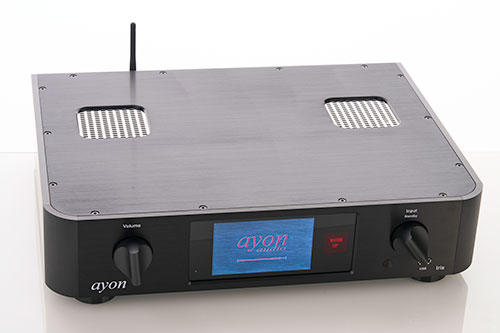
Ayon Iris Signature Streamer
Auf der High End Vienna haben Dirk Sommer und ich den Ayon Iris erstmals entdeckt – nun steht der außergewöhnliche Streaming-Player bei uns bereits zum Test. So frisch ist der Iris, dass selbst die Roon-Zertifizierung zum Testzeitpunkt noch läuft. Brandneu, doch der Iris kommt keineswegs aus dem Nichts: Wer die Entwicklung der digitalen Ayon-Komponenten verfolgt hat, erkennt eine kontinuierliche Beschäftigung mit dem Thema Streaming. Auch wir konnten diesen Weg begleiten – nach dem S3 und…01.09.2026
© 2026 | HIFISTATEMENT | netmagazine | Alle Rechte vorbehalten | Impressum | Datenschutz


Einige Hifistatement-Autoren benutzen
Qobuz Sublime+ Abonnements.

Einige Hifistatement-Autoren besitzen
eine roon Mitgliedschaft.

Einige Hifistatement-Autoren besitzen
die JPLAY hi-fi app.

Einige Hifistatement-Autoren besitzen
den Audirvana Plus 3 Music Player.