


 |
|For Markus Wierl, who calls his company – or himself? – Audio-Freak and has been dealing with audiophile music reproduction for many years, providing his customers with wide-ranging advice before making a sale is of primary importance, as can be seen from his website and his YouTube channel. Furthermore, he is much more open-minded than the author when it comes to the field of high-end.
He is not much into being deterred by home cinema systems with up to seven channels and four subwoofers, and as an avowed analogue enthusiast, he nevertheless relies on digital room correction in the – as I have to admit – excellent sounding listening room in his living room studio. He is also firmly convinced that a high-quality transformer with an equally high-quality phono stage for moving-coil cartridges is at least on a par with an MC phono equalizer, if not superior. That is why he decided to start the distribution in Germany and Switzerland of the two transformers, the MM phono stage, a Denon DL-103 variant in which the generator is integrated into an aluminum/wooden housing that also takes on the function of the headshell with its SME connection, as well as various affordable phono cables from the Slovenian manufacturer MK Analogue. A speciality of the transformers is that they feature a balanced circuitry, equipped with XLR inputs and outputs. Surprisingly, Markus Wierl and I agree on the subject of symmetry – and not only when it comes to the processing of delicate phono signals. Unfortunately, the MK Analogue device outputs the signal in an unbalanced fashion after the transformer: there is – still? – no balanced MM phono stage available. However, the signal is significantly stronger after the transformer and therefore less susceptible to interference on its further path. After I was completely thrilled by the tube phono stage from E.A.T., in which Moving Coil signals are pre-amplified by a transformer, I was quite enthusiastic about trying out the MK Analogue combo – whereby, as a playing partner, I naturally had one or two SPUs from Ortofon in mind.

When planning the review, Markus Wierl immediately asked me about the cartridges that I used to work with the most. He promptly made suggestions as to which of the two MK Analogue transformers, which settings and which terminating plugs I could use to get the best sound out of Lyra's Etna and Olympus SL, as well as the Transrotor Tamino, which is being manufactured by MySonicLab. And at first, that was not what I had in mind: Even though I liked the E.A.T. transformer solution, I still believe that phono stages with an MC input are the amplifiers of choice for high-quality moving coil pickups – apart from all the SPU variants. But more on that later.
The first two letters of MK Analogue are the initials of the company's founder, Matej Kelc, who, by his own account, built his first transformer in 1982 as a teenager. During the first years of his professional career, he worked in the hi-fi and pro-audio industry. He started out as a salesman but quickly became a developer. In 2000, he returned to Slovenia, where he had spent the first five years of his life, and five years later he founded a metal processing company, which soon expanded into plastic injection moulding and wood processing. However, his passion remained music and audio technology, which is why he launched MK Analogue, drawing on his network of suppliers in Slovenia, Austria and Germany. The new company's first two products were, as you would expect, two transformers: the SUT-1L for cartridges with low impedance and the SUT-1M for those with medium internal impedance. The former is intended for systems with up to 10 ohms of impedance, while the latter is recommended for cartridges from Denon, EMT, Audio Technica and Benz Micro, among others..


-
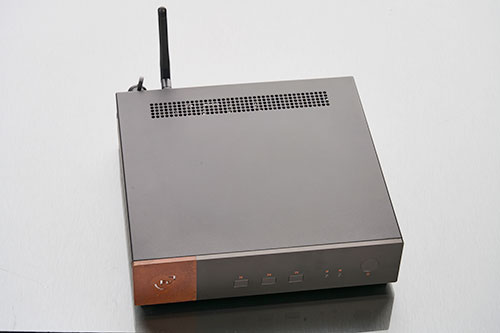
Ferrum BROEN
Auf der High End 2025 ließ man bei Ferrum durchblicken, dass an einem Streamer gearbeitet wird. Die Ferrum Streaming Control Technology, mit der die Musikwiedergabe mittels der Fernbedienung Ferrums DAC WANDLA steuerbar ist, war bereits eine Vorbereitung auf den Streamer und das Schaffen eines gesamten Ferrum-Ökosystems. Im Oktober 2025, wenige Monate nach der High End letzten Jahres waren auf der Audio Video Show in Warschau dann bereits erste BROEN Vorserienmodelle in Betrieb. Auf der diesjährige…06.10.2026 -
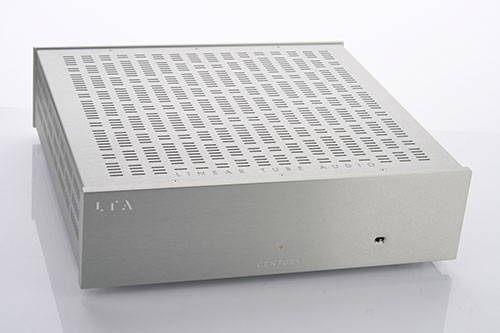
Linear Tube Audio Century
Century heißen die Röhren-Mono-Endverstärker von Linear Tube Audio, die ohne Ausgangsübertrager auskommen und sich dennoch grundlegend von anderen OTL-Konzepten unterscheiden. Wir haben uns intensiv damit beschäftigt, was die patentierte ZOTL-Technologie des Entwicklers so besonders macht und wie sie sich klanglich auswirkt. Für diesen Test haben Dirk Sommer und ich uns eine Arbeitsteilung vorgenommen, bei der ich (Carsten Bussler) mich auf die Technik der Century-Monos sowie die Hintergründe zu Linear Tube Audio und die Zusammenarbeit mit…29.09.2026 -
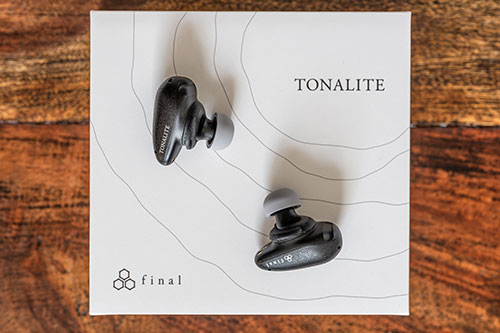
Final Tonalite
Finals Tonalite ist nicht nur ein neuer In-Ear, sondern macht gleichzeitig Finals Timbreanpassung jedem Nutzer mittels einer App zugänglich. Seit der noch etwas kryptischen Ankündigung dieser Technologie auf der High End 2022 habe ich Ihnen über den Entwicklungsprozess berichtet. Das fertige Produkt halte ich persönlich für einen Meilenstein. Tonalite ist eine grundlegende Neuentwicklung mit neuem Formfaktor und neuer Technik. Die Tonalite In-Ears verfügen über eine eher ovale Form, in der die gesamte Elektronik untergebracht ist.…25.09.2026 


-
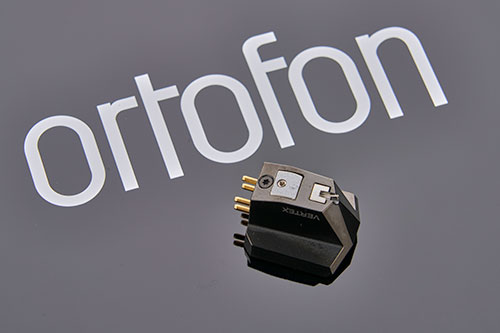
Ortofon MC Vertex
Die bisherigen Topmodelle von Ortofon, das Anna, das Anna Diamond und das Diamond, ähnelten einander auch optisch stark. Das Vertex macht schon durch sein Erscheinungsbild klar, dass es anders ist. Es ist der erste Tonabnehmer mit einem Diamanten mit Vertex-Schliff. Soweit mir bekannt, ist das der erste neue Nadelschliff seit rund 40 Jahren. Aber das ist nicht die einzige Veränderung gegenüber dem MC Diamond: Der Generator des Vertex besitzt einen deutlich höheren Innenwiderstand, die Nadelnachgiebigkeit…15.09.2026 -
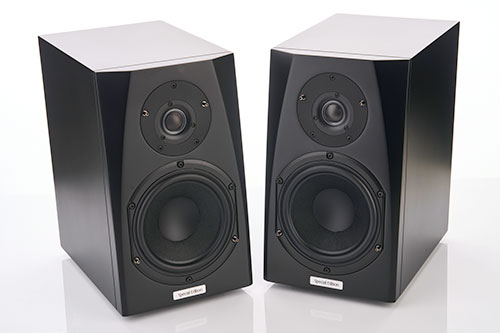
Phonar Veritas M4.2 SE
Es hat mir bislang stets Vergnügen bereitet, mich mit Phonar Lautsprechern zu beschäftigen. Nach einem Test kaufte ich die Veritas 9.2 SE und genieße seitdem ihre Musikalität. Phonar überzeugte immer wieder mit einem außergewöhnlich attraktiven Preis-Klang-Verhältnis. Bestätigt die neue, kompakte Phonar Veritas M4.2 SE diese Erfahrungen? Mein eindrucksvollstes Phonar-Erlebnis hatte ich vor zwei Jahren mit der Standbox Veritas p4.2 Next, die aktuell für einen Paarpreis von 2400 Euro auf der Phonar-Website zu sehen ist. Genau…08.09.2026 -
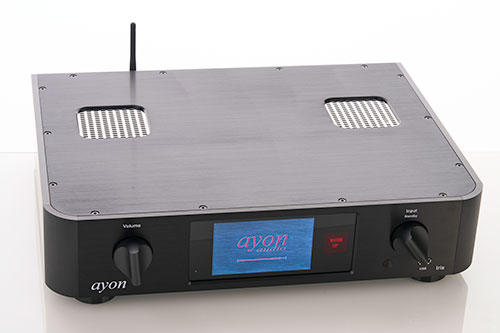
Ayon Iris Signature Streamer
Auf der High End Vienna haben Dirk Sommer und ich den Ayon Iris erstmals entdeckt – nun steht der außergewöhnliche Streaming-Player bei uns bereits zum Test. So frisch ist der Iris, dass selbst die Roon-Zertifizierung zum Testzeitpunkt noch läuft. Brandneu, doch der Iris kommt keineswegs aus dem Nichts: Wer die Entwicklung der digitalen Ayon-Komponenten verfolgt hat, erkennt eine kontinuierliche Beschäftigung mit dem Thema Streaming. Auch wir konnten diesen Weg begleiten – nach dem S3 und…01.09.2026
© 2026 | HIFISTATEMENT | netmagazine | Alle Rechte vorbehalten | Impressum | Datenschutz


Einige Hifistatement-Autoren benutzen
Qobuz Sublime+ Abonnements.

Einige Hifistatement-Autoren besitzen
eine roon Mitgliedschaft.

Einige Hifistatement-Autoren besitzen
die JPLAY hi-fi app.

Einige Hifistatement-Autoren besitzen
den Audirvana Plus 3 Music Player.