


 |
|What distinguishes the Step Up Transformer – or SUP – from MK Analogue from the not really many other representatives of its genre that I have dealt with in more detail are its balanced outputs and inputs. Each channel offers no fewer than two of them: one with a 24-decibel boost and a 1-to-16 transfer ratio and one with a 30-decibel boost and a 1-to-32 ratio. Using two inputs per channel instead of one plus a switch reduces the number of solder joints between the cartridge and the windings and is supposed to improve sound quality. In addition to the six XLR jacks on the back of the SUT-1L, there are two RCA jacks that can accept resistor plugs to adjust the termination impedance. The resistors are in parallel with the transformer's primary windings, so they are merely reducing the load on which the cartridge is operating. Since the current generated by the cartridge no longer runs through the transformer, the volume of the analogue chain is slightly reduced by using the plugs. On the material of the transformer windings and the core, Matej Kelc does not provide any information on his website.

Matej Kelc places great emphasis on consistently shielding the transformer against electromagnetic interference, resonances and direct sound radiation. The transformer itself is located in a MU metal capsule, which is surrounded by a brass body lined with bitumen mats. The entire aluminum housing is not only lined with additional bitumen mats, but its base plate is also connected to a stainless-steel plate: the sandwich construction serves to further optimize the resonance behaviour. Sorbothane feet decouple the SUT-1L from the ground.
The matching MK Analogue phono stage goes by the self-explanatory name MM-PH-AMP and is therefore designed exclusively for amplifying signals of those strengths provided by moving magnet, moving iron or high-output moving coil pickups and MC transformers. The MM-PH-AMP features a dual-mono design and is powered by an external power supply, which, however, is not designed with separate channels. To achieve the greatest possible homogeneity of the channels, Matej Kelc relies on a common filtering of the voltage, partly performed in the external power supply and partly on the common main board. The total capacity is twice 23,500 microfarads. The passive circuitry comes up with four filter stages and also fulfils the function of an inrush current limiter. Separate voltage regulation for each amplifier section with high damping as close as possible to the load minimizes interference and enhances dynamics.
RIAA equalization is performed purely passively. Ultra-fast MKP film capacitors coated on both sides are used to guarantee extremely high resolution and dynamics. The amplification is assumed by operational amplifiers with a rise time of 150 volts per microsecond and a high bandwidth. The output stage is a class A power amplifier that, with appropriate cooling, is even capable of driving loudspeakers. Longer cables between the MM-PH-AMP and the preamplifier should therefore not pose a problem. Matej Kelc's goal in developing the phono stage was to achieve phase linearity in the audible frequency range. On his website, he explains this decision as follows: ‘The timely correct reproduction of all frequencies in the audible range determines whether a recording is perceived as lively, natural, dynamic, finely resolved, spatial and simply real. If this is the case, we not only listen to the music, we feel it, it moves us emotionally.’


-
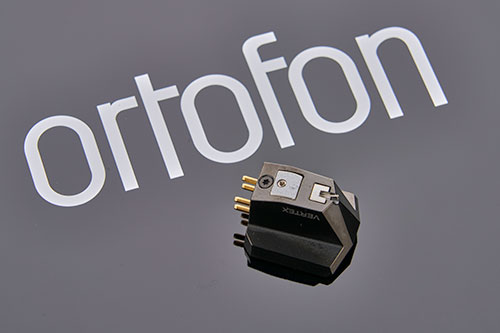
Ortofon MC Vertex
Die bisherigen Topmodelle von Ortofon, das Anna, das Anna Diamond und das Diamond, ähnelten einander auch optisch stark. Das Vertex macht schon durch sein Erscheinungsbild klar, dass es anders ist. Es ist der erste Tonabnehmer mit einem Diamanten mit Vertex-Schliff. Soweit mir bekannt, ist das der erste neue Nadelschliff seit rund 40 Jahren. Aber das ist nicht die einzige Veränderung gegenüber dem MC Diamond: Der Generator des Vertex besitzt einen deutlich höheren Innenwiderstand, die Nadelnachgiebigkeit…15.09.2026 -
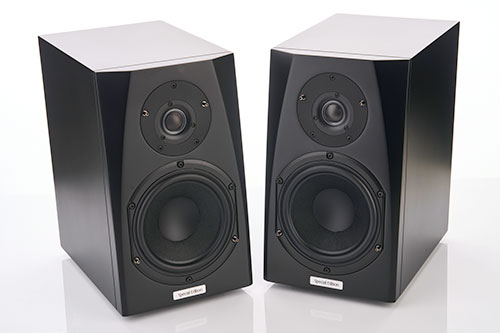
Phonar Veritas M4.2 SE
Es hat mir bislang stets Vergnügen bereitet, mich mit Phonar Lautsprechern zu beschäftigen. Nach einem Test kaufte ich die Veritas 9.2 SE und genieße seitdem ihre Musikalität. Phonar überzeugte immer wieder mit einem außergewöhnlich attraktiven Preis-Klang-Verhältnis. Bestätigt die neue, kompakte Phonar Veritas M4.2 SE diese Erfahrungen? Mein eindrucksvollstes Phonar-Erlebnis hatte ich vor zwei Jahren mit der Standbox Veritas p4.2 Next, die aktuell für einen Paarpreis von 2400 Euro auf der Phonar-Website zu sehen ist. Genau…08.09.2026 -
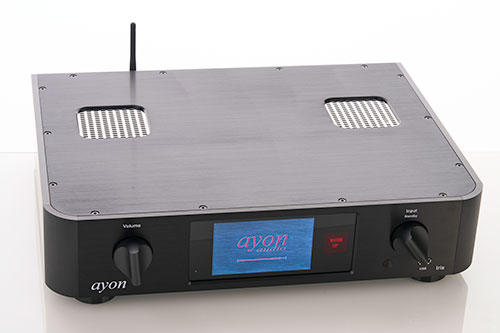
Ayon Iris Signature Streamer
Auf der High End Vienna haben Dirk Sommer und ich den Ayon Iris erstmals entdeckt – nun steht der außergewöhnliche Streaming-Player bei uns bereits zum Test. So frisch ist der Iris, dass selbst die Roon-Zertifizierung zum Testzeitpunkt noch läuft. Brandneu, doch der Iris kommt keineswegs aus dem Nichts: Wer die Entwicklung der digitalen Ayon-Komponenten verfolgt hat, erkennt eine kontinuierliche Beschäftigung mit dem Thema Streaming. Auch wir konnten diesen Weg begleiten – nach dem S3 und…01.09.2026 


-
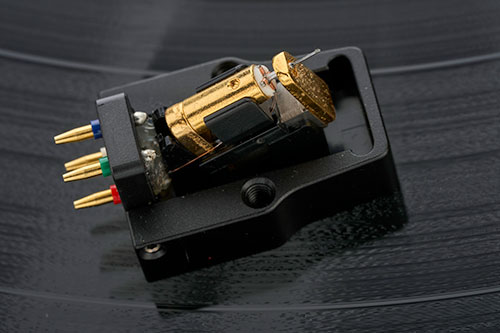
Sumiko Starling
Mein letzter Test eines Tonabnehmersystems befasste sich mit dem Sumiko Oriole. Nun drehen sich für diesen Test meine Schallplatten unter dem Sumiko Starling, dem teuersten System aus der Sumiko Referenz Serie. Nachdem ich überaus positiv überrascht vom Test des Oriole war und dies Peter Laitenberger vom deutschen ATR Vertrieb mitteilte, empfahl mir dieser mir doch einmal das Sumiko Starling anzuhören. Gesagt, getan und bereits wenige Tage später kam das kleine Päckchen mit dem Starling zu…28.08.2026 -
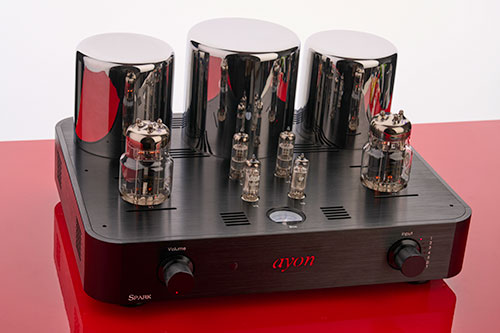
Ayon Spark V
Der Röhrenvollverstärker Spark ist mittlerweile seit über 20 Jahren ein fester Bestandteil des Produktportfolios von Ayon. Preislich eher im Einstiegssegment der Österreicher und nominell unterhalb der Evolution-Serie angesiedelt, hat dieses Gerät aufgrund der eingesetzten russischen Triode 6C33 das Potenzial zum Hidden Champion. Spätestens seit meinem Test des Boliden Ayon Crossfire Evo maße ich mir an, ein Kenner der Marke Ayon zu sein, zumal mir diverse andere Geräte der Marke im Laufe der Jahre zu Gehör…25.08.2026 -
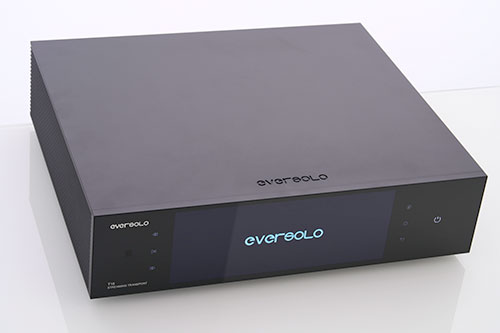
Eversolo T10
Eversolos Streamer DMP-A10 beeindruckte mit seinem hervorragenden Preis/Leistungsverhältnis und seiner prallen Ausstattungsfülle. Aber in meiner Kette im Wohnzimmer mit M-Scaler und HUGO 2 arbeitet er nur als reiner Datenlieferant. Kann das Eversolos neuer Streaming Transport T10 noch besser? Zumindest nach dem ersten Blick auf das rückseitige Anschlussfeld darf man das vermuten, denn dort befinden sich wie beim Eversolo DAC-Z10 zwei BNC-Anschlüsse für die Verbindung mit einer externen Clock, entweder mit einer Impedanz von 75 oder…21.08.2026
© 2026 | HIFISTATEMENT | netmagazine | Alle Rechte vorbehalten | Impressum | Datenschutz


Einige Hifistatement-Autoren benutzen
Qobuz Sublime+ Abonnements.

Einige Hifistatement-Autoren besitzen
eine roon Mitgliedschaft.

Einige Hifistatement-Autoren besitzen
die JPLAY hi-fi app.

Einige Hifistatement-Autoren besitzen
den Audirvana Plus 3 Music Player.