


 |
|Long-time Hifistatement readers may remember that the Alumine FIVE was already a topic here eight years ago. During this time, Jean-Pascal Panchard and his team have continuously developed the FIVE, as evidenced by the SE, SX, and LE model variants. A little spoiler on the side: for me, the SX now plays in a much higher league.
At that time, both the significantly more expensive Kawero! Classic and the LumenWhite DiamondLight competed against the FIVE and quickly made it clear that there was still a little more to be had in terms of spatial imaging than the Stenheim was able to offer. In the treble range it was not a child of sadness, although this tonal tuning was a good match for the perfectly contoured, rich and extremely lively bass range: The “old” FIVE was particularly impressive with its dynamics and playfulness. Of course, Stenheim owner Jean-Pascal Panchard also recognized that there was still a little more of headroom to be achieved in some areas than what the FIVE was capable of. Following the two-way Alumine TWO monitor and the bass module developed for it, this was Stenheim's first true three-way loudspeaker model. With the knowledge gained from expanding the model range – the Alumine Line was soon followed by the Reference Line – the Swiss company also revised its FIVE model. And not just once. I asked Jean-Pascal Panchard to provide some technical information about the FIVE SX, and in his reply, which I quote in translation below, he discussed the development from the FIVE SE to the SX:

"Following the huge success of the Alumine FIVE SE, we wanted to introduce a number of improvements – while retaining the exceptional characteristics that have made this speaker a global benchmark. …
After intensive technical deliberations, we identified three areas where we could achieve further improvements:
| 1. | Improved stability and mechanical grounding: a new, more solid plinth platform |
| 2. | Adaptability to room acoustics: an integrated “Room Control” function |
| 3. | Increased immunity to environmental influences: elimination of electromagnetic interference and eddy currents |
1. Platform
We drew on the insights gained during the development of the solid platform for our flagship Ultime Two loudspeaker. The additional mass beneath the loudspeaker significantly lowers its center of gravity, greatly improving mechanical stability. This new plinth is bolted directly to the cabinet, creating a mechanically unified structure with improved rigidity and damping. The end result is not just a speaker with a new base, but a speaker with a completely new mechanical identity: more mass, outstanding stability, and significantly optimized vibration behavior. The drivers are more firmly connected to the cabinet, and the entire construction is now more securely anchored to the floor. ...
The platform is equipped with oversized, adjustable M30 spikes that allow for generous height adjustment up to 30 millimeters. The adjustments are made from the top of the platform, ensuring easy and precise tuning of both height and vertical angle (front-to-back and side-to-side). Such precision is absolutely crucial in ultra-high-end loudspeaker setups, where even a few millimeters or a subtle change in angle can alter the soundstage or imaging.
2. Room adaptation
This feature helps to adapt the speaker to the often less than ideal acoustic conditions in real listening rooms – a well-known challenge in high-end audio. Most room problems occur either in the low frequency range (typically around 60 to 80 hertz, resulting in a “boomy” bass) or in the high frequency range (3 to 5 kilohertz, resulting in harshness or sharpness). Our “Room Control” allows these ranges to be adjusted by -1 or -2 decibels with a simple jumper setting. This modest but extremely effective change helps to dampen resonances without disturbing the overall sound balance of the speaker. ...
3. Chassis grounding terminal
In recent years, more and more high-end electronics manufacturers have been investigating the use of virtual grounding systems, external grounding systems that are not connected to the mains power supply. We have also conducted promising tests in which we connected the aluminum cabinet of our loudspeakers to such virtual grounding systems. The results are convincing: a noticeable reduction in background noise, improved separation between instruments, and improved spatial resolution — leading to a more natural and immersive listening experience. Therefore, all new models in the Alumine Five, SE, and SX series will be equipped with a chassis grounding connection that is internally connected to several important points in the enclosure to achieve an optimal effect.


-
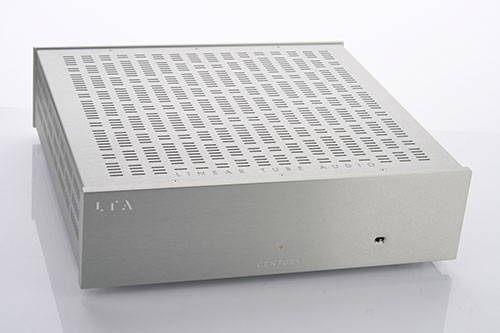
Linear Tube Audio Century
Century heißen die Röhren-Mono-Endverstärker von Linear Tube Audio, die ohne Ausgangsübertrager auskommen und sich dennoch grundlegend von anderen OTL-Konzepten unterscheiden. Wir haben uns intensiv damit beschäftigt, was die patentierte ZOTL-Technologie des Entwicklers so besonders macht und wie sie sich klanglich auswirkt. Für diesen Test haben Dirk Sommer und ich uns eine Arbeitsteilung vorgenommen, bei der ich (Carsten Bussler) mich auf die Technik der Century-Monos sowie die Hintergründe zu Linear Tube Audio und die Zusammenarbeit mit…29.09.2026 -
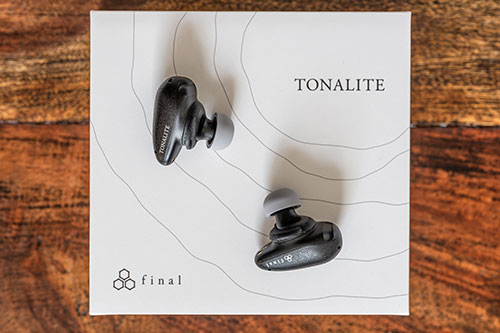
Final Tonalite
Finals Tonalite ist nicht nur ein neuer In-Ear, sondern macht gleichzeitig Finals Timbreanpassung jedem Nutzer mittels einer App zugänglich. Seit der noch etwas kryptischen Ankündigung dieser Technologie auf der High End 2022 habe ich Ihnen über den Entwicklungsprozess berichtet. Das fertige Produkt halte ich persönlich für einen Meilenstein. Tonalite ist eine grundlegende Neuentwicklung mit neuem Formfaktor und neuer Technik. Die Tonalite In-Ears verfügen über eine eher ovale Form, in der die gesamte Elektronik untergebracht ist.…25.09.2026 -
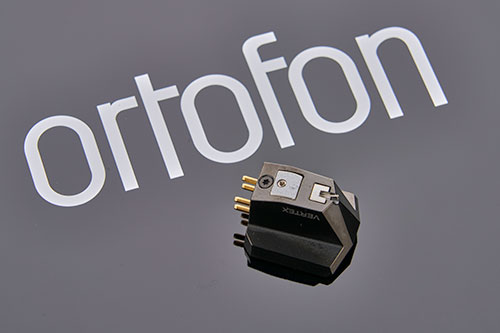
Ortofon MC Vertex
Die bisherigen Topmodelle von Ortofon, das Anna, das Anna Diamond und das Diamond, ähnelten einander auch optisch stark. Das Vertex macht schon durch sein Erscheinungsbild klar, dass es anders ist. Es ist der erste Tonabnehmer mit einem Diamanten mit Vertex-Schliff. Soweit mir bekannt, ist das der erste neue Nadelschliff seit rund 40 Jahren. Aber das ist nicht die einzige Veränderung gegenüber dem MC Diamond: Der Generator des Vertex besitzt einen deutlich höheren Innenwiderstand, die Nadelnachgiebigkeit…15.09.2026 


-
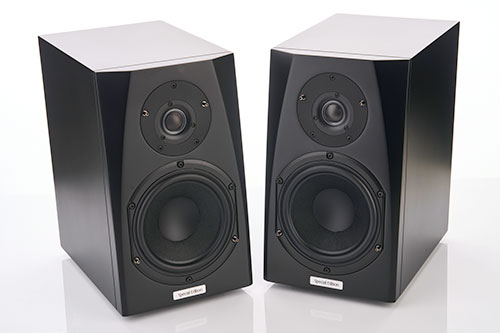
Phonar Veritas M4.2 SE
Es hat mir bislang stets Vergnügen bereitet, mich mit Phonar Lautsprechern zu beschäftigen. Nach einem Test kaufte ich die Veritas 9.2 SE und genieße seitdem ihre Musikalität. Phonar überzeugte immer wieder mit einem außergewöhnlich attraktiven Preis-Klang-Verhältnis. Bestätigt die neue, kompakte Phonar Veritas M4.2 SE diese Erfahrungen? Mein eindrucksvollstes Phonar-Erlebnis hatte ich vor zwei Jahren mit der Standbox Veritas p4.2 Next, die aktuell für einen Paarpreis von 2400 Euro auf der Phonar-Website zu sehen ist. Genau…08.09.2026 -
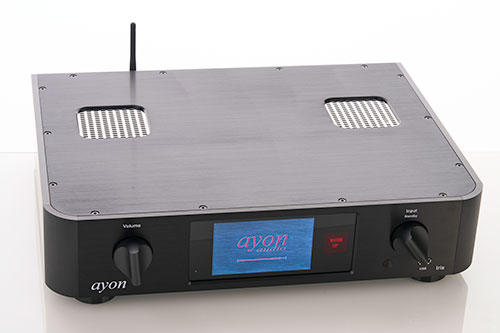
Ayon Iris Signature Streamer
Auf der High End Vienna haben Dirk Sommer und ich den Ayon Iris erstmals entdeckt – nun steht der außergewöhnliche Streaming-Player bei uns bereits zum Test. So frisch ist der Iris, dass selbst die Roon-Zertifizierung zum Testzeitpunkt noch läuft. Brandneu, doch der Iris kommt keineswegs aus dem Nichts: Wer die Entwicklung der digitalen Ayon-Komponenten verfolgt hat, erkennt eine kontinuierliche Beschäftigung mit dem Thema Streaming. Auch wir konnten diesen Weg begleiten – nach dem S3 und…01.09.2026 -
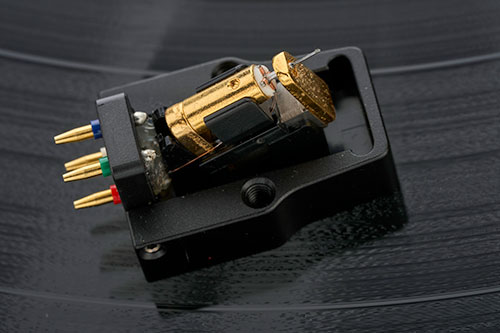
Sumiko Starling
Mein letzter Test eines Tonabnehmersystems befasste sich mit dem Sumiko Oriole. Nun drehen sich für diesen Test meine Schallplatten unter dem Sumiko Starling, dem teuersten System aus der Sumiko Referenz Serie. Nachdem ich überaus positiv überrascht vom Test des Oriole war und dies Peter Laitenberger vom deutschen ATR Vertrieb mitteilte, empfahl mir dieser mir doch einmal das Sumiko Starling anzuhören. Gesagt, getan und bereits wenige Tage später kam das kleine Päckchen mit dem Starling zu…28.08.2026
© 2026 | HIFISTATEMENT | netmagazine | Alle Rechte vorbehalten | Impressum | Datenschutz


Einige Hifistatement-Autoren benutzen
Qobuz Sublime+ Abonnements.

Einige Hifistatement-Autoren besitzen
eine roon Mitgliedschaft.

Einige Hifistatement-Autoren besitzen
die JPLAY hi-fi app.

Einige Hifistatement-Autoren besitzen
den Audirvana Plus 3 Music Player.