


 |
|
Since even micrometre-level adjustments aren't necessarily practical, the app includes a slider to pre-select the size of the height adjustment steps: very convenient and well-designed. The app also allows you to start and stop the turntable's motor and operate the tonearm lift. What might initially sound like an unnecessary gimmick quickly becomes indispensable: even in my relatively small listening room, it's extremely pleasant to lower the arm only after settling comfortably into my chair. Returning briefly to the PIEZO VTA system: Aligning the tonearm parallel to the platter by eye is extremely difficult due to its hyperbolic shape. However, because it's manufactured in two parts, the GRAVITON® Ti tonearm has an almost invisible ridge in the middle, which allows it to be horizontally adjusted using a cross-lens laser. I didn't change this setting afterward, as the geometry is only correct in precisely this position. If, for example, you wanted to change the VTA for sonic reasons and raise the tonearm slightly at the rear, the effective length would also change, and consequently, the offset angle would have to be adjusted. This applies not only to the GRAVITON® Ti tonearm, but to any tonearm. Nevertheless, the remote-controlled height adjustment makes sense. The current app, which wasn't yet available during the Prime Meridian system's stay in my listening room, offers various presets that can be assigned to records of different weights or thicknesses, for instance. Settings for a second or third GRAVITON® Ti tonearm with a perfectly aligned cartridge are also conceivable.

As the ongoing development of the app demonstrates, Wilson Benesch is constantly optimizing the GMT® One and the Prime Meridian systems. Compared to earlier versions, the STAGE One system has also undergone improvements: Initially, a small, wing-shaped housing, mounted on a plexiglass plate attached to the rear of the turntable so that it sits directly above the tonearm's pivot point, contained a 1:10 step-up transformer. This prepared the cartridge's output voltage for the phono stage. This step-up transformer has now been omitted, but the "piano" tonearm remains – and for good reason: Its underside features a socket, the counterpart to the plug of the cables that exit the tonearm precisely at its pivot point. The highly flexible cables are therefore not bent or looped as with other tonearms but run straight upwards.
Furthermore, due to its length, the tonearm moves through a smaller angle when playing an LP than, for example, a nine-inch arm. Therefore, the cables exert virtually no force on the tonearm and consequently on the cantilever suspension. This allows the cantilever to more easily track even very slight groove excursions and read out more detailed information. It's no wonder, then, that Craig Milnes attributes an important role to the tonearm cable in terms of fine detail resolution. On the back of the "Piano" tonearm, you'll find RCA or XLR connectors, depending on customer preference. Continuous cabling from the connector above the arm to the phono stage is also possible. Wilson Benesch recently began offering the arm as the GRAVITON® Ti tonearm for use on turntables from other manufacturers, without the remote-controlled height adjustment, but naturally with a version of the STAGE One cable routing. I wouldn't rule out trying it out on my LaGrange turntable myself – as soon as a base for the Brinkmann turntable has been designed.


-
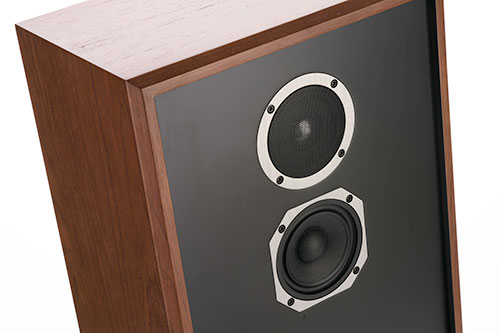
KLH Audio Model Four
Endlich steht mal etwas ganz anderes in meinem Hörraum. Der Lautsprecher des traditionsreichen amerikanischen Herstellers KLH entspricht einem Design von vor mehr als 50 Jahren, wie man es auch heutzutage bei Edelmarken wie Harbeth oder Audio Note findet. Bislang hatte ich nicht das Vergnügen, einen solchen Lautsprecher im Hörraum zu erleben. Neben dem Design mit breiter Schallwand und geringer Bautiefe macht der Paarpreis von knapp 2000 Euro die KLH Model Four hochgradig interessant. Auf zum…19.10.2026 -
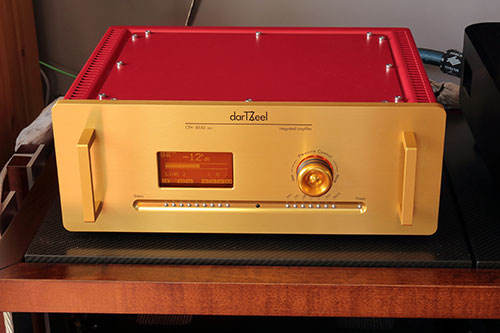

darTZeel Audio CTH-8550 Mk II
darTZeel ist ein Schweizer Unternehmen, das 2001 in Genf von Hervé Delétraz gegründet wurde. Der Name ist ein Anagramm des Nachnamens Delétraz. Die Arbeit an den ersten Geräten begann bereits 1984 im Rahmen einer Diplomarbeit, und nach 18 Jahren Forschung wurde 2002 der Leistungsverstärker NHB-108 offiziell vorgestellt. Es gibt Marken, auf die man viele Jahre warten muss, aber man wartet trotzdem weiter. So war es für mich bei der Marke darTZeel. Zufällig traf ich ihren…13.10.2026 -
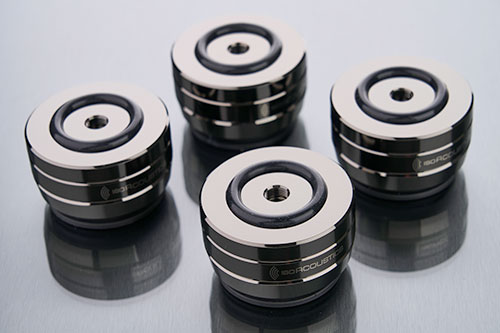
IsoAcoustics GAIA Neo I
Erinnern Sie sich noch? Es ist bereits eine ganze Weile her, da haben Hifi-Fans ihre Lautsprecher auf Tennisbälle gestellt, um einen besseren Klang aus ihnen herauszukitzeln. Oder sie haben abenteuerliche Selfmade-Konstruktionen gebastelt, auf denen die vielleicht nicht ganz highendigen Schallwandler platziert wurden. Das ist lange her und in der Zwischenzeit hat sich in Sachen Lautsprecher-Füße einiges getan. Es gibt eine große Zahl an Herstellern, die Basen, Spikes oder Ständer mit unterschiedlichen Konzepten und Materialien produzieren,…09.10.2026 


-
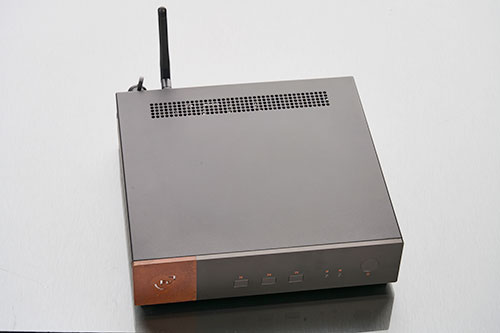
Ferrum BROEN
Auf der High End 2025 ließ man bei Ferrum durchblicken, dass an einem Streamer gearbeitet wird. Die Ferrum Streaming Control Technology, mit der die Musikwiedergabe mittels der Fernbedienung Ferrums DAC WANDLA steuerbar ist, war bereits eine Vorbereitung auf den Streamer und das Schaffen eines gesamten Ferrum-Ökosystems. Im Oktober 2025, wenige Monate nach der High End letzten Jahres waren auf der Audio Video Show in Warschau dann bereits erste BROEN Vorserienmodelle in Betrieb. Auf der diesjährige…06.10.2026 -
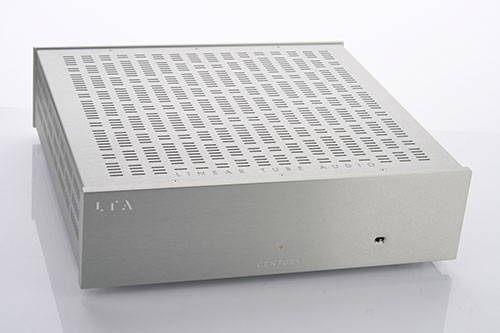
Linear Tube Audio Century
Century heißen die Röhren-Mono-Endverstärker von Linear Tube Audio, die ohne Ausgangsübertrager auskommen und sich dennoch grundlegend von anderen OTL-Konzepten unterscheiden. Wir haben uns intensiv damit beschäftigt, was die patentierte ZOTL-Technologie des Entwicklers so besonders macht und wie sie sich klanglich auswirkt. Für diesen Test haben Dirk Sommer und ich uns eine Arbeitsteilung vorgenommen, bei der ich (Carsten Bussler) mich auf die Technik der Century-Monos sowie die Hintergründe zu Linear Tube Audio und die Zusammenarbeit mit…29.09.2026 -
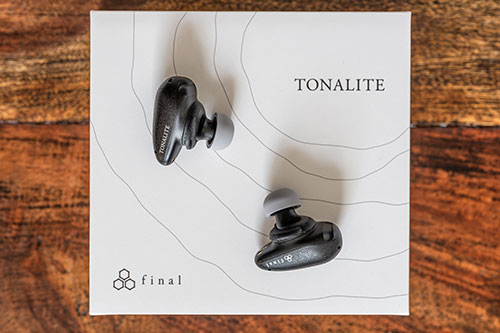
Final Tonalite
Finals Tonalite ist nicht nur ein neuer In-Ear, sondern macht gleichzeitig Finals Timbreanpassung jedem Nutzer mittels einer App zugänglich. Seit der noch etwas kryptischen Ankündigung dieser Technologie auf der High End 2022 habe ich Ihnen über den Entwicklungsprozess berichtet. Das fertige Produkt halte ich persönlich für einen Meilenstein. Tonalite ist eine grundlegende Neuentwicklung mit neuem Formfaktor und neuer Technik. Die Tonalite In-Ears verfügen über eine eher ovale Form, in der die gesamte Elektronik untergebracht ist.…25.09.2026
© 2026 | HIFISTATEMENT | netmagazine | Alle Rechte vorbehalten | Impressum | Datenschutz


Einige Hifistatement-Autoren benutzen
Qobuz Sublime+ Abonnements.

Einige Hifistatement-Autoren besitzen
eine roon Mitgliedschaft.

Einige Hifistatement-Autoren besitzen
die JPLAY hi-fi app.

Einige Hifistatement-Autoren besitzen
den Audirvana Plus 3 Music Player.