


 |
|As with all Wilson Benesch products, the housing of the TESSELLATE Ti-S is designed with a focus on high rigidity, low mass, and excellent resonance control. Therefore, a housing without perfectly parallel surfaces was constructed, featuring a tessellated lattice structure manufactured through selective laser sintering of titanium powder. The design of the internal structures, like the titanium components of the tonearm, was based on biomimetic principles, such as those used to develop the bones of a starling. The tessellated lattice structure of the sides creates a semi-open housing that significantly influences the sound less than a closed one. The housing surface that makes contact with the headshell also features a lattice structure. Since even seemingly flat surfaces are not perfectly even, contact is established only at various microscopically small points. Ideally, this connection should be mechanically stable and acoustically damped, but in this case, it is not, allowing reflected resonance energy to travel back to the cartridge's generator. During cartridge mounting, a thin layer of viscoelastic adhesive is applied to the headshell. As the mounting screws are tightened, this adhesive flows into the hexagonal grid, forming precisely shaped polymer cushions. This creates, firstly, a large, continuous contact surface instead of microscopically small contact points. Secondly, the viscoelastic material converts vibrational energy at the interface into heat, preventing it from being reflected back to the cartridge. Thirdly, once the adhesive has cured, the cartridge and headshell behave as a single unit: micro-movements between them cease.

But that's not all: The cartridge isn't simply screwed into the headshell with two Allen screws and washers, as is usually the case. Instead, Wilson Benesch includes a fin. This is a titanium arc with a tessellated lattice structure, which is, of course, also manufactured using selective laser sintering to achieve maximum rigidity with minimal mass. The wide base of the fin distributes the clamping forces evenly across the interface between the cartridge and tonearm. Wilson Benesch sees the fin not merely as a mounting component, but as an integral part of the resonance control system. While the white paper offers further insights into the special properties and Poisson's ratio of cork, I'll leave it at that with the technical features of the Prime Meridian system described so far. It should be clear that Wilson Benesch has thoroughly examined all aspects of vinyl playback and developed a wealth of innovative solutions. The Wilson Benesch system is unlike any turntable that has previously visited my listening room.

Immediately after setting up the turntable, while Christina, Craig, and Luke Milnes were still present, I put on Art Farmer and Jim Hall's Big Blues out of habit, and after the first few bars, I was certain I was going to have a lot of fun with the Prime Meridian system. I hadn't even sat down in the listening chair yet. Nevertheless, the transient response immediately captivated me; the Wilson Benesch cartridge played with pinpoint accuracy, there were no tonal anomalies, and even listening almost casually, the wealth of detail and the precise rendering of the musical events were striking. On the other hand, it was already becoming clear that describing the sound wouldn't be easy: you certainly wouldn't be satisfied with the simple statement, "I've never heard my LPs sound as good as with the Prime Meridian system." I postponed solving the problem for the time being, refrained from playing any familiar test records, and used the high-tech machine exclusively for enjoying music with my wife that evening.


-
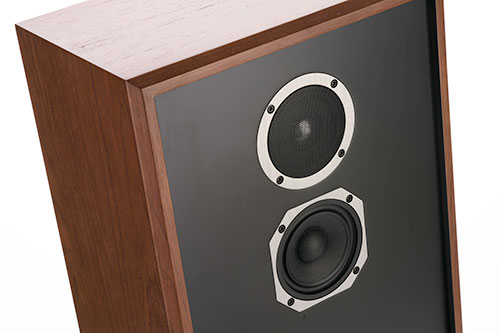
KLH Audio Model Four
Endlich steht mal etwas ganz anderes in meinem Hörraum. Der Lautsprecher des traditionsreichen amerikanischen Herstellers KLH entspricht einem Design von vor mehr als 50 Jahren, wie man es auch heutzutage bei Edelmarken wie Harbeth oder Audio Note findet. Bislang hatte ich nicht das Vergnügen, einen solchen Lautsprecher im Hörraum zu erleben. Neben dem Design mit breiter Schallwand und geringer Bautiefe macht der Paarpreis von knapp 2000 Euro die KLH Model Four hochgradig interessant. Auf zum…19.10.2026 -
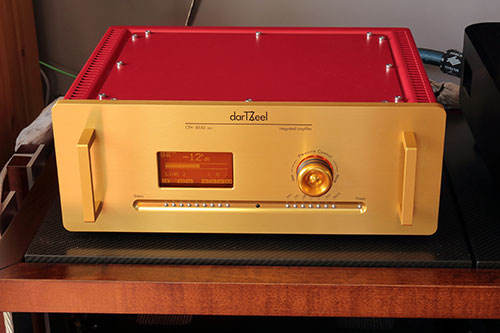

darTZeel Audio CTH-8550 Mk II
darTZeel ist ein Schweizer Unternehmen, das 2001 in Genf von Hervé Delétraz gegründet wurde. Der Name ist ein Anagramm des Nachnamens Delétraz. Die Arbeit an den ersten Geräten begann bereits 1984 im Rahmen einer Diplomarbeit, und nach 18 Jahren Forschung wurde 2002 der Leistungsverstärker NHB-108 offiziell vorgestellt. Es gibt Marken, auf die man viele Jahre warten muss, aber man wartet trotzdem weiter. So war es für mich bei der Marke darTZeel. Zufällig traf ich ihren…13.10.2026 -
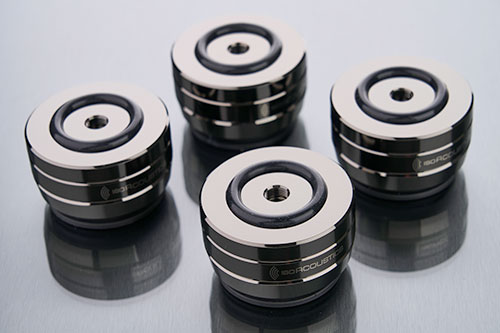
IsoAcoustics GAIA Neo I
Erinnern Sie sich noch? Es ist bereits eine ganze Weile her, da haben Hifi-Fans ihre Lautsprecher auf Tennisbälle gestellt, um einen besseren Klang aus ihnen herauszukitzeln. Oder sie haben abenteuerliche Selfmade-Konstruktionen gebastelt, auf denen die vielleicht nicht ganz highendigen Schallwandler platziert wurden. Das ist lange her und in der Zwischenzeit hat sich in Sachen Lautsprecher-Füße einiges getan. Es gibt eine große Zahl an Herstellern, die Basen, Spikes oder Ständer mit unterschiedlichen Konzepten und Materialien produzieren,…09.10.2026 


-
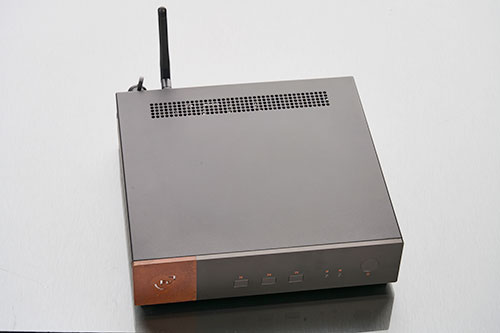
Ferrum BROEN
Auf der High End 2025 ließ man bei Ferrum durchblicken, dass an einem Streamer gearbeitet wird. Die Ferrum Streaming Control Technology, mit der die Musikwiedergabe mittels der Fernbedienung Ferrums DAC WANDLA steuerbar ist, war bereits eine Vorbereitung auf den Streamer und das Schaffen eines gesamten Ferrum-Ökosystems. Im Oktober 2025, wenige Monate nach der High End letzten Jahres waren auf der Audio Video Show in Warschau dann bereits erste BROEN Vorserienmodelle in Betrieb. Auf der diesjährige…06.10.2026 -
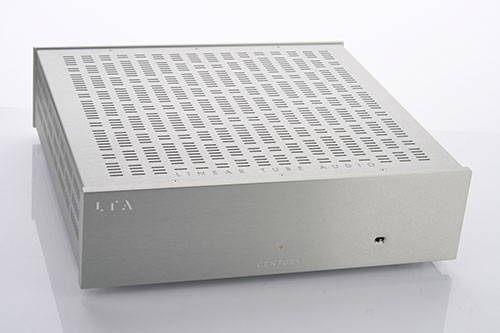
Linear Tube Audio Century
Century heißen die Röhren-Mono-Endverstärker von Linear Tube Audio, die ohne Ausgangsübertrager auskommen und sich dennoch grundlegend von anderen OTL-Konzepten unterscheiden. Wir haben uns intensiv damit beschäftigt, was die patentierte ZOTL-Technologie des Entwicklers so besonders macht und wie sie sich klanglich auswirkt. Für diesen Test haben Dirk Sommer und ich uns eine Arbeitsteilung vorgenommen, bei der ich (Carsten Bussler) mich auf die Technik der Century-Monos sowie die Hintergründe zu Linear Tube Audio und die Zusammenarbeit mit…29.09.2026 -
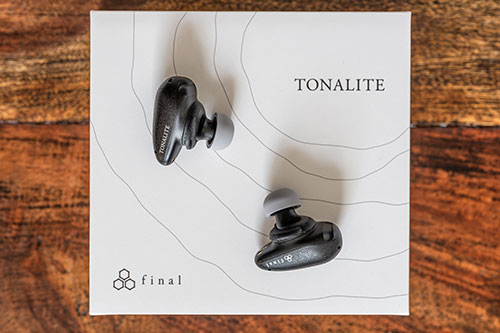
Final Tonalite
Finals Tonalite ist nicht nur ein neuer In-Ear, sondern macht gleichzeitig Finals Timbreanpassung jedem Nutzer mittels einer App zugänglich. Seit der noch etwas kryptischen Ankündigung dieser Technologie auf der High End 2022 habe ich Ihnen über den Entwicklungsprozess berichtet. Das fertige Produkt halte ich persönlich für einen Meilenstein. Tonalite ist eine grundlegende Neuentwicklung mit neuem Formfaktor und neuer Technik. Die Tonalite In-Ears verfügen über eine eher ovale Form, in der die gesamte Elektronik untergebracht ist.…25.09.2026
© 2026 | HIFISTATEMENT | netmagazine | Alle Rechte vorbehalten | Impressum | Datenschutz


Einige Hifistatement-Autoren benutzen
Qobuz Sublime+ Abonnements.

Einige Hifistatement-Autoren besitzen
eine roon Mitgliedschaft.

Einige Hifistatement-Autoren besitzen
die JPLAY hi-fi app.

Einige Hifistatement-Autoren besitzen
den Audirvana Plus 3 Music Player.