


 |
|
Showing more substance, enhanced clarity, and a great deal of inner coherence, the Lindemann is quick to reveal its higher ambitions. With the re-sampling function activated, the difference becomes even more obvious. Older recordings now have flow, and homogeneity as well. Brilliance, structure in the bass, and a transparent room imaging round off the soundscape. The reproduction gets – it's hard to describe – richer. However, with some recordings, which have accompanied me for many years, it's over the top for my taste, and I prefer the harder and edgier sound of the original resolution. Maybe it's just the long habit? In my view, the better the recording and production quality of the source material, the less re-sampling is needed. Since with the average listener this doesn't apply to the vast part of the music collection, I simply leave the re-sampling mode permanently on; the advantages prevail with 90 per cent of the music. Well, how does the little Lindemann sound? It's not easy to pick an individual audio virtue. It's very complete, big, colorful, and, as already mentioned above, homogeneous on a truly high level. But there is more: an immense tidiness which has nothing to do with clinical purity. Despite the complete absence of artifacts and grain, the Network sounds never cold or hard. Au contraire, there's always a dash of warmth in it while offering a palpable flow and substantial smoothness.

On async remodels, an album where Ruichi Sakamoto personally produced the interpretations of his album async by other artists, "life, life" by Andy Stott features an absurd initial bass gong that reverberates forth in space, lots of different subsonic tones, and a kaleidoscope of reverberating synthesizer layers, which effortlessly bridge the gap between the true acoustical room and the virtual one. Though everything is totally synthetic, the Lindemann manages to not only give power and punch to the deep initial strike, but also to model the reverb tail in a wonderful manner without detaching it from its origin or leaving it wavering in the empty space. It's a little more on the voluminous side, without brutality, yet with full emphasis and a tad bit more volume than structure. Actually, the entire bass range already becomes manifest here: very deep, structured and yet lush, also nicely balanced between volume and resolution and with just the right amount of impact. "Organic," this word comes to my mind, so real does the inherently synthetic bass figure sound. Certainly intended by the artist, but it takes quite a bit for a component to perform in such a convincing manner!
By the way: I need to admit that, due to the cornucopia of choices, I was in fact listening randomly, and now I can't remember too many names of outstanding examples. The search for high-resolution material was good fun. Including songs by Schubert, recorded at 24-bit/96 kilohertz. On the first album a pinpoint imaging in a very large room, a precisely contoured piano with an extremely transparent body, in front of it the vibrant singer whose voice is unraveled in all facets. Beauty that makes you want to get down on your knees. This is high-res, I was thinking by myself. On the second album a piano, the room slightly diffuse, the voice a little reserved. Pretty well known and normal. Also with high-res after all, it really matters who's sitting at the controls.


-
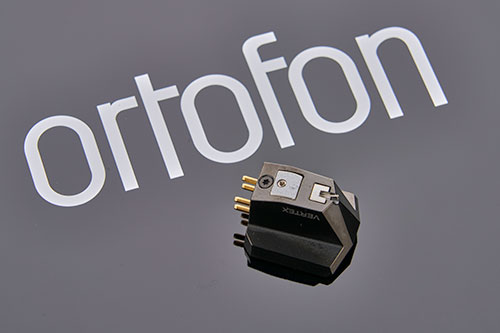
Ortofon MC Vertex
Die bisherigen Topmodelle von Ortofon, das Anna, das Anna Diamond und das Diamond, ähnelten einander auch optisch stark. Das Vertex macht schon durch sein Erscheinungsbild klar, dass es anders ist. Es ist der erste Tonabnehmer mit einem Diamanten mit Vertex-Schliff. Soweit mir bekannt, ist das der erste neue Nadelschliff seit rund 40 Jahren. Aber das ist nicht die einzige Veränderung gegenüber dem MC Diamond: Der Generator des Vertex besitzt einen deutlich höheren Innenwiderstand, die Nadelnachgiebigkeit…15.09.2026 -
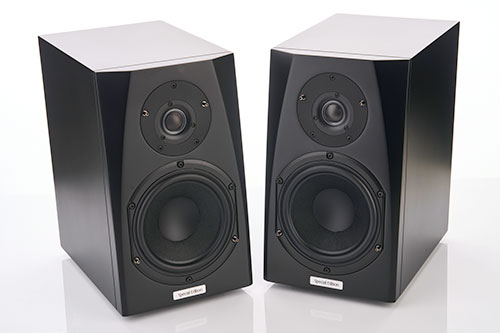
Phonar Veritas M4.2 SE
Es hat mir bislang stets Vergnügen bereitet, mich mit Phonar Lautsprechern zu beschäftigen. Nach einem Test kaufte ich die Veritas 9.2 SE und genieße seitdem ihre Musikalität. Phonar überzeugte immer wieder mit einem außergewöhnlich attraktiven Preis-Klang-Verhältnis. Bestätigt die neue, kompakte Phonar Veritas M4.2 SE diese Erfahrungen? Mein eindrucksvollstes Phonar-Erlebnis hatte ich vor zwei Jahren mit der Standbox Veritas p4.2 Next, die aktuell für einen Paarpreis von 2400 Euro auf der Phonar-Website zu sehen ist. Genau…08.09.2026 -
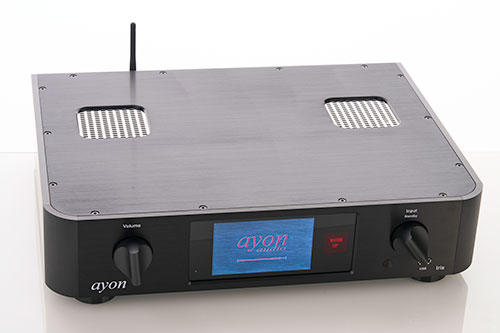
Ayon Iris Signature Streamer
Auf der High End Vienna haben Dirk Sommer und ich den Ayon Iris erstmals entdeckt – nun steht der außergewöhnliche Streaming-Player bei uns bereits zum Test. So frisch ist der Iris, dass selbst die Roon-Zertifizierung zum Testzeitpunkt noch läuft. Brandneu, doch der Iris kommt keineswegs aus dem Nichts: Wer die Entwicklung der digitalen Ayon-Komponenten verfolgt hat, erkennt eine kontinuierliche Beschäftigung mit dem Thema Streaming. Auch wir konnten diesen Weg begleiten – nach dem S3 und…01.09.2026 


-
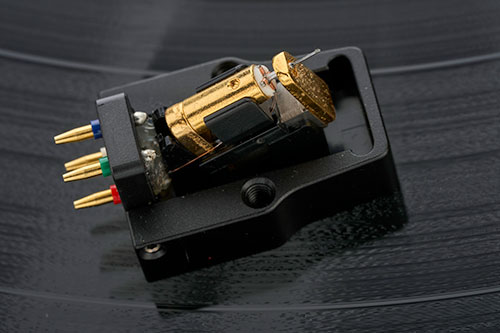
Sumiko Starling
Mein letzter Test eines Tonabnehmersystems befasste sich mit dem Sumiko Oriole. Nun drehen sich für diesen Test meine Schallplatten unter dem Sumiko Starling, dem teuersten System aus der Sumiko Referenz Serie. Nachdem ich überaus positiv überrascht vom Test des Oriole war und dies Peter Laitenberger vom deutschen ATR Vertrieb mitteilte, empfahl mir dieser mir doch einmal das Sumiko Starling anzuhören. Gesagt, getan und bereits wenige Tage später kam das kleine Päckchen mit dem Starling zu…28.08.2026 -
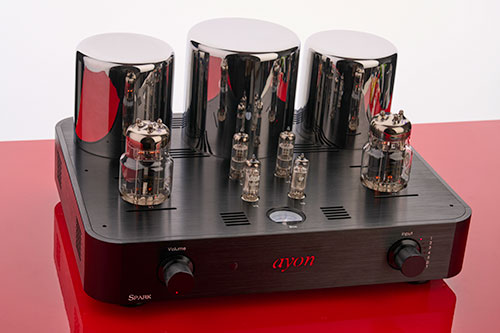
Ayon Spark V
Der Röhrenvollverstärker Spark ist mittlerweile seit über 20 Jahren ein fester Bestandteil des Produktportfolios von Ayon. Preislich eher im Einstiegssegment der Österreicher und nominell unterhalb der Evolution-Serie angesiedelt, hat dieses Gerät aufgrund der eingesetzten russischen Triode 6C33 das Potenzial zum Hidden Champion. Spätestens seit meinem Test des Boliden Ayon Crossfire Evo maße ich mir an, ein Kenner der Marke Ayon zu sein, zumal mir diverse andere Geräte der Marke im Laufe der Jahre zu Gehör…25.08.2026 -
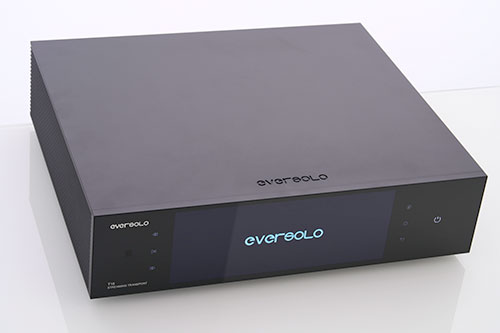
Eversolo T10
Eversolos Streamer DMP-A10 beeindruckte mit seinem hervorragenden Preis/Leistungsverhältnis und seiner prallen Ausstattungsfülle. Aber in meiner Kette im Wohnzimmer mit M-Scaler und HUGO 2 arbeitet er nur als reiner Datenlieferant. Kann das Eversolos neuer Streaming Transport T10 noch besser? Zumindest nach dem ersten Blick auf das rückseitige Anschlussfeld darf man das vermuten, denn dort befinden sich wie beim Eversolo DAC-Z10 zwei BNC-Anschlüsse für die Verbindung mit einer externen Clock, entweder mit einer Impedanz von 75 oder…21.08.2026
© 2026 | HIFISTATEMENT | netmagazine | Alle Rechte vorbehalten | Impressum | Datenschutz


Einige Hifistatement-Autoren benutzen
Qobuz Sublime+ Abonnements.

Einige Hifistatement-Autoren besitzen
eine roon Mitgliedschaft.

Einige Hifistatement-Autoren besitzen
die JPLAY hi-fi app.

Einige Hifistatement-Autoren besitzen
den Audirvana Plus 3 Music Player.