


 |
|Even though the ERCO merely offers one RCA input, almost the entire signal processing is carried out in balanced mode: On the one hand, the incoming analog signal is balanced directly after the input jacks, on the other hand, the proven ESS-Sabre ES9028PRO DAC chip provides a balanced signal itself. Since HEM has had the very best experience with the ES9028Pro, they saw no reason to switch to the current chip series from ESS-Sabre. The ES9028Pro processes PCM with up to 32 bit and 384 kilohertz as well as DSD256. A rotary switch on the back of the device allows to activate the bypass mode. This, however, is only possible by means of a screwdriver to avoid an unintentional activation, as in bypass mode the full output voltage is applied to the RCA and XLR outputs, bypassing therefore the blue ALPS four-channel potentiometer. The headphone outputs on the contrary are not affected by the bypass mode. Thus, even in an audio system with a preamplifier, both the converter and headphone amplifier can be used comfortably without switching or reconnecting cables.

Like the OOR, also the ERCO's internal power supply with its low-noise switching regulators, sophisticated filtering and linear low-drop voltage regulators (LDO) with fast transient response is the technological heritage of the HYPSOS. Actually the ERCO features two DC inputs as well: a classic 2.5/5.5-millimeter DC jack plug and a four-pin WEIPU plug, the same as on the HYPSOS. For the second option, the ERCO comes with a special power link cable with four-pin WEIPU connectors on both sides. In case a normal cable is used, the "4-Terminal Sensing Design" (4TSD) feature in the HYPSOS measures the voltage directly at the cable output, while when using the FPL cable it measures the voltage on the ERCO's motherboard instead. This allows the HYPSOS to regulate the voltage for the converter/headphone amplifier even more precisely.

But first, the ERCO has to get by without an additional power supply and accumulate a good number of operating hours. It turned out that even with a media converter like the ADOT, a few hours of break-in time improve the sonic performance, and this effect, as to my experience, is particularly pronounced with a digital-to-analog converter. In order to be able to run the ERCO continuously for a few days without blocking the systems in the study or living room as a result, the ERCO has to make do with a fairly simple environment to begin with, a set-up which should nevertheless represent a rather typical application for it: It fetches its data from a MacBook Pro via the supplied USB-A-to-C cable. The laptop sources the music files from an external USB hard drive - a rather questionable solution in terms of sound - and prepares them for the converter using Audirvana Studio, while the SendyAudio Peacock - my current favorite headphone right after the Stealth from Dan Clark Audio, which has long since returned to its distributor - is connected via the jack socket.


-
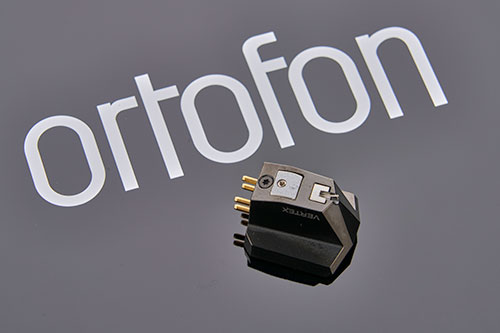
Ortofon MC Vertex
Die bisherigen Topmodelle von Ortofon, das Anna, das Anna Diamond und das Diamond, ähnelten einander auch optisch stark. Das Vertex macht schon durch sein Erscheinungsbild klar, dass es anders ist. Es ist der erste Tonabnehmer mit einem Diamanten mit Vertex-Schliff. Soweit mir bekannt, ist das der erste neue Nadelschliff seit rund 40 Jahren. Aber das ist nicht die einzige Veränderung gegenüber dem MC Diamond: Der Generator des Vertex besitzt einen deutlich höheren Innenwiderstand, die Nadelnachgiebigkeit…15.09.2026 -
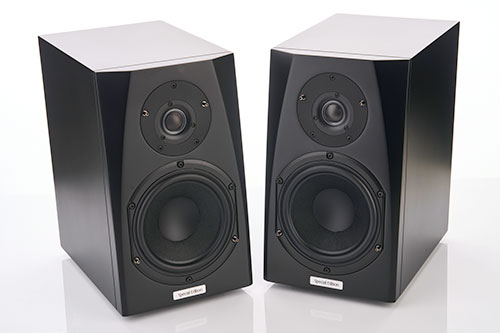
Phonar Veritas M4.2 SE
Es hat mir bislang stets Vergnügen bereitet, mich mit Phonar Lautsprechern zu beschäftigen. Nach einem Test kaufte ich die Veritas 9.2 SE und genieße seitdem ihre Musikalität. Phonar überzeugte immer wieder mit einem außergewöhnlich attraktiven Preis-Klang-Verhältnis. Bestätigt die neue, kompakte Phonar Veritas M4.2 SE diese Erfahrungen? Mein eindrucksvollstes Phonar-Erlebnis hatte ich vor zwei Jahren mit der Standbox Veritas p4.2 Next, die aktuell für einen Paarpreis von 2400 Euro auf der Phonar-Website zu sehen ist. Genau…08.09.2026 -
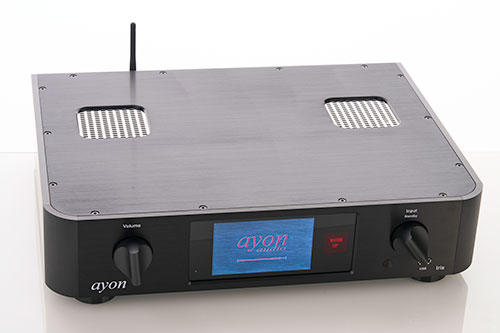
Ayon Iris Signature Streamer
Auf der High End Vienna haben Dirk Sommer und ich den Ayon Iris erstmals entdeckt – nun steht der außergewöhnliche Streaming-Player bei uns bereits zum Test. So frisch ist der Iris, dass selbst die Roon-Zertifizierung zum Testzeitpunkt noch läuft. Brandneu, doch der Iris kommt keineswegs aus dem Nichts: Wer die Entwicklung der digitalen Ayon-Komponenten verfolgt hat, erkennt eine kontinuierliche Beschäftigung mit dem Thema Streaming. Auch wir konnten diesen Weg begleiten – nach dem S3 und…01.09.2026 


-
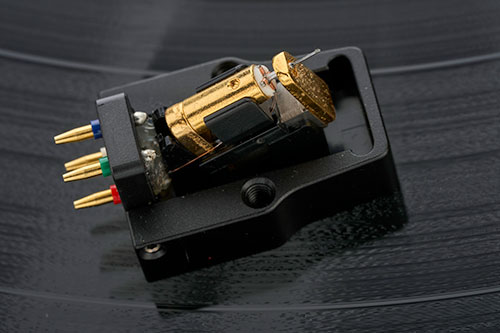
Sumiko Starling
Mein letzter Test eines Tonabnehmersystems befasste sich mit dem Sumiko Oriole. Nun drehen sich für diesen Test meine Schallplatten unter dem Sumiko Starling, dem teuersten System aus der Sumiko Referenz Serie. Nachdem ich überaus positiv überrascht vom Test des Oriole war und dies Peter Laitenberger vom deutschen ATR Vertrieb mitteilte, empfahl mir dieser mir doch einmal das Sumiko Starling anzuhören. Gesagt, getan und bereits wenige Tage später kam das kleine Päckchen mit dem Starling zu…28.08.2026 -
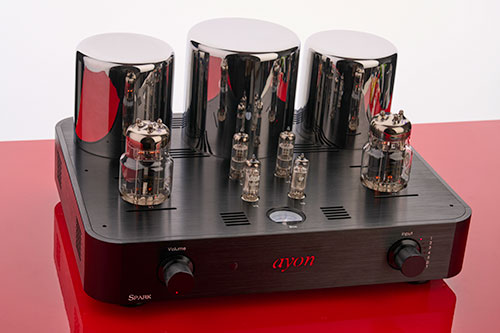
Ayon Spark V
Der Röhrenvollverstärker Spark ist mittlerweile seit über 20 Jahren ein fester Bestandteil des Produktportfolios von Ayon. Preislich eher im Einstiegssegment der Österreicher und nominell unterhalb der Evolution-Serie angesiedelt, hat dieses Gerät aufgrund der eingesetzten russischen Triode 6C33 das Potenzial zum Hidden Champion. Spätestens seit meinem Test des Boliden Ayon Crossfire Evo maße ich mir an, ein Kenner der Marke Ayon zu sein, zumal mir diverse andere Geräte der Marke im Laufe der Jahre zu Gehör…25.08.2026 -
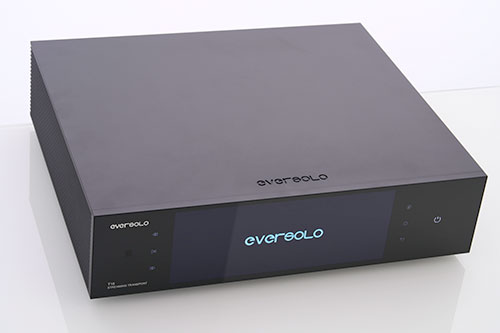
Eversolo T10
Eversolos Streamer DMP-A10 beeindruckte mit seinem hervorragenden Preis/Leistungsverhältnis und seiner prallen Ausstattungsfülle. Aber in meiner Kette im Wohnzimmer mit M-Scaler und HUGO 2 arbeitet er nur als reiner Datenlieferant. Kann das Eversolos neuer Streaming Transport T10 noch besser? Zumindest nach dem ersten Blick auf das rückseitige Anschlussfeld darf man das vermuten, denn dort befinden sich wie beim Eversolo DAC-Z10 zwei BNC-Anschlüsse für die Verbindung mit einer externen Clock, entweder mit einer Impedanz von 75 oder…21.08.2026
© 2026 | HIFISTATEMENT | netmagazine | Alle Rechte vorbehalten | Impressum | Datenschutz


Einige Hifistatement-Autoren benutzen
Qobuz Sublime+ Abonnements.

Einige Hifistatement-Autoren besitzen
eine roon Mitgliedschaft.

Einige Hifistatement-Autoren besitzen
die JPLAY hi-fi app.

Einige Hifistatement-Autoren besitzen
den Audirvana Plus 3 Music Player.