


 |
|But even then, the underlying evaluation system can't be completely switched off - not even when a record is on the turntable that already thrilled us in the mid-80s: musically, not necessarily sonically. Yes, you guessed correctly that a double bass plays an important role on it, namely the one played by Eddy Gomez, who recorded Music For Flute And Double Bass with Jeremy Steig at the end of 1978. The CMP record is so dear to me that I've had a second, brand-new copy on my shelf for some time now, just in case something happens to the copy that's been played for over 40 years.

The rhythmically and harmonically nuanced interplay between these contrasting instruments, in which additional voices also participate thanks to studio technology, is what makes the album so appealing. While the use of numerous effects such as octave divider, Mutron Bi-Phase, Echoplex, and ring modulator for the flutes provides variety, it often lends the sound a somewhat inorganic quality. Eddie Gomez's basses, including a 5/8 model, were recorded via a pickup. When the Wilson Benesch takes over the recording, additional micro-details suddenly become apparent here and there; the flute's sound isn't masked by the effects, as the instrument's tone and the layers of effects above it are simply more clearly differentiated, and even the less-than-ideal bass sound becomes more realistic and grounded. I haven't heard the album sound so finely detailed and emotionally engaging in over 40 years. The transients, which now come remarkably close to those of a live acoustic instrument, certainly contribute to this. The interaction of flute and bass with the virtual space was also previously not so clearly perceptible. I'm really not exaggerating when I say that I've never experienced the LP as intensely as with the Prime Meridian system.

Naturally, after my initial, overwhelmingly positive experiences with the Wilson Benesch, I was curious to see what other unheard-of details it might reveal from the familiar test records. The answer is simple: more information. Sometimes it's a handling noise, sometimes a bit more air surrounding an instrument, sometimes a more lingering reverb tail, sometimes a touch more depth to the soundstage – and all this without ever sounding even remotely cold or analytical. The Prime Meridian system seamlessly integrates these sonic nuances into the musical flow: they are present when listening critically, but never intrude when you primarily want to focus on the music itself: simply perfect! However, I'll spare you and myself the trouble of assigning these new discoveries to specific test records. There simply isn't a single record where the Wilson Benesch didn't offer a little something extra compared to all the other turntables in my listening room.


-
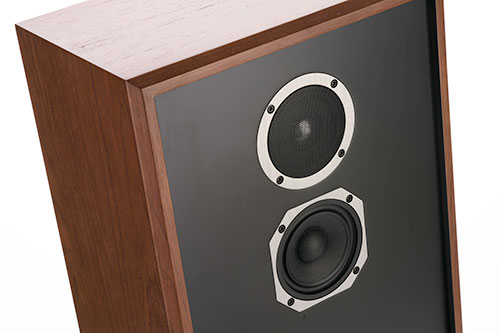
KLH Audio Model Four
Endlich steht mal etwas ganz anderes in meinem Hörraum. Der Lautsprecher des traditionsreichen amerikanischen Herstellers KLH entspricht einem Design von vor mehr als 50 Jahren, wie man es auch heutzutage bei Edelmarken wie Harbeth oder Audio Note findet. Bislang hatte ich nicht das Vergnügen, einen solchen Lautsprecher im Hörraum zu erleben. Neben dem Design mit breiter Schallwand und geringer Bautiefe macht der Paarpreis von knapp 2000 Euro die KLH Model Four hochgradig interessant. Auf zum…19.10.2026 -
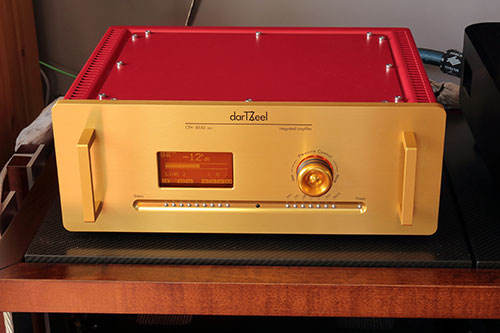

darTZeel Audio CTH-8550 Mk II
darTZeel ist ein Schweizer Unternehmen, das 2001 in Genf von Hervé Delétraz gegründet wurde. Der Name ist ein Anagramm des Nachnamens Delétraz. Die Arbeit an den ersten Geräten begann bereits 1984 im Rahmen einer Diplomarbeit, und nach 18 Jahren Forschung wurde 2002 der Leistungsverstärker NHB-108 offiziell vorgestellt. Es gibt Marken, auf die man viele Jahre warten muss, aber man wartet trotzdem weiter. So war es für mich bei der Marke darTZeel. Zufällig traf ich ihren…13.10.2026 -
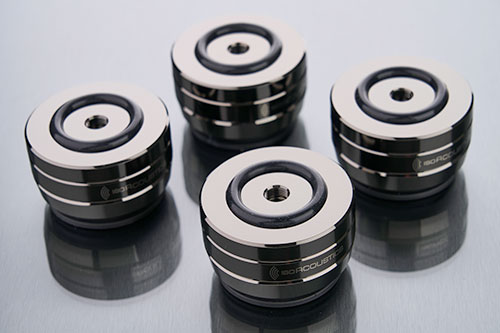
IsoAcoustics GAIA Neo I
Erinnern Sie sich noch? Es ist bereits eine ganze Weile her, da haben Hifi-Fans ihre Lautsprecher auf Tennisbälle gestellt, um einen besseren Klang aus ihnen herauszukitzeln. Oder sie haben abenteuerliche Selfmade-Konstruktionen gebastelt, auf denen die vielleicht nicht ganz highendigen Schallwandler platziert wurden. Das ist lange her und in der Zwischenzeit hat sich in Sachen Lautsprecher-Füße einiges getan. Es gibt eine große Zahl an Herstellern, die Basen, Spikes oder Ständer mit unterschiedlichen Konzepten und Materialien produzieren,…09.10.2026 


-
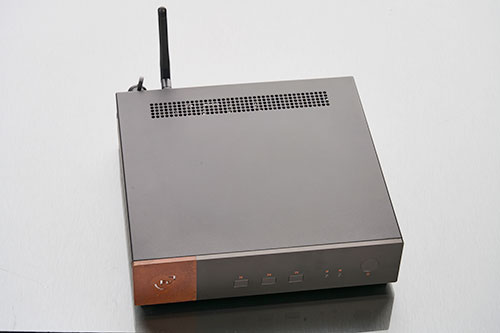
Ferrum BROEN
Auf der High End 2025 ließ man bei Ferrum durchblicken, dass an einem Streamer gearbeitet wird. Die Ferrum Streaming Control Technology, mit der die Musikwiedergabe mittels der Fernbedienung Ferrums DAC WANDLA steuerbar ist, war bereits eine Vorbereitung auf den Streamer und das Schaffen eines gesamten Ferrum-Ökosystems. Im Oktober 2025, wenige Monate nach der High End letzten Jahres waren auf der Audio Video Show in Warschau dann bereits erste BROEN Vorserienmodelle in Betrieb. Auf der diesjährige…06.10.2026 -
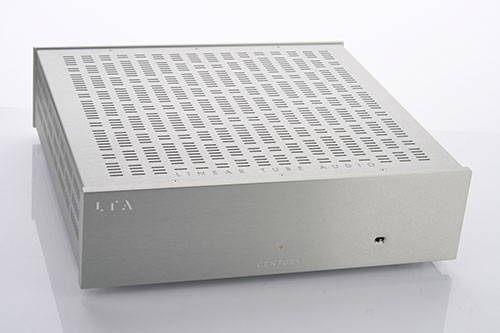
Linear Tube Audio Century
Century heißen die Röhren-Mono-Endverstärker von Linear Tube Audio, die ohne Ausgangsübertrager auskommen und sich dennoch grundlegend von anderen OTL-Konzepten unterscheiden. Wir haben uns intensiv damit beschäftigt, was die patentierte ZOTL-Technologie des Entwicklers so besonders macht und wie sie sich klanglich auswirkt. Für diesen Test haben Dirk Sommer und ich uns eine Arbeitsteilung vorgenommen, bei der ich (Carsten Bussler) mich auf die Technik der Century-Monos sowie die Hintergründe zu Linear Tube Audio und die Zusammenarbeit mit…29.09.2026 -
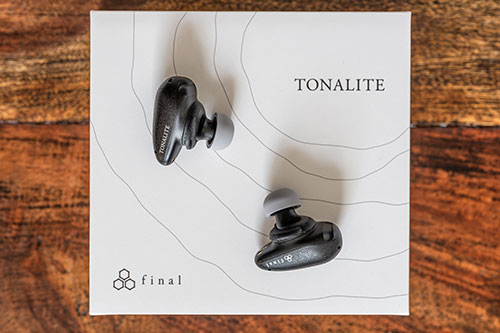
Final Tonalite
Finals Tonalite ist nicht nur ein neuer In-Ear, sondern macht gleichzeitig Finals Timbreanpassung jedem Nutzer mittels einer App zugänglich. Seit der noch etwas kryptischen Ankündigung dieser Technologie auf der High End 2022 habe ich Ihnen über den Entwicklungsprozess berichtet. Das fertige Produkt halte ich persönlich für einen Meilenstein. Tonalite ist eine grundlegende Neuentwicklung mit neuem Formfaktor und neuer Technik. Die Tonalite In-Ears verfügen über eine eher ovale Form, in der die gesamte Elektronik untergebracht ist.…25.09.2026
© 2026 | HIFISTATEMENT | netmagazine | Alle Rechte vorbehalten | Impressum | Datenschutz


Einige Hifistatement-Autoren benutzen
Qobuz Sublime+ Abonnements.

Einige Hifistatement-Autoren besitzen
eine roon Mitgliedschaft.

Einige Hifistatement-Autoren besitzen
die JPLAY hi-fi app.

Einige Hifistatement-Autoren besitzen
den Audirvana Plus 3 Music Player.