


 |
|In the past few years I had lost track of the Lindemann company and their audio products. This was despite the fact that I had only the finest memories of the products from Bavaria since the early days, and whenever I passed by a Lindemann demonstration at some trade show, I was greatly impressed. But somehow, we never got together.
One reason for my distance may have been their price policy at that time, and the bulky devices which, admittedly, earned the highest accolades both nationally and internationally, but were a little out of my financial reach. Already since the end of the last millennium they were working on upsampling there, using high-res formats could be played back since 2001 on their own SACD player. This know-how in the digital domain, built up over decades, led to the introduction of the Musicbook series in 2013, which handled the music via network. The enclosures are smaller now, and so are the prices. Even smaller is their latest incarnation, the brand-new Limetree series by Lindemann. It currently comprises four devices for different applications, and more are in the pipeline. The Limetree Headphone represents a high-quality analog headphone/preamp combo; the Limetree Phono is a phono preamp with discrete inputs for moving coil and moving magnet pickups; the Limetree Bridge is a network player for local storage media and streaming services without a converter; and, the subject of my evaluation here, the Limetree Network, which is basically a Bridge with an on board converter and a preamp. All devices are housed in little aluminum boxes of merely 107 x 40 x 107 mm in size.

Well, owing to SMD technology, we are now used to see ever smaller and lighter high-quality hifi gear. But still I have to swallow, reminiscing of the massive ancestors, when unpacking the little box with its well-crafted, neatly coined standard aluminum body. One small toggle switch, three LEDs and one ⅛" jack output for a headphone embellish the front, which hardly offers any more free space. The rear panel looks equally tidy: one USB input and a LAN interface are sitting beside an RCA out, a socket for a W-LAN antenna and the power connector, including a little push button to make contact with the wireless home network. But if you take a look inside, the minimalism is soon gone. One AK4452 DAC is used per channel, an AK4137 takes care of the re-sampling, and to keep the jitter permanently low, a MEMS FemtoClock has been installed.
All common music file formats with a maximum resolution of 384 kilohertz for PCM files – via W-Lan "only" 192 kilohertz – or DSD256 respectively are supported (via W-Lan, at least DSD128). The Limetree Network is ready for the most popular streaming providers of high-res music material. Customers can choose between TIDAL, Qobuz, Deezer, HighResAudio, and Spotify, and also have access to countless internet radio stations and podcasts. Of course, one can also access a music server over the network via UPnP and DLNA and locally connect a USB hard disk to play back locally stored music. Owners of a Roon player can use it with the Lindemann Limetree Network. It's "Roon ready" and may be used with Roon Core and Roon software. Oh yes, streaming is also possible via Bluetooth, of course. However, the player should support the A2DP Bluetooth audio transfer protocol. The incoming signals are processed bit-perfect according to the source, a 7-color LED indicates the given resolution in each case. Pressing the on/off switch a little longer will cause the converter to switch into re-sampling mode, which is also indicated by an LED. Now the signals are converted to DSD 256. Compared to PCM, Lindemann attributes a more transparent and more natural sound in this operation mode. Did I say anything it about being small?


-
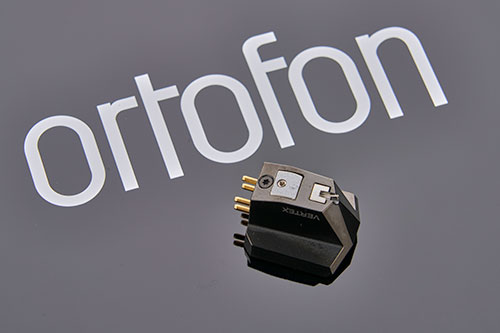
Ortofon MC Vertex
Die bisherigen Topmodelle von Ortofon, das Anna, das Anna Diamond und das Diamond, ähnelten einander auch optisch stark. Das Vertex macht schon durch sein Erscheinungsbild klar, dass es anders ist. Es ist der erste Tonabnehmer mit einem Diamanten mit Vertex-Schliff. Soweit mir bekannt, ist das der erste neue Nadelschliff seit rund 40 Jahren. Aber das ist nicht die einzige Veränderung gegenüber dem MC Diamond: Der Generator des Vertex besitzt einen deutlich höheren Innenwiderstand, die Nadelnachgiebigkeit…15.09.2026 -
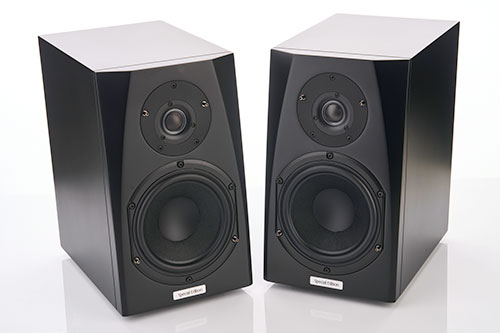
Phonar Veritas M4.2 SE
Es hat mir bislang stets Vergnügen bereitet, mich mit Phonar Lautsprechern zu beschäftigen. Nach einem Test kaufte ich die Veritas 9.2 SE und genieße seitdem ihre Musikalität. Phonar überzeugte immer wieder mit einem außergewöhnlich attraktiven Preis-Klang-Verhältnis. Bestätigt die neue, kompakte Phonar Veritas M4.2 SE diese Erfahrungen? Mein eindrucksvollstes Phonar-Erlebnis hatte ich vor zwei Jahren mit der Standbox Veritas p4.2 Next, die aktuell für einen Paarpreis von 2400 Euro auf der Phonar-Website zu sehen ist. Genau…08.09.2026 -
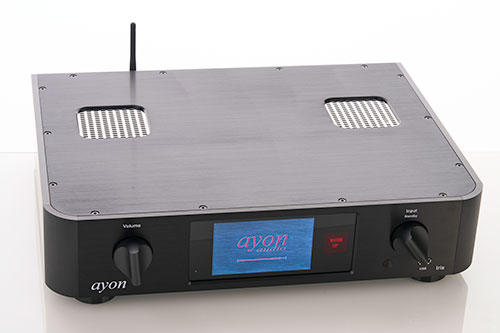
Ayon Iris Signature Streamer
Auf der High End Vienna haben Dirk Sommer und ich den Ayon Iris erstmals entdeckt – nun steht der außergewöhnliche Streaming-Player bei uns bereits zum Test. So frisch ist der Iris, dass selbst die Roon-Zertifizierung zum Testzeitpunkt noch läuft. Brandneu, doch der Iris kommt keineswegs aus dem Nichts: Wer die Entwicklung der digitalen Ayon-Komponenten verfolgt hat, erkennt eine kontinuierliche Beschäftigung mit dem Thema Streaming. Auch wir konnten diesen Weg begleiten – nach dem S3 und…01.09.2026 


-
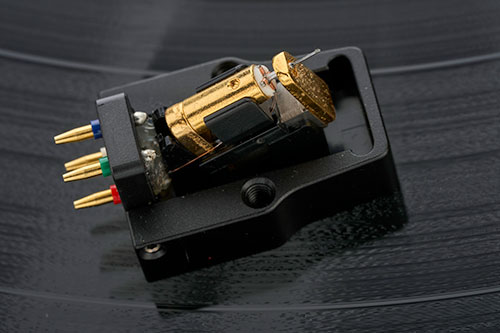
Sumiko Starling
Mein letzter Test eines Tonabnehmersystems befasste sich mit dem Sumiko Oriole. Nun drehen sich für diesen Test meine Schallplatten unter dem Sumiko Starling, dem teuersten System aus der Sumiko Referenz Serie. Nachdem ich überaus positiv überrascht vom Test des Oriole war und dies Peter Laitenberger vom deutschen ATR Vertrieb mitteilte, empfahl mir dieser mir doch einmal das Sumiko Starling anzuhören. Gesagt, getan und bereits wenige Tage später kam das kleine Päckchen mit dem Starling zu…28.08.2026 -
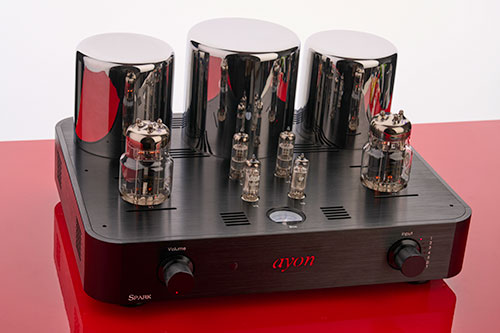
Ayon Spark V
Der Röhrenvollverstärker Spark ist mittlerweile seit über 20 Jahren ein fester Bestandteil des Produktportfolios von Ayon. Preislich eher im Einstiegssegment der Österreicher und nominell unterhalb der Evolution-Serie angesiedelt, hat dieses Gerät aufgrund der eingesetzten russischen Triode 6C33 das Potenzial zum Hidden Champion. Spätestens seit meinem Test des Boliden Ayon Crossfire Evo maße ich mir an, ein Kenner der Marke Ayon zu sein, zumal mir diverse andere Geräte der Marke im Laufe der Jahre zu Gehör…25.08.2026 -
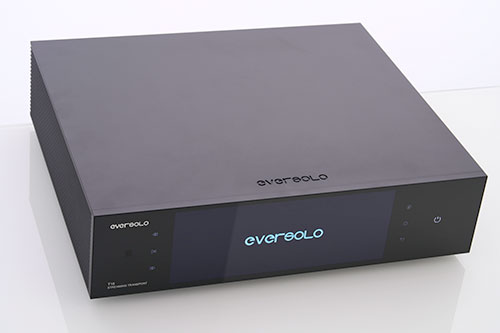
Eversolo T10
Eversolos Streamer DMP-A10 beeindruckte mit seinem hervorragenden Preis/Leistungsverhältnis und seiner prallen Ausstattungsfülle. Aber in meiner Kette im Wohnzimmer mit M-Scaler und HUGO 2 arbeitet er nur als reiner Datenlieferant. Kann das Eversolos neuer Streaming Transport T10 noch besser? Zumindest nach dem ersten Blick auf das rückseitige Anschlussfeld darf man das vermuten, denn dort befinden sich wie beim Eversolo DAC-Z10 zwei BNC-Anschlüsse für die Verbindung mit einer externen Clock, entweder mit einer Impedanz von 75 oder…21.08.2026
© 2026 | HIFISTATEMENT | netmagazine | Alle Rechte vorbehalten | Impressum | Datenschutz


Einige Hifistatement-Autoren benutzen
Qobuz Sublime+ Abonnements.

Einige Hifistatement-Autoren besitzen
eine roon Mitgliedschaft.

Einige Hifistatement-Autoren besitzen
die JPLAY hi-fi app.

Einige Hifistatement-Autoren besitzen
den Audirvana Plus 3 Music Player.