


 |
|
After the Pirol had made its very first, very positive impression, we got a start on the fine tuning. As already mentioned, there wasn’t any need to worry about tonality and dynamics. However, as the Kawero Classic and the Goebel entry-level model Epoque Aeon Fine had previously indulged me with a much deeper soundstage, I asked Michael Plessmann to tease somewhat more out of his creations in this regard. Giving the speakers a more precise alignment, he was able to achieve marginal improvements. But, however, after connecting his laptop to the active electronics of the two speakers one by one and shifting the frequency at which the first-order filter stepped in from a surprisingly low 50 hertz to an even more surprising 27 hertz, the sound immediately isolated itself entirely from the cabinets and the imaginary soundstage enlarged a good deal further into the deep. This would have left me happy all around – if the DSPs would have been capable of saving these settings. But to achieve this, Michael Plessmann had to first commission a software update from his German DSP supplier.

While waiting for the update to arrive, I had enough time to gain initial experience with the Pirol. As long as a loudspeaker isn’t as demanding on power amplifiers as the "previous", somewhat amplifier-killing Goebel Epoque Fine, I am not necessarily interested in the efficiency of a transducer. Be that as it may, the representatives from Soundspace Systems made it obvious that after all I ought to somehow think about it: Even when listening to the most familiar records, there suddenly was fine detail to be more clearly audible than with transducers whose efficiency lies around 90 decibels. Although this will not have the effect of me ordering the one or other low power amplifier for reviewing right away, it makes me better understand the preferences of my colleagues Saile and Bussler. Efficiency is something that's not to be sneezed at – even when the power amps in play then have power in abundance. Actually, I could get used to the active bass of the Pirol in the long run. Even if the bass level is clearly set to joyful listening, the lows of the Pirol remain rhythmically thrilling, resilient, nimble, fast and outlined. And such a constellation is a very difficult thing to achieve with pure passive concepts. One usually has to decide between the earmarks just described or immersing in pleasant low bass waves.


-
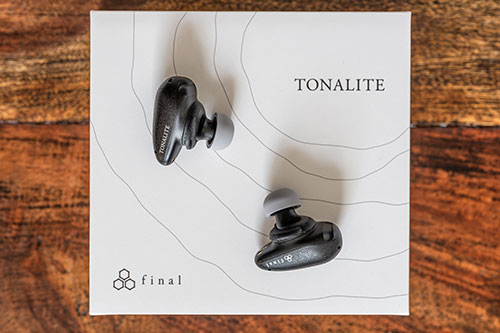
Final Tonalite
Finals Tonalite ist nicht nur ein neuer In-Ear, sondern macht gleichzeitig Finals Timbreanpassung jedem Nutzer mittels einer App zugänglich. Seit der noch etwas kryptischen Ankündigung dieser Technologie auf der High End 2022 habe ich Ihnen über den Entwicklungsprozess berichtet. Das fertige Produkt halte ich persönlich für einen Meilenstein. Tonalite ist eine grundlegende Neuentwicklung mit neuem Formfaktor und neuer Technik. Die Tonalite In-Ears verfügen über eine eher ovale Form, in der die gesamte Elektronik untergebracht ist.…25.09.2026 -
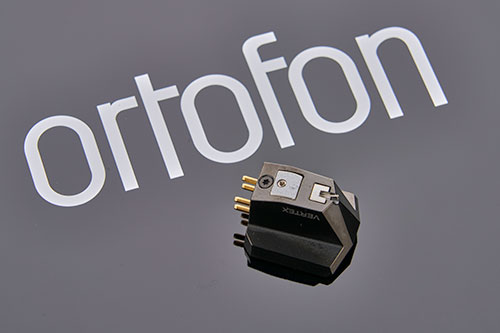
Ortofon MC Vertex
Die bisherigen Topmodelle von Ortofon, das Anna, das Anna Diamond und das Diamond, ähnelten einander auch optisch stark. Das Vertex macht schon durch sein Erscheinungsbild klar, dass es anders ist. Es ist der erste Tonabnehmer mit einem Diamanten mit Vertex-Schliff. Soweit mir bekannt, ist das der erste neue Nadelschliff seit rund 40 Jahren. Aber das ist nicht die einzige Veränderung gegenüber dem MC Diamond: Der Generator des Vertex besitzt einen deutlich höheren Innenwiderstand, die Nadelnachgiebigkeit…15.09.2026 -
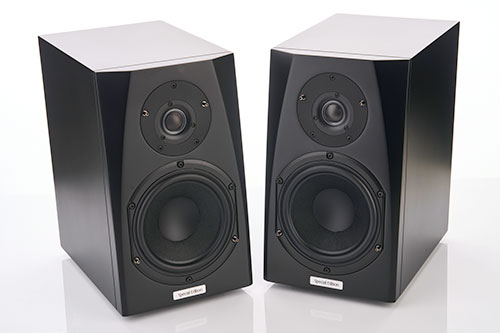
Phonar Veritas M4.2 SE
Es hat mir bislang stets Vergnügen bereitet, mich mit Phonar Lautsprechern zu beschäftigen. Nach einem Test kaufte ich die Veritas 9.2 SE und genieße seitdem ihre Musikalität. Phonar überzeugte immer wieder mit einem außergewöhnlich attraktiven Preis-Klang-Verhältnis. Bestätigt die neue, kompakte Phonar Veritas M4.2 SE diese Erfahrungen? Mein eindrucksvollstes Phonar-Erlebnis hatte ich vor zwei Jahren mit der Standbox Veritas p4.2 Next, die aktuell für einen Paarpreis von 2400 Euro auf der Phonar-Website zu sehen ist. Genau…08.09.2026 


-
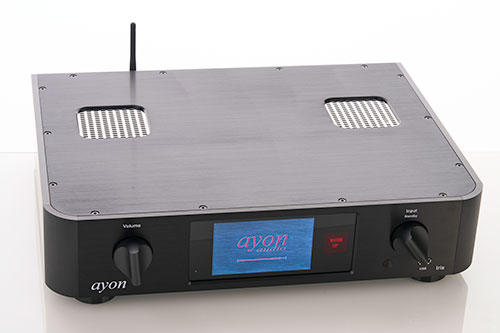
Ayon Iris Signature Streamer
Auf der High End Vienna haben Dirk Sommer und ich den Ayon Iris erstmals entdeckt – nun steht der außergewöhnliche Streaming-Player bei uns bereits zum Test. So frisch ist der Iris, dass selbst die Roon-Zertifizierung zum Testzeitpunkt noch läuft. Brandneu, doch der Iris kommt keineswegs aus dem Nichts: Wer die Entwicklung der digitalen Ayon-Komponenten verfolgt hat, erkennt eine kontinuierliche Beschäftigung mit dem Thema Streaming. Auch wir konnten diesen Weg begleiten – nach dem S3 und…01.09.2026 -
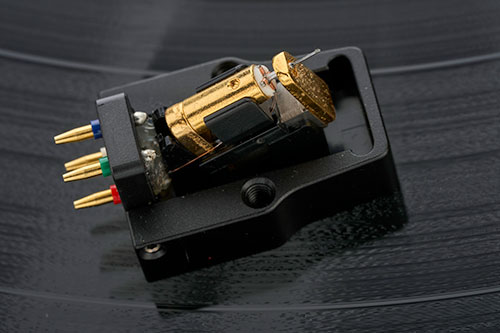
Sumiko Starling
Mein letzter Test eines Tonabnehmersystems befasste sich mit dem Sumiko Oriole. Nun drehen sich für diesen Test meine Schallplatten unter dem Sumiko Starling, dem teuersten System aus der Sumiko Referenz Serie. Nachdem ich überaus positiv überrascht vom Test des Oriole war und dies Peter Laitenberger vom deutschen ATR Vertrieb mitteilte, empfahl mir dieser mir doch einmal das Sumiko Starling anzuhören. Gesagt, getan und bereits wenige Tage später kam das kleine Päckchen mit dem Starling zu…28.08.2026 -
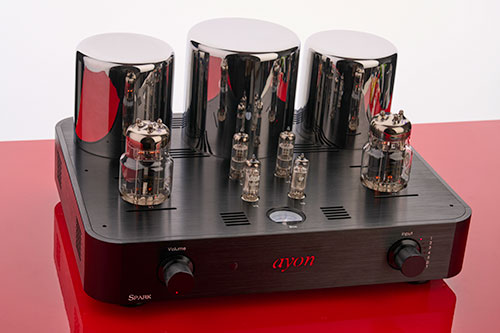
Ayon Spark V
Der Röhrenvollverstärker Spark ist mittlerweile seit über 20 Jahren ein fester Bestandteil des Produktportfolios von Ayon. Preislich eher im Einstiegssegment der Österreicher und nominell unterhalb der Evolution-Serie angesiedelt, hat dieses Gerät aufgrund der eingesetzten russischen Triode 6C33 das Potenzial zum Hidden Champion. Spätestens seit meinem Test des Boliden Ayon Crossfire Evo maße ich mir an, ein Kenner der Marke Ayon zu sein, zumal mir diverse andere Geräte der Marke im Laufe der Jahre zu Gehör…25.08.2026
© 2026 | HIFISTATEMENT | netmagazine | Alle Rechte vorbehalten | Impressum | Datenschutz


Einige Hifistatement-Autoren benutzen
Qobuz Sublime+ Abonnements.

Einige Hifistatement-Autoren besitzen
eine roon Mitgliedschaft.

Einige Hifistatement-Autoren besitzen
die JPLAY hi-fi app.

Einige Hifistatement-Autoren besitzen
den Audirvana Plus 3 Music Player.