


 |
|
First pass: I listen to the REF10 again, having read up on it beforehand, with which pieces of music I had listened to it during the first review. It is like meeting an old friend again. Immediately, this extraordinary sound experience is there again: velvety, transparent and always highly musical. On "Galicia Flamenco" with Gino D' Auri (Flamenco Passion - FIM XRCD) the instruments gain the substance again and seem much more colorful. In the first movement from the "Divertimento K. 136" by Mozart with the Academy of St. Martin in the Fields conducted by Neville Marinner (Decca Legacy Volume Four - FIM UHD), the strings again have that fascinating velvety quality. Especially with this recording, the sound of the strings can quickly become quite exhausting in certain system constellations but there is no trace of this with the REF10, despite the subjectively higher intensity of the musical performance.
Second run: I am not at all prepared for what awaits me after the first plug-in to the REF 10 SE120. Let's start with the midrange, which is so important for the overall musical experience. The gain here is sensational with the REF10 SE120. In the track we have just heard, "Galicia Flamenco", the instruments suddenly sound much rounder and become almost tangible. Hard strummed guitar strings no longer just bang, but the finest differences in articulation behind them become audible. In the "Piano Concerto in A Minor" by Edvard Grieg with Radu Lupu as soloist (Grieg: Piano Concerto In A Minor - Radu Lupo/London Symphony Orchestra/André Previn - Decca Legacy Volume One - FIM UHD 89), every piano stroke is now full of micro-dynamics and seems to be virtually sharpened. It is clear at any time whether a key is pressed softly and sensitively or whether in staccato passages the fingers are quickly pushed off the keys. All instruments sound more polished overall, more three-dimensional and thus ultimately somehow more "real". This effect continues in the lows and highs without a break. Thus, in the string sonatas by G.A. Rossini for two violins, cello and contrabass (Rossini: 5 Sonate a Quattro - Salvatore Accardo - LIM UHD 049), the strings always sound velvety and smooth up to the highest pitches as if from one cast over the entire tonal range.

At the same time, there is a striking airiness around the individual instruments in the orchestra. In a piece like "España" by Emmanuel Chabrier (Chabrier: España - London Symphony Orchestra/Ataulfo Argenta - Decca Legacy Volume Two - FIM UHD 90), which lives from the rich and at the same time subtle orchestratio and rhythm, it becomes possible to recognize the smallest musical by-lines, which were quite obviously previously concealed. Because the individual instruments are now much more clearly placed in the orchestra and more precisely staggered in space, the spatial impression is considerably improved. The gain is not so much in the absolute depth, but rather in the perceived reality. There is no doubt in my mind: the REF10 SE120 is superior to the REF10 in all respects. It doesn't even take much effort to hear it, so clear and unambiguous are the differences between the two devices. You will not believe it: I have not switched back to the REF10 once!


-
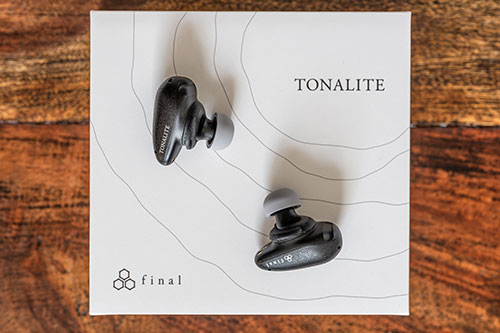
Final Tonalite
Finals Tonalite ist nicht nur ein neuer In-Ear, sondern macht gleichzeitig Finals Timbreanpassung jedem Nutzer mittels einer App zugänglich. Seit der noch etwas kryptischen Ankündigung dieser Technologie auf der High End 2022 habe ich Ihnen über den Entwicklungsprozess berichtet. Das fertige Produkt halte ich persönlich für einen Meilenstein. Tonalite ist eine grundlegende Neuentwicklung mit neuem Formfaktor und neuer Technik. Die Tonalite In-Ears verfügen über eine eher ovale Form, in der die gesamte Elektronik untergebracht ist.…25.09.2026 -
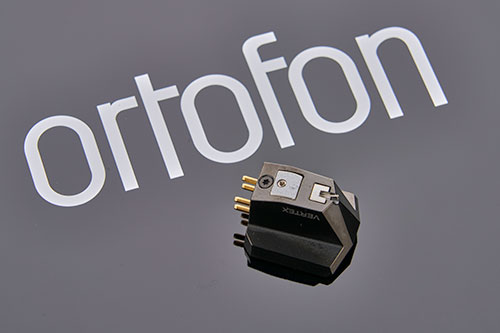
Ortofon MC Vertex
Die bisherigen Topmodelle von Ortofon, das Anna, das Anna Diamond und das Diamond, ähnelten einander auch optisch stark. Das Vertex macht schon durch sein Erscheinungsbild klar, dass es anders ist. Es ist der erste Tonabnehmer mit einem Diamanten mit Vertex-Schliff. Soweit mir bekannt, ist das der erste neue Nadelschliff seit rund 40 Jahren. Aber das ist nicht die einzige Veränderung gegenüber dem MC Diamond: Der Generator des Vertex besitzt einen deutlich höheren Innenwiderstand, die Nadelnachgiebigkeit…15.09.2026 -
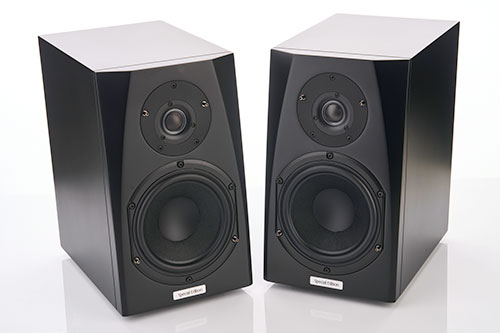
Phonar Veritas M4.2 SE
Es hat mir bislang stets Vergnügen bereitet, mich mit Phonar Lautsprechern zu beschäftigen. Nach einem Test kaufte ich die Veritas 9.2 SE und genieße seitdem ihre Musikalität. Phonar überzeugte immer wieder mit einem außergewöhnlich attraktiven Preis-Klang-Verhältnis. Bestätigt die neue, kompakte Phonar Veritas M4.2 SE diese Erfahrungen? Mein eindrucksvollstes Phonar-Erlebnis hatte ich vor zwei Jahren mit der Standbox Veritas p4.2 Next, die aktuell für einen Paarpreis von 2400 Euro auf der Phonar-Website zu sehen ist. Genau…08.09.2026 


-
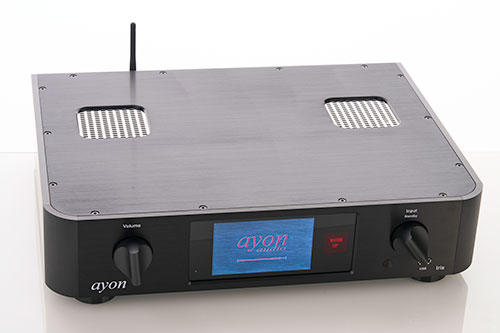
Ayon Iris Signature Streamer
Auf der High End Vienna haben Dirk Sommer und ich den Ayon Iris erstmals entdeckt – nun steht der außergewöhnliche Streaming-Player bei uns bereits zum Test. So frisch ist der Iris, dass selbst die Roon-Zertifizierung zum Testzeitpunkt noch läuft. Brandneu, doch der Iris kommt keineswegs aus dem Nichts: Wer die Entwicklung der digitalen Ayon-Komponenten verfolgt hat, erkennt eine kontinuierliche Beschäftigung mit dem Thema Streaming. Auch wir konnten diesen Weg begleiten – nach dem S3 und…01.09.2026 -
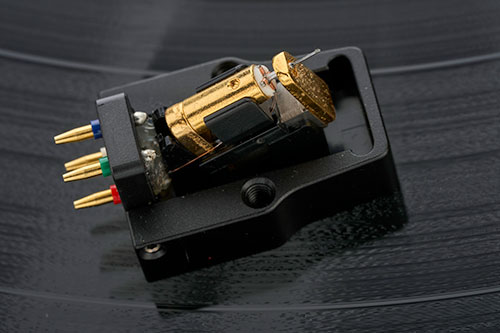
Sumiko Starling
Mein letzter Test eines Tonabnehmersystems befasste sich mit dem Sumiko Oriole. Nun drehen sich für diesen Test meine Schallplatten unter dem Sumiko Starling, dem teuersten System aus der Sumiko Referenz Serie. Nachdem ich überaus positiv überrascht vom Test des Oriole war und dies Peter Laitenberger vom deutschen ATR Vertrieb mitteilte, empfahl mir dieser mir doch einmal das Sumiko Starling anzuhören. Gesagt, getan und bereits wenige Tage später kam das kleine Päckchen mit dem Starling zu…28.08.2026 -
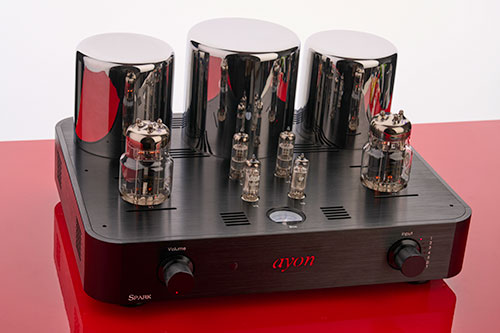
Ayon Spark V
Der Röhrenvollverstärker Spark ist mittlerweile seit über 20 Jahren ein fester Bestandteil des Produktportfolios von Ayon. Preislich eher im Einstiegssegment der Österreicher und nominell unterhalb der Evolution-Serie angesiedelt, hat dieses Gerät aufgrund der eingesetzten russischen Triode 6C33 das Potenzial zum Hidden Champion. Spätestens seit meinem Test des Boliden Ayon Crossfire Evo maße ich mir an, ein Kenner der Marke Ayon zu sein, zumal mir diverse andere Geräte der Marke im Laufe der Jahre zu Gehör…25.08.2026
© 2026 | HIFISTATEMENT | netmagazine | Alle Rechte vorbehalten | Impressum | Datenschutz


Einige Hifistatement-Autoren benutzen
Qobuz Sublime+ Abonnements.

Einige Hifistatement-Autoren besitzen
eine roon Mitgliedschaft.

Einige Hifistatement-Autoren besitzen
die JPLAY hi-fi app.

Einige Hifistatement-Autoren besitzen
den Audirvana Plus 3 Music Player.