


 |
|The input stage of the OOR is realized with carefully selected, fast operational amplifiers featuring a special external compensation. Within this section, the adjustment of the gain and by means of a four-channel ALPS potentiometer also the volume can be performed, as the entire signal path is completely designed as a balanced circuitry. It is containing neither transformers nor coils. Unbalanced input signals are converted into balanced signals by the input amplifier section. Before reaching the unbalanced RCA output, the signal is converted back to single-ended.
The output power amplifiers are – as aforementioned – of completely discrete design and operate using low-noise bipolar transistors. There are four of these amplifiers, two for each channel, as is required for a balanced output topology. These amplifiers are DC-coupled, and there is a DC servo that features a three-decibel cutoff frequency at about 0.1 hertz. The available output power into 32 ohms is four watts at the 6.35-millimeter jack output, and 5.5 watts at the balanced four-pin XLR output. At 600 ohms, 200 and 800 milliwatts are available, respectively. The output impedance here is less than 0.3 ohms, regardless of load, while at the RCA preamp outputs, it's 22 ohms, and at the XLR connectors, 44 ohms.

Since the OOR undoubtedly belongs to the group of stationary headphone amplifiers due to the mains power it requires, I connect it therefore to the balanced outputs of Chord Electronics' DAVE and in a first glance to the supplied external 24-volt switching power supply. The OOR spends the approximately 40-hour break-in period - partly powered by its own power supply, partly by the Hypsos - with the Audeze LCD-X that I received back from repair. Since I've been working with the incredibly well-sounding and opulently equipped Weiss DAC502 with its special equalization for the LCD-X, I am nevertheless aware that the magnetostat isn't exactly blessed with an ultra-linear frequency response without it. However, it really offers a lot of fun paired to the OOR on the rather randomly selected album Changing Places performed by the Tord Gustavson Trio. On "Deep As Love", I especially like the accurate differentiation of double bass, grand piano, drums and cymbals. The transient and dying-out oscillation of single tones or chords is immensely detailed to follow without distracting the listener from the musical content. The inner dynamics of individual sound events are rendered in an equally remarkable way. "Graceful Touch" begins with a quiet intro on the drums, and in the process you get a very credible impression of the imaginary recording space. Generally speaking, the instruments don't stick on a flat plane between the ears, and although the OOR doesn't come with a cross-feed circuitry, the sonic image doesn't seem to be factitiously widened out: I really wouldn’t mind to become a headphone aficionado!

This impressive sound experience is not only feasible in conjunction with the Audeze: With the SendyAudio Peacock, I enjoy the first songs of the album at least as intensively - but in a slightly less spectacular way, being tonally somewhat more balanced and coherent. The three-stage gain control was initially set to the middle position, but already in combination with the LCD-X I reduced the gain by ten decibels, in order to allow the potentiometer to be now used in the range between eleven and one o'clock instead of between eight and ten o'clock. All headphones used are operated in balanced mode, since the OOR is conceived balanced throughout as well.


-
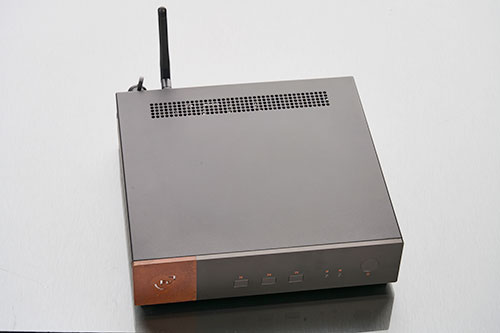
Ferrum BROEN
Auf der High End 2025 ließ man bei Ferrum durchblicken, dass an einem Streamer gearbeitet wird. Die Ferrum Streaming Control Technology, mit der die Musikwiedergabe mittels der Fernbedienung Ferrums DAC WANDLA steuerbar ist, war bereits eine Vorbereitung auf den Streamer und das Schaffen eines gesamten Ferrum-Ökosystems. Im Oktober 2025, wenige Monate nach der High End letzten Jahres waren auf der Audio Video Show in Warschau dann bereits erste BROEN Vorserienmodelle in Betrieb. Auf der diesjährige…06.10.2026 -
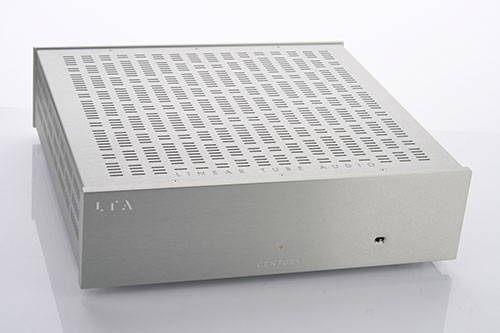
Linear Tube Audio Century
Century heißen die Röhren-Mono-Endverstärker von Linear Tube Audio, die ohne Ausgangsübertrager auskommen und sich dennoch grundlegend von anderen OTL-Konzepten unterscheiden. Wir haben uns intensiv damit beschäftigt, was die patentierte ZOTL-Technologie des Entwicklers so besonders macht und wie sie sich klanglich auswirkt. Für diesen Test haben Dirk Sommer und ich uns eine Arbeitsteilung vorgenommen, bei der ich (Carsten Bussler) mich auf die Technik der Century-Monos sowie die Hintergründe zu Linear Tube Audio und die Zusammenarbeit mit…29.09.2026 -
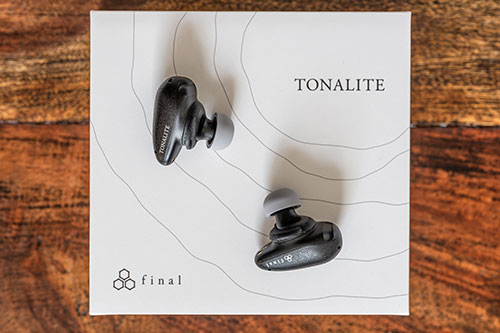
Final Tonalite
Finals Tonalite ist nicht nur ein neuer In-Ear, sondern macht gleichzeitig Finals Timbreanpassung jedem Nutzer mittels einer App zugänglich. Seit der noch etwas kryptischen Ankündigung dieser Technologie auf der High End 2022 habe ich Ihnen über den Entwicklungsprozess berichtet. Das fertige Produkt halte ich persönlich für einen Meilenstein. Tonalite ist eine grundlegende Neuentwicklung mit neuem Formfaktor und neuer Technik. Die Tonalite In-Ears verfügen über eine eher ovale Form, in der die gesamte Elektronik untergebracht ist.…25.09.2026 


-
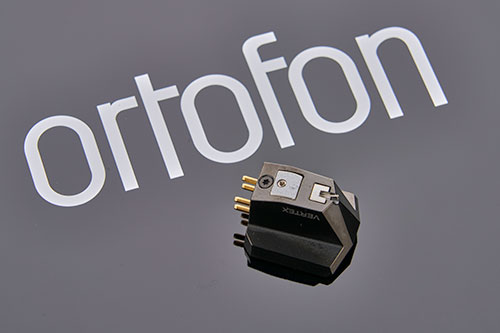
Ortofon MC Vertex
Die bisherigen Topmodelle von Ortofon, das Anna, das Anna Diamond und das Diamond, ähnelten einander auch optisch stark. Das Vertex macht schon durch sein Erscheinungsbild klar, dass es anders ist. Es ist der erste Tonabnehmer mit einem Diamanten mit Vertex-Schliff. Soweit mir bekannt, ist das der erste neue Nadelschliff seit rund 40 Jahren. Aber das ist nicht die einzige Veränderung gegenüber dem MC Diamond: Der Generator des Vertex besitzt einen deutlich höheren Innenwiderstand, die Nadelnachgiebigkeit…15.09.2026 -
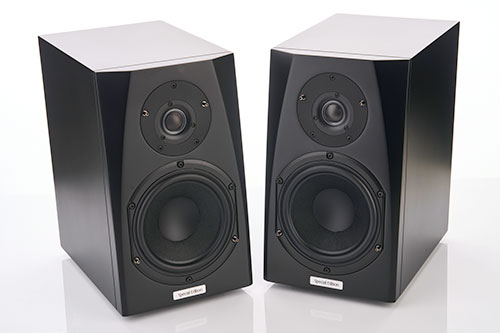
Phonar Veritas M4.2 SE
Es hat mir bislang stets Vergnügen bereitet, mich mit Phonar Lautsprechern zu beschäftigen. Nach einem Test kaufte ich die Veritas 9.2 SE und genieße seitdem ihre Musikalität. Phonar überzeugte immer wieder mit einem außergewöhnlich attraktiven Preis-Klang-Verhältnis. Bestätigt die neue, kompakte Phonar Veritas M4.2 SE diese Erfahrungen? Mein eindrucksvollstes Phonar-Erlebnis hatte ich vor zwei Jahren mit der Standbox Veritas p4.2 Next, die aktuell für einen Paarpreis von 2400 Euro auf der Phonar-Website zu sehen ist. Genau…08.09.2026 -
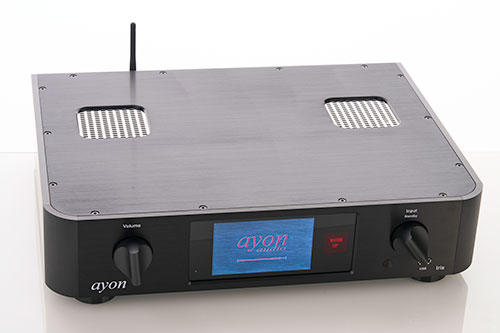
Ayon Iris Signature Streamer
Auf der High End Vienna haben Dirk Sommer und ich den Ayon Iris erstmals entdeckt – nun steht der außergewöhnliche Streaming-Player bei uns bereits zum Test. So frisch ist der Iris, dass selbst die Roon-Zertifizierung zum Testzeitpunkt noch läuft. Brandneu, doch der Iris kommt keineswegs aus dem Nichts: Wer die Entwicklung der digitalen Ayon-Komponenten verfolgt hat, erkennt eine kontinuierliche Beschäftigung mit dem Thema Streaming. Auch wir konnten diesen Weg begleiten – nach dem S3 und…01.09.2026
© 2026 | HIFISTATEMENT | netmagazine | Alle Rechte vorbehalten | Impressum | Datenschutz


Einige Hifistatement-Autoren benutzen
Qobuz Sublime+ Abonnements.

Einige Hifistatement-Autoren besitzen
eine roon Mitgliedschaft.

Einige Hifistatement-Autoren besitzen
die JPLAY hi-fi app.

Einige Hifistatement-Autoren besitzen
den Audirvana Plus 3 Music Player.