


 |
|The change from the SendyAudio Peacock to the significantly cheaper Aiva is easy to bear after having the level adjusted, yet no serious differences in quality come to light - at least that's my first impression. After a longer listening and some toggling between the two headphones, it is noticeable that the spatial image during the drum intro seems to be larger with the Peacock in play, at the same time giving the double bass a bit more volume. Even though the OOR incites the headphones to sonic excellence, it does not equalize the differences between them.

So I commit myself to the Peacock again and enjoy the airy and dynamically exciting playback of Shostakovich's Symphony No. 15 by fully immerging in warm timbres. Although I don't find fault with the sonic performance in the slightest, I connect the OOR to the Hypsos instead of the supplied external switching power supply, which of course lists the company's own headphone amplifier already in its shortlist. Therefore a few movements of the combined rotary and push control knob are sufficient to set the correct voltage and polarity for the OOR: Thanks to the much more elaborate power supply, even more air surrounds the instrument groups, the spatial information appears to be more precise, and the fortissimo passages gain a bit more of dramatic impact. In comparison, I rate the added sonic value offered by the Hypsos a bit higher than that when swapping from the SendyAudio Aiva to the Peacock.
Needless to say, that I give the initial two tracks of Changing Places also a comparative listen via the big SendyAudio on the SPL Phonitor x, whereby its matrix circuitry stays deactivated for the time being: Dynamically, the Phonitor is even a little more convincing, but the subtleties in the transient and dying-out oscillation of individual tones become clearer through the OOR. It is almost impossible for me to assign a hi-fi criterion to what fascinates me so much about the Ferrum’s performance. In all individual disciplines, the headphone amplifiers perform at a similar level, but there is something delicate, tingling about the way the OOR presents itself sonically, which the neutral, rational sounding SPL is lacking. As might be expected, these differences are all the more pronounced when the OOR is powered by the Hypsos. Even when listening to Symphony No. 15, the Polish duo stays my favourite: The musicians seem to be playing in a slightly larger, airier room. With the matrix circuit influencing the sound of the Phonitor, the imaging doesn't get any more spacious, but to my ears it sounds a touch more coherent. Nevertheless, when it's not exactly about large-scale orchestral music, I simply enjoy the Hypsos and OOR combo more.
Not to give the OOR an edge, but simply because I can't stop listening to one of my latest discoveries on Qobuz, Houston Person and Ron Carter's lyrical duo album Remember Love, I start off with "My One And Only Love" with the Peacock connected to the Phonitor, and then repeat it with Hypsos and OOR taking care of the amplification. Even with the SPL, you can get infatuated by the old familiar, but excitingly interpreted melody. However, the Ferrum combo does this a bit better thanks to the airier performance and an emotionally stronger approach. Yes, my previous enormous appreciation for OOR and his fellow mate still remains unchanged with this track.


-
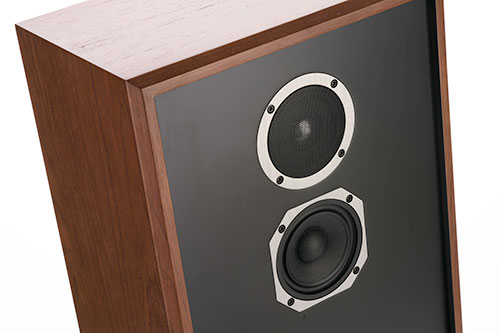
KLH Audio Model Four
Endlich steht mal etwas ganz anderes in meinem Hörraum. Der Lautsprecher des traditionsreichen amerikanischen Herstellers KLH entspricht einem Design von vor mehr als 50 Jahren, wie man es auch heutzutage bei Edelmarken wie Harbeth oder Audio Note findet. Bislang hatte ich nicht das Vergnügen, einen solchen Lautsprecher im Hörraum zu erleben. Neben dem Design mit breiter Schallwand und geringer Bautiefe macht der Paarpreis von knapp 2000 Euro die KLH Model Four hochgradig interessant. Auf zum…19.10.2026 -
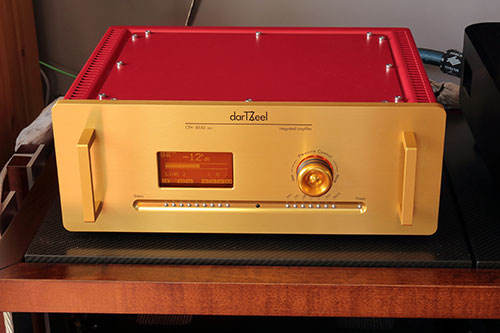

darTZeel Audio CTH-8550 Mk II
darTZeel ist ein Schweizer Unternehmen, das 2001 in Genf von Hervé Delétraz gegründet wurde. Der Name ist ein Anagramm des Nachnamens Delétraz. Die Arbeit an den ersten Geräten begann bereits 1984 im Rahmen einer Diplomarbeit, und nach 18 Jahren Forschung wurde 2002 der Leistungsverstärker NHB-108 offiziell vorgestellt. Es gibt Marken, auf die man viele Jahre warten muss, aber man wartet trotzdem weiter. So war es für mich bei der Marke darTZeel. Zufällig traf ich ihren…13.10.2026 -
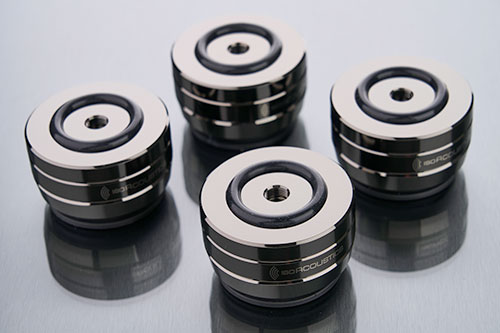
IsoAcoustics GAIA Neo I
Erinnern Sie sich noch? Es ist bereits eine ganze Weile her, da haben Hifi-Fans ihre Lautsprecher auf Tennisbälle gestellt, um einen besseren Klang aus ihnen herauszukitzeln. Oder sie haben abenteuerliche Selfmade-Konstruktionen gebastelt, auf denen die vielleicht nicht ganz highendigen Schallwandler platziert wurden. Das ist lange her und in der Zwischenzeit hat sich in Sachen Lautsprecher-Füße einiges getan. Es gibt eine große Zahl an Herstellern, die Basen, Spikes oder Ständer mit unterschiedlichen Konzepten und Materialien produzieren,…09.10.2026 


-
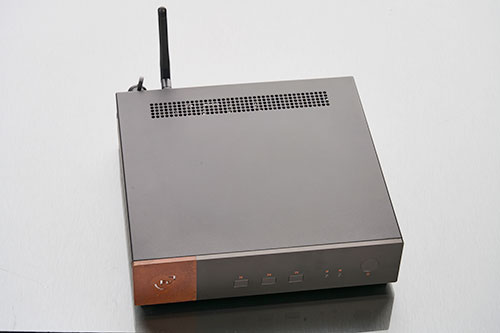
Ferrum BROEN
Auf der High End 2025 ließ man bei Ferrum durchblicken, dass an einem Streamer gearbeitet wird. Die Ferrum Streaming Control Technology, mit der die Musikwiedergabe mittels der Fernbedienung Ferrums DAC WANDLA steuerbar ist, war bereits eine Vorbereitung auf den Streamer und das Schaffen eines gesamten Ferrum-Ökosystems. Im Oktober 2025, wenige Monate nach der High End letzten Jahres waren auf der Audio Video Show in Warschau dann bereits erste BROEN Vorserienmodelle in Betrieb. Auf der diesjährige…06.10.2026 -
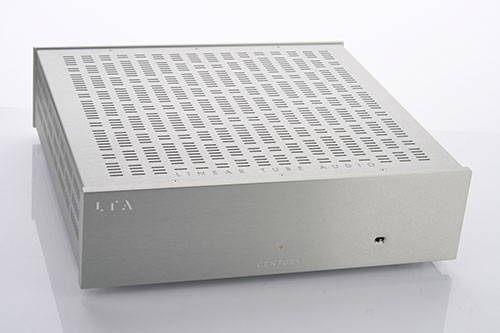
Linear Tube Audio Century
Century heißen die Röhren-Mono-Endverstärker von Linear Tube Audio, die ohne Ausgangsübertrager auskommen und sich dennoch grundlegend von anderen OTL-Konzepten unterscheiden. Wir haben uns intensiv damit beschäftigt, was die patentierte ZOTL-Technologie des Entwicklers so besonders macht und wie sie sich klanglich auswirkt. Für diesen Test haben Dirk Sommer und ich uns eine Arbeitsteilung vorgenommen, bei der ich (Carsten Bussler) mich auf die Technik der Century-Monos sowie die Hintergründe zu Linear Tube Audio und die Zusammenarbeit mit…29.09.2026 -
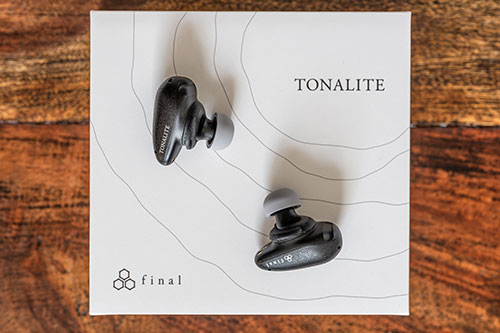
Final Tonalite
Finals Tonalite ist nicht nur ein neuer In-Ear, sondern macht gleichzeitig Finals Timbreanpassung jedem Nutzer mittels einer App zugänglich. Seit der noch etwas kryptischen Ankündigung dieser Technologie auf der High End 2022 habe ich Ihnen über den Entwicklungsprozess berichtet. Das fertige Produkt halte ich persönlich für einen Meilenstein. Tonalite ist eine grundlegende Neuentwicklung mit neuem Formfaktor und neuer Technik. Die Tonalite In-Ears verfügen über eine eher ovale Form, in der die gesamte Elektronik untergebracht ist.…25.09.2026
© 2026 | HIFISTATEMENT | netmagazine | Alle Rechte vorbehalten | Impressum | Datenschutz


Einige Hifistatement-Autoren benutzen
Qobuz Sublime+ Abonnements.

Einige Hifistatement-Autoren besitzen
eine roon Mitgliedschaft.

Einige Hifistatement-Autoren besitzen
die JPLAY hi-fi app.

Einige Hifistatement-Autoren besitzen
den Audirvana Plus 3 Music Player.