


 |
|It would be really nice if I could more often occupy myself with test objects as intensively as with the Epoque Aeon Fine. Already the previous model without the Aeon addition to the name had left a lasting impression on me - even if our relationship saw some clouds on the horizon. This endurance test also entailed some consequences: In the meantime I set out to buy the loudspeaker.
Thus, I am the second Hifi Statement author in a little while to follow up to Carsten Bussler who has to admit right at the beginning of his report that one isn't impartial towards one's current test components. However, almost eight years ago I had already proclaimed in the introduction of the article about the Goebel Epoque Fine that it appeared to be one of the two or three best loudspeakers I had ever hosted in my listening room. Even back then, this happened to be more a kind of effusiveness than an appropriate professional distance. But this review is not meant be an objective description: If our texts weren't allowed to manifest the pleasure we take in utilizing the respective equipment, we could apply for a job with the German consumer and test organisation Stiftung Warentest right away. And in the foreseeable future, that's not quite what my colleagues and I have in mind!

As much as I was impressed by the Epoque Fine whilst occupying myself with it because of its extremely homogeneous performance, the idea of having it in my system for a longer time never crossed my mind. After all, it didn't jar with it very well. As my aforementioned enthusiastic assessment, which I very much like to reiterate, points out, it fell far short of any kind of acoustic aspects. There were simply electrical divergences: With its minimum impedance of 1.6 Ohms at 160 Hertz, which were set as crossover frequency between woofers and bending wave transducer, the Epoque Fine stressed the Brinkmann mono amplifiers to such an extent that one of them emitted smoke signals into the listening room. The power-houses, which company director Oliver Goebel then heaved into my workroom to enable me to finish the test, were priced with similar tags as the loudspeakers, but didn't necessarily sound better than the Brinkmann monos when reaching the brink of their collapse. With the LumenWhite DiamondLight I already owned a loudspeaker that was extremely expensive compared to the rest of the chain, but when a speaker appears to be so capricious that it won't work without power amplifiers that require a similar investment, this simply isn't an option for me. In addition, it is markedly difficult to find an extremely stable power pack that plays as musically as a fine small power amp. So, after having completed the test, I didn't give the Epoque Fine any kind of further consideration.
That, however, may in no case mean that I lost the contact to Oliver Goebel, as the one or other report from his showroom evidences. His company is located in Alling, which is only twelve kilometers away from my own town Groebenzell. At least as often as I made my way to Alling - and not all of my visits are documented in hifistatement - also Oliver Goebel happened to visit me in my listening room. Mostly we didn’t busy ourselves with his own products, but rather shared interest in i.e. a particular switch, an interesting clock or an exceptional NAS server. Whenever I needed a special cable for their integration into my system, I could always give a try to a new development from Goebel High End. Thanks to the lively exchange of both ideas and components I already heard at an early stage about the new version of the Epoque Fine, now marked by the addition of the word Aeon.


-
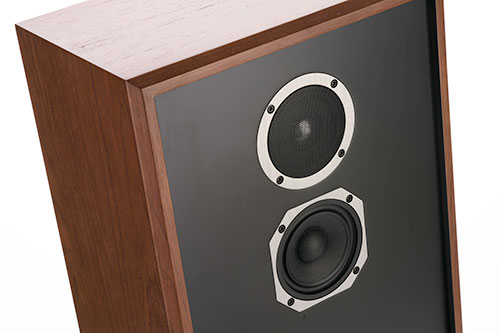
KLH Audio Model Four
Endlich steht mal etwas ganz anderes in meinem Hörraum. Der Lautsprecher des traditionsreichen amerikanischen Herstellers KLH entspricht einem Design von vor mehr als 50 Jahren, wie man es auch heutzutage bei Edelmarken wie Harbeth oder Audio Note findet. Bislang hatte ich nicht das Vergnügen, einen solchen Lautsprecher im Hörraum zu erleben. Neben dem Design mit breiter Schallwand und geringer Bautiefe macht der Paarpreis von knapp 2000 Euro die KLH Model Four hochgradig interessant. Auf zum…19.10.2026 -
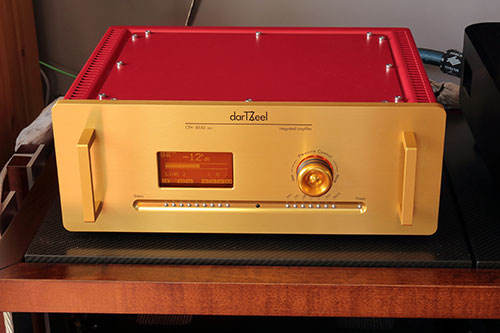

darTZeel Audio CTH-8550 Mk II
darTZeel ist ein Schweizer Unternehmen, das 2001 in Genf von Hervé Delétraz gegründet wurde. Der Name ist ein Anagramm des Nachnamens Delétraz. Die Arbeit an den ersten Geräten begann bereits 1984 im Rahmen einer Diplomarbeit, und nach 18 Jahren Forschung wurde 2002 der Leistungsverstärker NHB-108 offiziell vorgestellt. Es gibt Marken, auf die man viele Jahre warten muss, aber man wartet trotzdem weiter. So war es für mich bei der Marke darTZeel. Zufällig traf ich ihren…13.10.2026 -
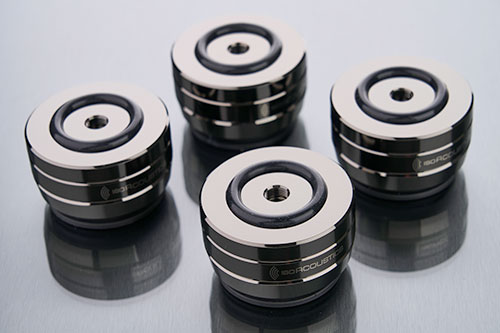
IsoAcoustics GAIA Neo I
Erinnern Sie sich noch? Es ist bereits eine ganze Weile her, da haben Hifi-Fans ihre Lautsprecher auf Tennisbälle gestellt, um einen besseren Klang aus ihnen herauszukitzeln. Oder sie haben abenteuerliche Selfmade-Konstruktionen gebastelt, auf denen die vielleicht nicht ganz highendigen Schallwandler platziert wurden. Das ist lange her und in der Zwischenzeit hat sich in Sachen Lautsprecher-Füße einiges getan. Es gibt eine große Zahl an Herstellern, die Basen, Spikes oder Ständer mit unterschiedlichen Konzepten und Materialien produzieren,…09.10.2026 


-
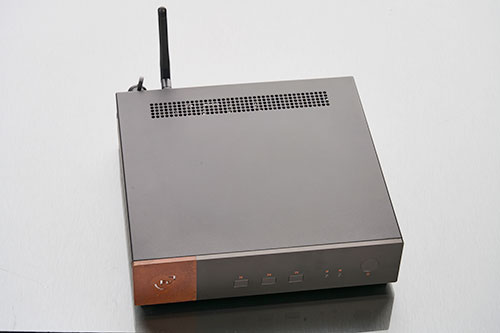
Ferrum BROEN
Auf der High End 2025 ließ man bei Ferrum durchblicken, dass an einem Streamer gearbeitet wird. Die Ferrum Streaming Control Technology, mit der die Musikwiedergabe mittels der Fernbedienung Ferrums DAC WANDLA steuerbar ist, war bereits eine Vorbereitung auf den Streamer und das Schaffen eines gesamten Ferrum-Ökosystems. Im Oktober 2025, wenige Monate nach der High End letzten Jahres waren auf der Audio Video Show in Warschau dann bereits erste BROEN Vorserienmodelle in Betrieb. Auf der diesjährige…06.10.2026 -
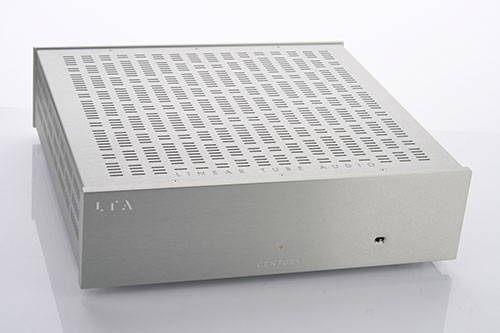
Linear Tube Audio Century
Century heißen die Röhren-Mono-Endverstärker von Linear Tube Audio, die ohne Ausgangsübertrager auskommen und sich dennoch grundlegend von anderen OTL-Konzepten unterscheiden. Wir haben uns intensiv damit beschäftigt, was die patentierte ZOTL-Technologie des Entwicklers so besonders macht und wie sie sich klanglich auswirkt. Für diesen Test haben Dirk Sommer und ich uns eine Arbeitsteilung vorgenommen, bei der ich (Carsten Bussler) mich auf die Technik der Century-Monos sowie die Hintergründe zu Linear Tube Audio und die Zusammenarbeit mit…29.09.2026 -
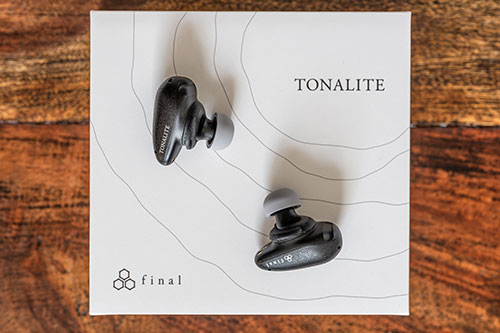
Final Tonalite
Finals Tonalite ist nicht nur ein neuer In-Ear, sondern macht gleichzeitig Finals Timbreanpassung jedem Nutzer mittels einer App zugänglich. Seit der noch etwas kryptischen Ankündigung dieser Technologie auf der High End 2022 habe ich Ihnen über den Entwicklungsprozess berichtet. Das fertige Produkt halte ich persönlich für einen Meilenstein. Tonalite ist eine grundlegende Neuentwicklung mit neuem Formfaktor und neuer Technik. Die Tonalite In-Ears verfügen über eine eher ovale Form, in der die gesamte Elektronik untergebracht ist.…25.09.2026
© 2026 | HIFISTATEMENT | netmagazine | Alle Rechte vorbehalten | Impressum | Datenschutz


Einige Hifistatement-Autoren benutzen
Qobuz Sublime+ Abonnements.

Einige Hifistatement-Autoren besitzen
eine roon Mitgliedschaft.

Einige Hifistatement-Autoren besitzen
die JPLAY hi-fi app.

Einige Hifistatement-Autoren besitzen
den Audirvana Plus 3 Music Player.