


 |
|An alternative to this concept is to dispense with a fully conductive membrane and instead use a wafer-thin plastic film to which conductor tracks are applied. With this technique - which Raidho is also using - it is easier to realise an impedance in the normal range between 4 and 8 ohms, as longer and thinner conductor tracks are possible here, running meander-like across the diaphragm. Speakers that make use of this concept are also called "semi" ribbons or magnetostats. The foil used by Raidho is said to be record-breakingly light at only 20 milligrams and a full 11 microns thick. The version of the "ribbon" used in the TD1.2 has also been given a particularly powerful motor that increases sensitivity by three decibels compared to the previous model. The acoustically optimised chamber behind the foil should lead to a further reduction of distortion by 35 decibels compared to the already extremely low values of the previously employed version.

Almost more complex than the construction of the ribbon is the manufacturing of the midwoofer with its diameter of 11.5 centimetres. Right from the beginning, Raidho has relied on composite materials for the diaphragm technology. The advantages lie the individual balance between high torsional stiffness on the one hand and high inward damping on the other. With the technology used in the TD1.2, the effort was taken to the absolute extreme. An aluminum cone with a ceramic coating forms the basis of the diaphragm. Added to this are layers of tantalum, which is extremely hard and stiff, and - yes, you read that correctly - diamond. Raidho specifies 10 micrometres or 1.5 carats of diamond on each membrane. The tantalum/diamond layers are said to reduce resonance by 36 decibels compared to ceramic and to be 50 times stiffer than a pure ceramic diaphragm. At the same time, this is said to have raised the resonance frequency to 20 kilohertz. The result of this enormous outlay is said to be a perfect transient response without measurable distortion. The motor is based on neodymium ring magnets with optimised magnetic field characteristics, which, in interaction with the underhung titanium voice coil wound in flat wire, ensure that an extremely strong magnetic field is created inside the driver. This should lead to a drastic increase in dynamic performance. However, the effort expended doesn't stop with the drivers. The crossover of the TD1.2 was completely redesigned, with the focus on a correct phase response at all frequencies and an optimal impulse behaviour. Only a few, but very high-quality components from Mundorf are used here. The wiring is point-to-point, waiving therefore the customary circuit board.

Each driver is mounted in its own solid aluminum frame, which is fixed to the baffle with four screws each. The frames are rounded to avoid diffraction effects at the front of the speaker. The lower baffle section is slightly tilted to optimise phase response. The curved cabinet, optimised for low resonance, tapers slightly towards the rear and is reinforced by a thick aluminium backbone accommodating for the bass reflex ports. The optimised crossover and the new driver design afore described should lead to a considerable improvement in efficiency - not exactly one of the strengths of Raidho speakers up to this day. In operation, I got by with the modest output of my Omtec CA 25 without any problems.


-
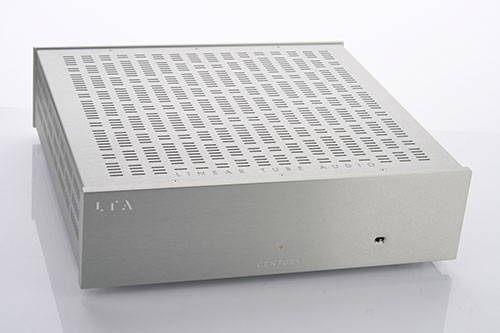
Linear Tube Audio Century
Century heißen die Röhren-Mono-Endverstärker von Linear Tube Audio, die ohne Ausgangsübertrager auskommen und sich dennoch grundlegend von anderen OTL-Konzepten unterscheiden. Wir haben uns intensiv damit beschäftigt, was die patentierte ZOTL-Technologie des Entwicklers so besonders macht und wie sie sich klanglich auswirkt. Für diesen Test haben Dirk Sommer und ich uns eine Arbeitsteilung vorgenommen, bei der ich (Carsten Bussler) mich auf die Technik der Century-Monos sowie die Hintergründe zu Linear Tube Audio und die Zusammenarbeit mit…29.09.2026 -
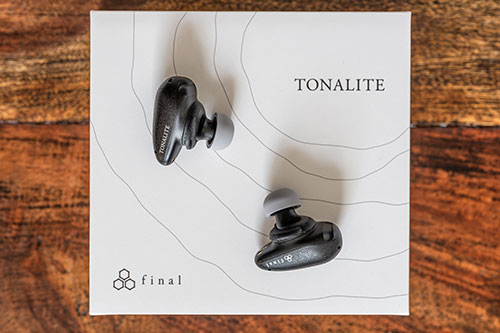
Final Tonalite
Finals Tonalite ist nicht nur ein neuer In-Ear, sondern macht gleichzeitig Finals Timbreanpassung jedem Nutzer mittels einer App zugänglich. Seit der noch etwas kryptischen Ankündigung dieser Technologie auf der High End 2022 habe ich Ihnen über den Entwicklungsprozess berichtet. Das fertige Produkt halte ich persönlich für einen Meilenstein. Tonalite ist eine grundlegende Neuentwicklung mit neuem Formfaktor und neuer Technik. Die Tonalite In-Ears verfügen über eine eher ovale Form, in der die gesamte Elektronik untergebracht ist.…25.09.2026 -
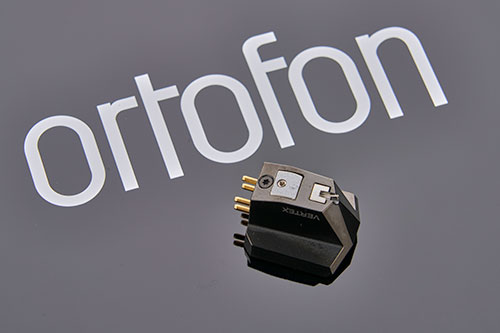
Ortofon MC Vertex
Die bisherigen Topmodelle von Ortofon, das Anna, das Anna Diamond und das Diamond, ähnelten einander auch optisch stark. Das Vertex macht schon durch sein Erscheinungsbild klar, dass es anders ist. Es ist der erste Tonabnehmer mit einem Diamanten mit Vertex-Schliff. Soweit mir bekannt, ist das der erste neue Nadelschliff seit rund 40 Jahren. Aber das ist nicht die einzige Veränderung gegenüber dem MC Diamond: Der Generator des Vertex besitzt einen deutlich höheren Innenwiderstand, die Nadelnachgiebigkeit…15.09.2026 


-
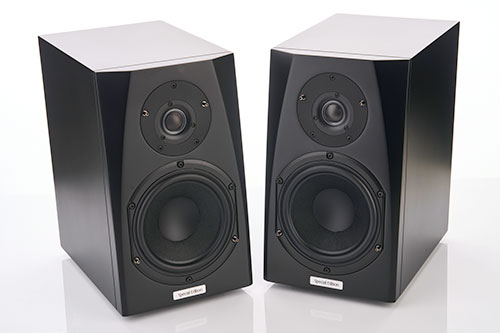
Phonar Veritas M4.2 SE
Es hat mir bislang stets Vergnügen bereitet, mich mit Phonar Lautsprechern zu beschäftigen. Nach einem Test kaufte ich die Veritas 9.2 SE und genieße seitdem ihre Musikalität. Phonar überzeugte immer wieder mit einem außergewöhnlich attraktiven Preis-Klang-Verhältnis. Bestätigt die neue, kompakte Phonar Veritas M4.2 SE diese Erfahrungen? Mein eindrucksvollstes Phonar-Erlebnis hatte ich vor zwei Jahren mit der Standbox Veritas p4.2 Next, die aktuell für einen Paarpreis von 2400 Euro auf der Phonar-Website zu sehen ist. Genau…08.09.2026 -
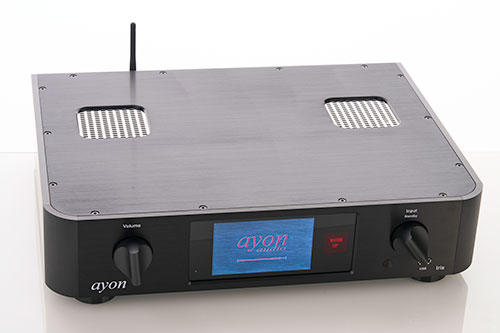
Ayon Iris Signature Streamer
Auf der High End Vienna haben Dirk Sommer und ich den Ayon Iris erstmals entdeckt – nun steht der außergewöhnliche Streaming-Player bei uns bereits zum Test. So frisch ist der Iris, dass selbst die Roon-Zertifizierung zum Testzeitpunkt noch läuft. Brandneu, doch der Iris kommt keineswegs aus dem Nichts: Wer die Entwicklung der digitalen Ayon-Komponenten verfolgt hat, erkennt eine kontinuierliche Beschäftigung mit dem Thema Streaming. Auch wir konnten diesen Weg begleiten – nach dem S3 und…01.09.2026 -
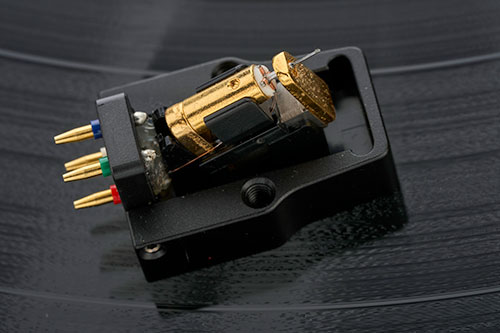
Sumiko Starling
Mein letzter Test eines Tonabnehmersystems befasste sich mit dem Sumiko Oriole. Nun drehen sich für diesen Test meine Schallplatten unter dem Sumiko Starling, dem teuersten System aus der Sumiko Referenz Serie. Nachdem ich überaus positiv überrascht vom Test des Oriole war und dies Peter Laitenberger vom deutschen ATR Vertrieb mitteilte, empfahl mir dieser mir doch einmal das Sumiko Starling anzuhören. Gesagt, getan und bereits wenige Tage später kam das kleine Päckchen mit dem Starling zu…28.08.2026
© 2026 | HIFISTATEMENT | netmagazine | Alle Rechte vorbehalten | Impressum | Datenschutz


Einige Hifistatement-Autoren benutzen
Qobuz Sublime+ Abonnements.

Einige Hifistatement-Autoren besitzen
eine roon Mitgliedschaft.

Einige Hifistatement-Autoren besitzen
die JPLAY hi-fi app.

Einige Hifistatement-Autoren besitzen
den Audirvana Plus 3 Music Player.