


 |
|
After just a few pieces of music, I realized that I was dealing with a very balanced, harmonious and neutral sounding preamplifier. The KECES S4 had no inherent sound signature whatsoever. Somehow this preamplifier was tonally invisible, in the best sense without a specific signature, extremely permeable to everything on the record and thus very close to the ideal of the amplifying piece of wire. I identified no interference artefacts, perceived an extremely low noise floor level and a black background against which the musical performance contrasted perfectly.
The AC/DC track "Hells Bells" (Back in Black, Atlantic Records, 1980) immediately reveals any weakness in the low frequency range, which is why I always like to listen to it for testing purposes. Both via MM and MC, the massive "hell's bells" at the beginning of the intro clattered in a really fat, black and fundamental manner, which only very high-quality phono preamps can come up with in this form. Guitar riffs, drums and Brian Johnson's vocals were always crystal clear and cleanly separated from each other, never smudging tones or impulses or even creating a "tonal swamp". Hence the KECES S4 always maintained control and overview of the sound. If I wanted to, I could follow even the smallest, most subtle instrumental arborizations and noises. In general, the entire sonic image seemed to me to be slightly characterized by a silvery timbre, which seemed to emphasize the high differentiation capability of the S4.

AC/DC’s rock ballad "Ride on" (Dirty Deeds Done Dirt Cheap, Atlantic Records, 1976) then raised goosebumps again. The (artificial) extraordinarily generous recording image gave every instrument enough room to breathe and, above all, conveyed the characteristic lightness in Bon Scott's voice with natural authenticity. Scott's powerful vocals were loaded with a lot of energy, this being for me a further proof of the spotlessly clean electrical and circuitry design of the S4, especially with regard to the phono section. Basically, the soundstage happened to be more wide than deep.
Somewhat lighter fare was provided by a number of iconic 12-inchers performed by electro-pop celebs Depeche Mode with tracks such as "Precious" (Mute Records, 2005) or "Shake the Disease" (Mute Records, 1985). The stable low-frequency foundation provided a massive, powerful bass that was nevertheless agile and never puffy, thereby ensuring quite a high enjoyment factor. Things continued a little more subtly with the Cranberries. Dolores O'Riordan performed "Ode to my Family" (No Need to Argue, Island Records, 1994) and "Linger" (12", Island Records, 1993) and it quickly became clear that the high frequency spectrum and the mid-range, which is so important for rendering voices, were in no way inferior to the lowest octaves. Only really good (phono) preamplifiers can achieve the finest high-frequency resolution without any hint of harshness and with cleanly articulated sibilants.


-
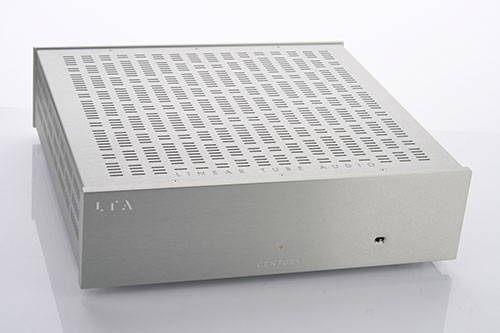
Linear Tube Audio Century
Century heißen die Röhren-Mono-Endverstärker von Linear Tube Audio, die ohne Ausgangsübertrager auskommen und sich dennoch grundlegend von anderen OTL-Konzepten unterscheiden. Wir haben uns intensiv damit beschäftigt, was die patentierte ZOTL-Technologie des Entwicklers so besonders macht und wie sie sich klanglich auswirkt. Für diesen Test haben Dirk Sommer und ich uns eine Arbeitsteilung vorgenommen, bei der ich (Carsten Bussler) mich auf die Technik der Century-Monos sowie die Hintergründe zu Linear Tube Audio und die Zusammenarbeit mit…29.09.2026 -
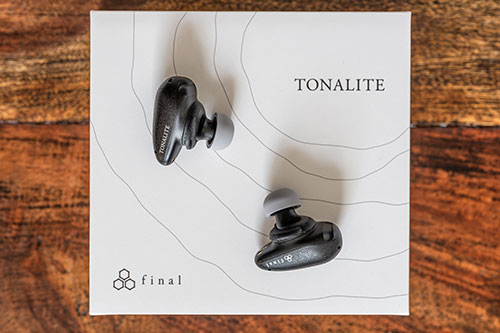
Final Tonalite
Finals Tonalite ist nicht nur ein neuer In-Ear, sondern macht gleichzeitig Finals Timbreanpassung jedem Nutzer mittels einer App zugänglich. Seit der noch etwas kryptischen Ankündigung dieser Technologie auf der High End 2022 habe ich Ihnen über den Entwicklungsprozess berichtet. Das fertige Produkt halte ich persönlich für einen Meilenstein. Tonalite ist eine grundlegende Neuentwicklung mit neuem Formfaktor und neuer Technik. Die Tonalite In-Ears verfügen über eine eher ovale Form, in der die gesamte Elektronik untergebracht ist.…25.09.2026 -
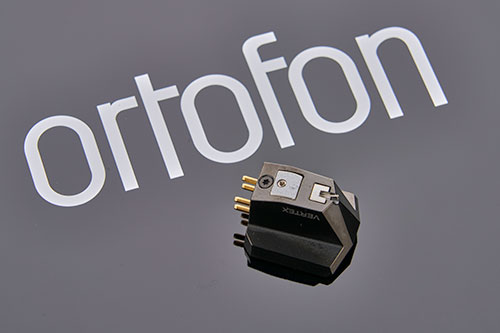
Ortofon MC Vertex
Die bisherigen Topmodelle von Ortofon, das Anna, das Anna Diamond und das Diamond, ähnelten einander auch optisch stark. Das Vertex macht schon durch sein Erscheinungsbild klar, dass es anders ist. Es ist der erste Tonabnehmer mit einem Diamanten mit Vertex-Schliff. Soweit mir bekannt, ist das der erste neue Nadelschliff seit rund 40 Jahren. Aber das ist nicht die einzige Veränderung gegenüber dem MC Diamond: Der Generator des Vertex besitzt einen deutlich höheren Innenwiderstand, die Nadelnachgiebigkeit…15.09.2026 


-
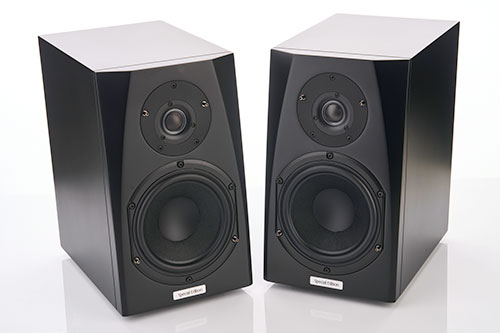
Phonar Veritas M4.2 SE
Es hat mir bislang stets Vergnügen bereitet, mich mit Phonar Lautsprechern zu beschäftigen. Nach einem Test kaufte ich die Veritas 9.2 SE und genieße seitdem ihre Musikalität. Phonar überzeugte immer wieder mit einem außergewöhnlich attraktiven Preis-Klang-Verhältnis. Bestätigt die neue, kompakte Phonar Veritas M4.2 SE diese Erfahrungen? Mein eindrucksvollstes Phonar-Erlebnis hatte ich vor zwei Jahren mit der Standbox Veritas p4.2 Next, die aktuell für einen Paarpreis von 2400 Euro auf der Phonar-Website zu sehen ist. Genau…08.09.2026 -
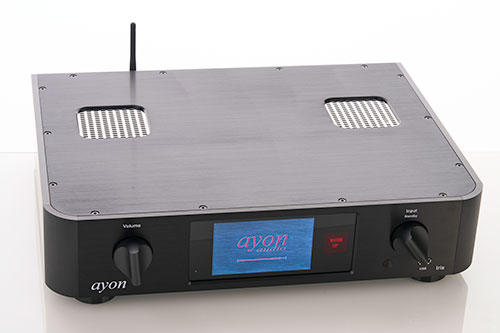
Ayon Iris Signature Streamer
Auf der High End Vienna haben Dirk Sommer und ich den Ayon Iris erstmals entdeckt – nun steht der außergewöhnliche Streaming-Player bei uns bereits zum Test. So frisch ist der Iris, dass selbst die Roon-Zertifizierung zum Testzeitpunkt noch läuft. Brandneu, doch der Iris kommt keineswegs aus dem Nichts: Wer die Entwicklung der digitalen Ayon-Komponenten verfolgt hat, erkennt eine kontinuierliche Beschäftigung mit dem Thema Streaming. Auch wir konnten diesen Weg begleiten – nach dem S3 und…01.09.2026 -
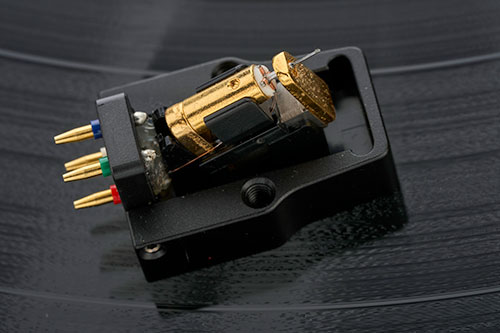
Sumiko Starling
Mein letzter Test eines Tonabnehmersystems befasste sich mit dem Sumiko Oriole. Nun drehen sich für diesen Test meine Schallplatten unter dem Sumiko Starling, dem teuersten System aus der Sumiko Referenz Serie. Nachdem ich überaus positiv überrascht vom Test des Oriole war und dies Peter Laitenberger vom deutschen ATR Vertrieb mitteilte, empfahl mir dieser mir doch einmal das Sumiko Starling anzuhören. Gesagt, getan und bereits wenige Tage später kam das kleine Päckchen mit dem Starling zu…28.08.2026
© 2026 | HIFISTATEMENT | netmagazine | Alle Rechte vorbehalten | Impressum | Datenschutz


Einige Hifistatement-Autoren benutzen
Qobuz Sublime+ Abonnements.

Einige Hifistatement-Autoren besitzen
eine roon Mitgliedschaft.

Einige Hifistatement-Autoren besitzen
die JPLAY hi-fi app.

Einige Hifistatement-Autoren besitzen
den Audirvana Plus 3 Music Player.